CYTOLOGY

CYTOLOGY

QUALITY CONTROL IN CYTOLOGY

INTRODUCTION:- Cytopathologists are concerned about and committed to quality assurance and quality control in their laboratories. These practices include, among others, the use of intralaboratory and extradepartmental consultations, case reviews, correlation of cytologic and histopathologic specimens and review of completed diagnostic reports. QUALITY ASSURANCE MEASURES:- Cytopathology is a practice of medicine and represents a medical consultation, in both gynecologic and nongynecologic anatomic sites. The basic principles of quality assurance apply to all types of cytologic specimens. The following represents several minimum quality assurance measures. 1. Laboratory Directors:- *The laboratory should be directed by a legally qualified physician with a specialist qualification in pathology, including special training and expertise in cytopathology. *The director or designated medical professional is responsible for proper performance and reporting of all tests done in the cytopathology laboratory. *The director or designated cytopathologist should be physically present in the laboratory to direct the staff, be available for consultations, review all reactive and abnormal gynecologic cytology samples, review fine needle aspiration samples, and review all nongynecologic samples. 2. Cytotechnologists:- A suitably qualified person should be recruited for this position. 3. Physical Laboratory Facilities:- *The laboratory should be clean, well lighted, adequately ventilated, and functionally arranged so as to minimize problems in specimen handling, evaluation, and reporting. *The area for specimen preparation and handling should be separate from the area where specimens are evaluated and reported. *Formaldehyde and xylene (if in use) should be carefully monitored due to the possible presence of hazardous vapor concentrations. 4. Safety Precautions:- *Laboratory personnel must be protected against hazards (chemical, electric, fire, infections, or others) by using well-ventilated hoods and biologic safety hoods for handling potentially infectious material. * Fire precautions should be posted and tested. 5. Equipment:- *An adequate number of binocular microscopes of good quality and proper working order must be available. * Laboratory instruments and equipment should be under periodic maintenance to monitor and ensure malfunctions do not adversely affect analytical results. 6. Specimen Collection:- *Cytologic specimens should be accepted and examined only if requested by a licensed medical practitioner and collected in accordance with instructions regarding recommended collection techniques. *The cytopathology laboratory should inform the originator of the sample if the specimens are “unsatisfactory” and detail adequacy qualifiers such as presence or absence of a transformation zone component or obscuring factors in “satisfactory samples”. 7. Preparation, Fixation, and Staining Procedures:- *The specimens must be identified with the patient’s name and/ or a unique identifier and must be accompanied by a requisition form with the requesting physician’s name, address, date of specimen collection, specimen source, and appropriate clinical information about the patient. *When the specimen arrives in the laboratory the laboratory staff affix an accession number or bar code label on each slide for further identification. *The laboratory should have written criteria for rejecting specimens. *Fixation while the specimen is still wet is recommended for conventional cell samples. *The Papanicolaou staining procedure is strongly suggested for most cytologic samples, unless additional staining procedures are warranted. *Staining solutions and chemicals used in the cytopathology laboratory should be labeled with the time of preparation, purchase, or both. Staining solutions should be filtered regularly to avoid contamination and should be covered when not in use. *Effective measures to prevent cross-contamination between gynecologic and nongynecologic specimens during the staining process must be used. 8. Slide Evaluation Workload:- *Regulations as to the number of specimens a cytotechnologist may evaluate in a 24-hour period are currently set at 100 slides per an 8-hour day. * This regulation may not do justice to the various conditions that influence the quality of the slide evaluation performance. * The percentage of atypical cases evaluated versus the percentage of negative cases in varying populations as well as screening of nongynecologic specimens should be considered when workloads are established. *This regulation ensures that the number and type of cytologic samples evaluated do not, through fatigue, adversely affect the cytotechnologist’s performance. 9. Cytologic Terminology:- *The vaginal/ectocervical/endocervical cytology sample should be interpreted preferably by using the Bethesda System. *The nongynecologic material should be interpreted in medical terms. 10. Laboratory Records, Logs, and Files:- *Each specimen should be recorded and a sequential accession number assigned together with the name of the patient and the originator of the sample. *Test records must be retained for at least 5-10 years. *The negative gynecologic cell samples should be retained on file for a minimum of 5 years and negative fine needle aspirates for 10 years or indefinitely if they exhibit abnormal features. *The modern cytopathology laboratory should use a computerized file system.

CYTOLOGY

SPECIMEN PROCESSING & STAINING

INTRODUCTION:- Laboratory sample processing includes steps from the receipt of the specimen in the laboratory to the delivery of a stained slide ready for microscopic examination. Throughout processing, the identity and integrity of the specimen must be maintained, and the principles of universal precautions followed. SPECIMEN PROCESSING:- The laboratory should confirm the identity and integrity of the specimenreceived. Specimens are accepted only when ordered by physicians or otherpersons authorized by law. Each sample must have a request completed by theauthorized provider prior to processing. 1. Specimen Preparation :- (a) Smears:- The preparation objective of direct smears is a slide with an evenly andthinly applied cellular specimen that is free of mechanical distortion and free of drying artifact when the slide is fixed in alcohol. Smears fixed inalcohol (wet fixation) are usually stained by the Papanicolaou method; airdried smears are usually stained with a Romanowsky stain. Smearspreserved with spray fixatives should be soaked in 95% alcohol. (b) Liquid Specimens:- *Liquid specimens should be processed according to the manner in whichthey are submitted. *Liquid specimens may be received fresh, with heparin, with preservative (alcohol or other fixative), or with physiologic solution or tissue culture medium. *Additional processing should be considered for grossly bloody specimens prior to slide preparation. *Blood clots should be removed and processed as a cell block. *Specimens of low cellularity and low volume may be cytocentrifugeddirectly. * High volume specimens are usually concentrated prior to preparation.Centrifugation is frequently used with the re-suspended pellet used fordirect smears. 2. Specimen staining:- The Papanicolaou stain is recommended for the staining of alcohol fixedcytology slides. Romanowsky stains may also be used for wet fixed slides,but are primarily applied to air-dried smears. (a) Papanicolaou Stain:- *The Papanicolaou stain uses a standard nuclear stain, hematoxylin, and twocytoplasmic counterstains, OG-6 and EA. *The outcome of this method is crisp nuclear detail and transparency of the cytoplasm, which allows the examiner to clearly visualize cellular morphology. *Either a progressive or regressive technique may be used for nuclear staining. Several automatic programmable stainers are available.  (b) Romanowsky Stain :- *A Romanowsky stain is recommended for air-dried smears. *Romanowsky stains, mixtures of eosin and methylene blue, are a family of polychromestains that produce their effect by the production of azure dyes as a result of demethylation of thiazines and the acidic component eosin. *Unlike the Papanicolaou stain they are metachromatic. *Most Romanowsky stains used in cytology are aqueous stains as opposed to the methyl alcohol based stains of hematology. *Many commercial stains are available, and most consist of a methanol-based fixative, and two dyes which result in differentiation of cytoplasmic and nuclear components.  *Most Romanowsky stains are rapid and are useful in enhancing pleomorphism, and distinguishing extracellular from intracytoplasmic material. 3. Dehydration, Clearing and Coverslipping:- (a) Dehydration and Clearing:- *After staining, the sample is dehydrated by a series of increasing concentrations of alcohol followed by rinsing in clearing solutions. *The last clearing solution should be colorless and its refractive index should be closeto that of the coverslip, slides and mounting medium. *Xylene is the most commonly used clearing agent. Xylene clearing must be performed in a well ventilated area or fume hood to limit exposure to xylene fumes.  *Slides should remain in the clearing agent until coverslipping is performed. (b) Coverslipping:- *Mounting medium used to bond the slide and the coverslip should be compatible with the clearing agent, transparent, and have a refractive index similar to the glass slide and the stained specimen. *Adequate mounting medium should be applied to protect the cellular material from air-drying and shrinkage, and to prevent fading of the cell sample. *The cellular material should be covered by a suitably sized coverslip or covering material of appropriate quality *Different methods used to coverslip include placing the mounting medium on the coverslip, then inverting the coverslip onto the slide surface, or lowering the slide onto a coverslip containing adequate mounting medium. Glass coverslips, coverfilm and automated coverslippers are available.  *deally, the mounting medium should be allowed to dry before the slides are reviewed to reduce movement of cellular material during the slide examination. *Chemical waste collected throughout the staining, dehydration, clearing and coverslipping processes must be disposed of or recycled. *The stained and labeled slide(s) should be matched with its requisition or other laboratory document that displays the same information.  *The information on the slide must correspond to the information on the requisition or laboratory document.

CYTOLOGY

SPECIMEN COLLECTION & STORAGE

INTRODUCTION:- Cytology is the field of diagnostic medicine which deals with study of individual cells and/or tissue fragments spread on glass slides and stained. The final quality of cytodiagnosis depends to a large extent on quality of preparation of the material. It has an advantage of providing a rapid diagnosis. Cytological study can be done on various discharges from body (urine, nipple, sputum, vaginal, sinus, etc), scrapings obtained (buccal mucosa, gastric, respiratory), tap done from fluid collected in body (pleural, peritoneal, pericardial) or aspiration from palpable lumps.  HEALTH AND SAFETY :- There are potential hazards in handling fluid specimens like unfixed sputum,urine and other body fluids. All employees should be aware of all health andsafety aspects of laboratory, including:-  *   fire drills                                                                                                                                               *   storage                                                                                                                                               *   disposal of chemicals                                                                                                                       *   use of electrical equipment                                                                                                             *   storage and disposal of biological*    infectious material. Modern approach is to use ‘Universal Precautions’ to treat all unfixed specimens with care and to handle them in biological safety cabinets. Centrifuges should use sealed buckets. Main aspects of safety in cytology laboratory:- 1. Specimen reception- suitable container (disinfectant, autoclave proof);availability of suitable disinfectant (hypochlorite); protocol for leakage/spillage.  2.Specimen preparation– Protective clothes, coats, gloves, eye protection etc;Safety cabinet, Disposal pots with disinfectant, Refrigerator for specimenstorage 3. Specimen disposal– Disposal protocol, Autoclave, clinical waste collection. 4. Fire hazards and evacuation(Rescue,exit) procedure. 5. Storage of chemicals- Inflammables, Poisons, Toxic substances  6. First aid. SPECIMEN COLLECTION:- Most specimens are received in the laboratory either as direct cell spreads onslides or as cell suspensions (fluids). Most of Hospitals have FNA (fine needleaspiration) clinic where FNA is done by cytopathologist. Medical technologistis required in the clinic to spread the sample on glass slides and fix the slidesappropriately. Some clinics also perform rapid staining to check adequacy ofmaterial.  TRANSPORT AND INFORMATION :- *Specimens should be sent to the laboratory as early as possible in suitable containers. *Lids should be properly secured to prevent any leakage and specimens should be sealed in plastic bags. *Glass slides should be kept in suitable slide boxes. *All specimens and slides should be properly labeled with patient’s name and number. *Fixed smears should be submitted in containers that protect against breakage. *Slide containers are available in a variety of shapes, volumes and material. *Optimal design features include easily opened containers which stay closed during transport, shock resistant material, and enough room to prevent slides from adhering to one another or the container. *The slides should be marked clearly with the patient’s name, as well as other identifiers if possible. *If more than one site is sampled, the slides must be clearly marked as to their site. Slides in fixative should be submitted in leak proof containers that protect against breakage and are clearly labeled with the patient’s name and specimen site(s). *Each fluid specimen should be placed in a clearly labeled container that is leak proof. *Enclosure in a transport bag indicating biohazardous contents is careful if a courier system or manual delivery is planned. *Paper requisitions that accompany slides in fixative should be placed in an outside pocket to avoid exposure to any leakage of fixative. *Needles should never be transported with fluid specimens.  *Large glass collection containers should be avoided. *Specimen should be accompanied by properly filled requisition form. The requisition must also provide space for the date the sample was collected, the test to be performed, the source of the material, and the name and address or other suitable identifiers of the authorized person requesting the test. *The request form should contain essential patient identification data- name, age, sex,ward/OPD, hospital number, any previous sample number. Precise information should be given regarding type of specimen, any fixative used, relevant clinical information and any previous treatment.  *A written procedure must be in place to handle specimens that are received without adequate information on the request form. *High risk specimens should be clearly marked with biohazard stickers or labels. *The specimen after checking all labels should be given a lab identification number. The laboratory identifier may be generated manually or electronically and may be numeric or alphanumeric and may also be bar coded. Criteria for the rejection of specimens :- *Unlabeled slides, slides labeled with nonpermanent writing utensils or paper  labels and broken slides.*Mismatched specimens and requisition forms.*Specimen without accompanying requisition form. STORAGE OF SPECIMENS:- *Samples should be immediately prepared from the specimen. *Record the date of preparation on the specimen container and refrigerate any remainingspecimen. Specimen can be stored for one week before disposal. *Ideally, samples need to

CYTOLOGY

FINE NEEDLE ASPIRATION CYTOLOGY (FNAC)

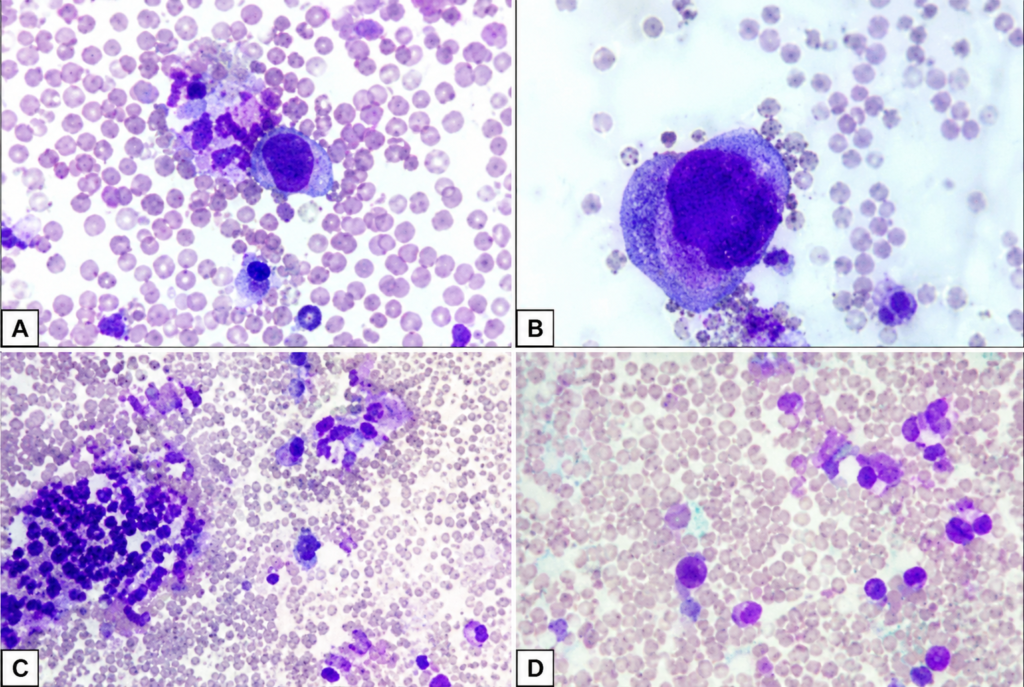
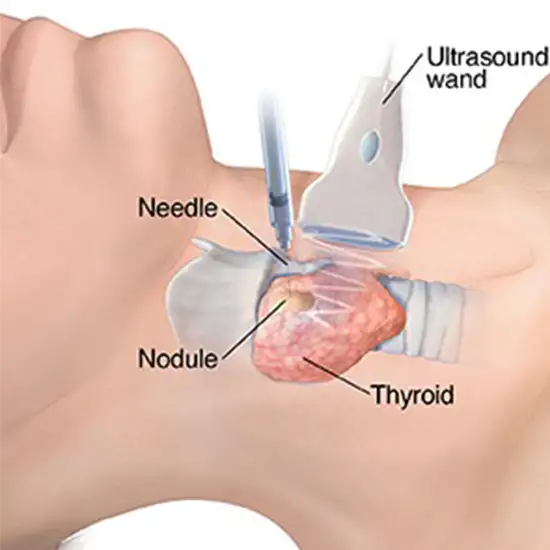
INTRODUCTION :- The use of fine-needle aspiration (FNA), a method of aspiration biopsy cytology, continues to grow throughout the World. Improvements in imaging, computed tomography scan (CT), and ultrasound (USG) have fueled the growth of FNAamong both radiologists and clinicians. The dominant clinical sites for FNA still remain breast, thyroid, and lymph nodes among superficial tissues. After reading this lesson, you will be able to: *describe the techniques of fine needle aspiration cytology                                                                                                              *arrange the clinic for performing FNAC                                                                                                                                                *assist the pathologist in performing FNAC                                                                                                                                          *smears and collect any fluids obtained from FNAC and process appropriately.  CLINICAL SKILLS REQUIRED :- Aspiration biopsy may be indicated whenever there is a palpable tumor mass ora lesion visualized within any organ. For the physician or more specifically for the pathologist performing FNA, some familiarity with general anatomy isessential. For the physician or more specifically for the pathologist performing FNA, some familiarity with general anatomy is essential. For the pathologist performing this biopsy some sharpening of clinical skills, both obtaining a  focused clinical history and performing a physical examination are required. Clinicians performing aspiration biopsy obviously lack this essential ingredient of experience and knowledge of morphology. Despite the recognized participation and value of cytotechnologists to an aspiration biopsy service, the pathologist must be actively involved in the aspiration biopsy, making both the initial and final evaluation of the smears. The Thin-needle Aspiration Method :- Thin needle generally 22, 23, 25, and 27 gauge, are used for the performance of aspiration biopsy, most often 1.5 in. in length. Special situations may dictate shorter needles and even higher gauge. For example, the very small cutaneousmetastasis of breast carcinoma on the chest wall may be sampled more easily with a 27-gauge, 1-in. or even ½-in. needle and with a small, 3.0- to 5.0-mL syringe, approaching the nodule in a plane perpendicular to the skin surface, inthe manner of performing a tuberculin skin test. Radiologists most often use the Chiba needle of 21 and 22 gauge for transthoracic and transabdominal aspirations. If one employs only the thin-needle technique, there are virtually nocomplications, the exceptions being FNA of the thorax (pneumothorax) or some cases of excessive bleeding with transabdominal aspiration biopsy. Basic Equipment :- The basic equipment used for rapid and efficient performance of thin-needle aspiration biopsy are as follows. 1. Cameco Syringe Pistol, Aspir-Gun, or other type aspiration handle; 2. 10 or 20-mL disposable plastic syringe with LuerLok or straight tip, depending on aspiration gun handle size; 3. 22 to 27-gauge, 0.6- to 1.0-mm external diameter disposable needles, 3.8 and 8.8 cm, 15 and 20 cm long, with or without stylus; the needle hub should be clear;  4. Alcohol skin preparation sponges; betadine skin sponges for deeper aspirations, transabdominal, transthoracic, bone (where the cortex is not intact or the periosteum is elevated), or deep soft tissue; 5. Sterile gauze pads 6. Microscopic glass slides with frosted ends; 7. Small vial of balanced salt solution and/or RPMI tissue culture transport media; 8. Suitable alcohol spray fixatives for immediate fixation of wet smears 9. 10 or 20 mL capped tube with 10% neutral buffered formalin for cell-block. 10. Optional vial of local anesthesia, 1-2% lidocaine; topical spray anesthesia for aspirates in children or intraoral aspirates; vials of lidocaine that dentists use for local anesthesia and the dispensing equipment may be useful; 11. Small vial of buffered glutaraldehyde for fixing aspirate for electron microscopy if required or anticipated. A small plastic tray easily holds all the equipment. Majority of the smears are to be air-dried and later stained with a Romanowsky method, the Diff-Quik stain being preferred. Some smears are usually wet-fixed in 95% ethyl alcohol. Aspiration Technique :- To be successful with an aspiration biopsy, it is important to follow the preliminary steps listed here: 1. Review the history of the patient. Determine the clinical problem and its relevance to the lesion to be biopsied. 2. Determine whether the biopsy is justified.  3. Palpate the mass, attempting to determine its location in relation to surrounding structures. Estimate its depth. Decide on the optimal direction of the needle to accomplish the aspiration biopsy. A mass located deeply in tissue in usually best approached perpendicularly to the skin surface. Small and superficially lying tumors are best approached by penetrating theskin at or very close to a horizontal plane, then feeling for the mass with the needle tip. 4. The patient should be placed in a comfortable position for the aspiration biopsy, but the mass must be easily palpable and immobilized during the biopsy. Step 4 is very important for head and neck lesions. The prominence of an enlarged lymph node, or lump, may sometimes depend on whether the patient is supine or erect. The sternocleidomastoid muscle bulk and its close proximity to the cervical lymph nodes require positioning the patient such that the biopsy needle passes through only a minimum of soft tissue and muscle before reaching

Scroll to Top