

“Microbiology Worlds”
Microbiology is the scientific study of microorganisms, which are microscopic living organisms that include bacteria, viruses, fungi, and protozoa. These microorganisms play a crucial role in various biological processes and have a significant impact on human health, agriculture, industry, and the environment. French chemist and Microbiologist Louis Pasteur (1822-1895) coined the term “microbiology”. He used the term to describe his work with organisms at the microscopic level.
The field of microbiology has a rich history that spans several centuries, with important discoveries and developments contributing to our understanding of the microbial world.
Historical Background of Microbiology:-
1.0Aristotle (384-322 BC):-
The concept of spontaneous generation was proposed by various ancient civilizations and philosophers, including the ancient Egyptians and Greeks.
One of the most notable proponents of
spontaneous generation in ancient times was the Greek philosopher Aristotle. He
proposed the idea that certain animals, insects, and even mice could arise
spontaneously from decaying organic matter.
In the Middle Ages, spontaneous generation
was further supported by prominent figures such as Avicenna and Albertus Magnus.
2.0 Anton
van Leeuwenhoek (1632 – 1723):-
Anton van Leeuwenhoek made significant
contributions to the field of microbiology, earning him the title of the “father of microbiology & Protozoology.”
Here are some of his key contributions:
1. Discovery of Microorganisms: In the 17th century, Leeuwenhoek designed powerful single-lens microscopes, enabling him to observe tiny organisms that were previously invisible to the human eye. He was the first to describe and document various microorganisms, including bacteria, protozoa, and other microscopic life forms. In 1676 Observations of bacteria, which he called “animalcules,” provided crucial evidence against the theory of spontaneous generation.
2.. Microscopic Studies of
Biological Samples: Leeuwenhoek examined a wide range of biological samples, including water, dental plaque, and even his own feces.
3. Advancements in Microscopy:
Leeuwenhoek’s innovative improvements to microscope design, including using
high-quality lenses and precise grinding techniques, significantly enhanced the
magnification and clarity of his observations.
4.. The term “microbe” was first used by Sedillot in 1878. The word comes from the Greek words “mikros” meaning “small” and “bios” meaning “life”. It literally means “small life” or “microscopic life”.
3.0 Francesco Redi (1626-1697):-
Francesco Redi was an Italian physician,
naturalist, and poet who made significant contributions to the field of
microbiology, particularly in the context of spontaneous generation, which was
the widely held belief at the time, that living organisms could arise from
non-living matter. Redi conducted a series of experiments that challenged this
idea, providing evidence against spontaneous generation
Francesco Redi experiments:-
In 1668, Redi conducted a famous experiment to test the hypothesis that maggots (the larvae of flies) spontaneously generated from decaying meat. He set up three groups of jars, each containing decaying meat. One group was left open, allowing flies to access the meat and lay eggs, another group was covered with gauze, preventing flies from touching the meat but allowing air to pass, and the third group was completely sealed. Redi observed that maggots only appeared in the open jars, where flies could access the meat, and not in the covered or sealed jars. This experiment provided strong evidence against spontaneous generation, demonstrating that maggots only appeared when flies were able to lay their eggs on the decaying meat.
4.0 John Needham (1713 – 1781):
In 1745, Needham conducted experiments where he heated nutrient broths and then sealed them in flasks. Afterward, he observed the growth of microorganisms in the sealed flasks and concluded that life could arise spontaneously from non-living matter.
5.0 Lazzaro Spallanzani (1729 – 1799):-
Lazzaro Spallanzani Disproving Spontaneous Generation Theory and support Biogenesis Theory.
In 1765, Lazzaro Spallanzani conducted experiments where he boiled nutrient-rich broth in sealed containers, effectively sterilizing the broth. His experiments showed that no microorganisms grew in the sealed flasks, even after long periods, unless they were exposed to air. This demonstrated that living organisms did not arise spontaneously but were introduced to the broth from the external environment.
6.0 Louis
Pasteur (1822 – 1895):
Louis Pasteur made several significant contributions to the field of microbiology, , earning him the title of the “father of Medical microbiology.” He coined the term “microbiology”, Aerobic and Anaerobic.
1. Disproving Spontaneous Generation: Pasteur conducted experiments that disproved the prevailing notion of spontaneous generation
2. Germ Theory of Disease: Germ theory states that microorganisms are the cause of many diseases
3. Pasteurization: Pasteurization is a heat treatment process developed by Louis Pasteur to kill or deactivate harmful microorganisms in food and beverages, such as milk and wine.
4. Vaccination: He developed vaccines against several diseases, including rabies and anthrax.
5.Fermentation: Chemical process by which molecules such as glucose are broken down anaerobically
7.0 John Tyndall:-
John Tyndall was a prominent 19th-century Irish physicist and naturalist who made significant contributions to the field of microbiology, particularly in the areas of sterilization..
1.Tantalization: Tyndall developed a process known as Tantalization, which involves intermittent sterilization through boiling, incubation, and e-boiling. This method was used to kill heat-resistant bacterial spores and became an important technique in microbiology for ensuring the elimination of spore-forming bacteria in culture media and other substances.
2. He Discovered highly resistant bacterial structure, later known as endospore.
8.0 Lord Joseph Lister:-
Lord Joseph Lister, a British surgeon, is
widely regarded as the pioneer of antiseptic surgery. He is also known as father of Antiseptic Surgery.
His contributions to microbiology and healthcare have had a profound impact on the field, here are some key contributions of Lord Joseph Lister in microbiology.
1. Introduction of Antiseptic Techniques
2….Impact on Infection Control
9.0 Robert
Koch (1843 – 1910):
Robert Koch, a German physician
and microbiologist, made significant contributions to the field of microbiology, particularly in the areas of medical microbiology and infectious diseases.
Koch’s Postulates: Koch formulated a set of postulates in the late 19th century that are used to demonstrate the association between a specific microorganism and a particular disease. These postulates are still considered fundamental in the field of microbiology and are used to identify the causative agents of infectious diseases.
Discovery of the Tuberculosis Bacterium (Mycobacterium tuberculosis):
In 1882, Koch identified and isolated the bacterium responsible for tuberculosis, one of the most devastating diseases of his time. This discovery was a landmark achievement and demonstrated the application of his postulates in establishing the link between a specific microorganism and a disease.
Cholera Research: Koch conducted extensive research on cholera, a severe diarrheal disease. He identified Vibrio cholerae as the causative agent of cholera and contributed significantly to understanding its transmission and epidemiology.
Anthrax Studies: Koch studied anthrax, a disease that affects animals and occasionally humans. He identified Bacillus anthracis as the bacterium causing anthrax and developed techniques for its cultivation and study. His work on anthrax was instrumental in understanding the pathogenesis of the disease.
10.0 Fanny Hesse (1850 – 1934):-
Fanny Hesse, the wife of renowned German
physician and bacteriologist Walther Hesse, made a significant contribution to
the field of microbiology. While her husband is often credited with this
discovery,
In 1881, Fanny Hesse suggested using agar-agar as a solidifying agent for nutrient media. She recommended this idea to her husband, Walther Hesse, who was working in Robert Koch’s laboratory. Walther Hesse, following his wife’s suggestion, introduced agar-agar as a solid medium for culturing bacteria. This innovation revolutionized microbiology by providing a reliable and standardized method for growing bacteria in a controlled environment.
11.0 Julius Richard Petri (1852 –
1921)
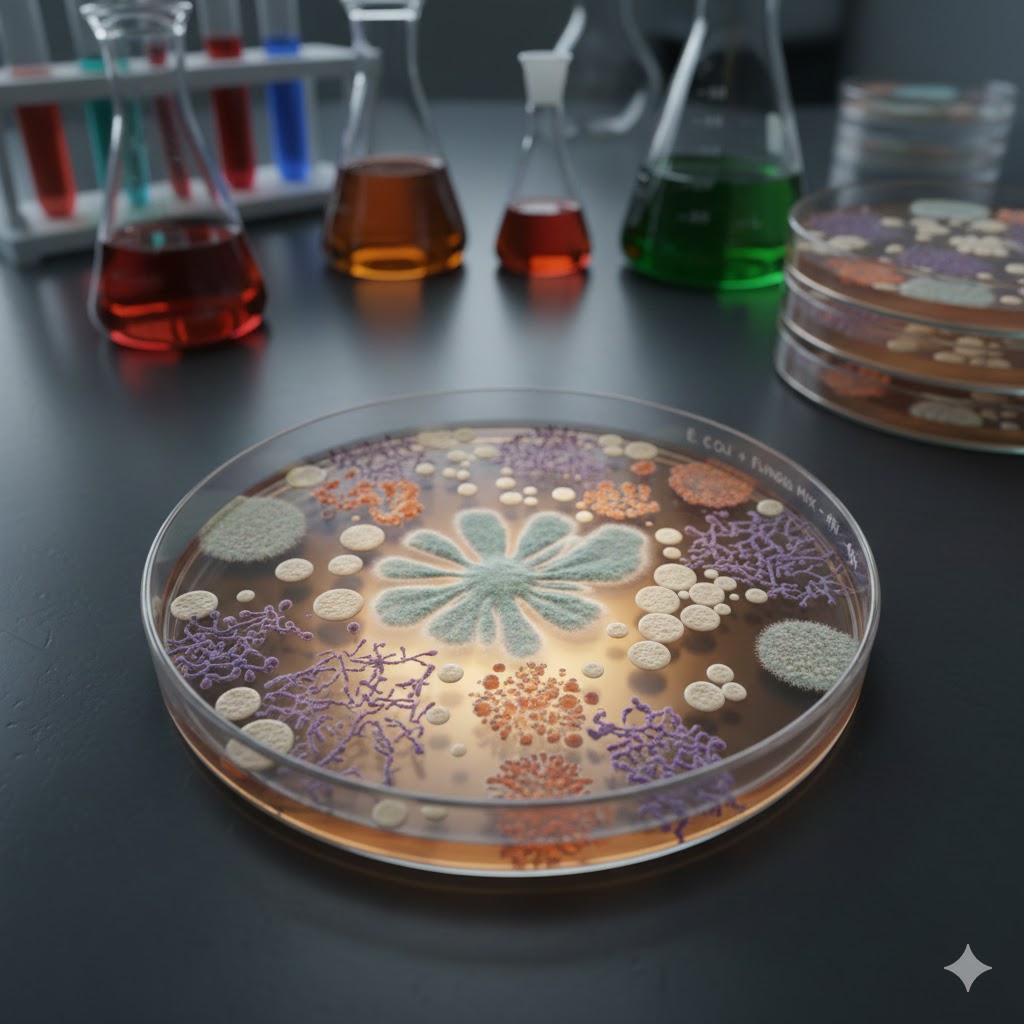
Richard Petri, a German bacteriologist, is best known for his invention of the Petri dish, a shallow cylindrical glass or plastic lidded dish used for the culture of microorganisms. His contribution in inventing the Petri dish had a significant impact on the field of microbiology and laboratory practices.
12.0 Edward Jenner (1749 – 1823)-
Edward Jenner, an English physician and scientist, made a significant contribution to the field of microbiology through his pioneering work
Smallpox Vaccination:-
Jenner’s most notable contribution to microbiology was the development of the smallpox vaccine. In 1796, he conducted a groundbreaking experiment where he inoculated a young boy named James Phipps with cowpox, a disease similar to smallpox but much less severe. After the boy recovered from cowpox, Jenner exposed him to smallpox and observed that he did not develop the disease. This experiment demonstrated that cowpox could protect against smallpox, leading to the development of the smallpox vaccine.
13.0 Alexander Fleming (1881 – 1955):-
Alexander Fleming, a Scottish bacteriologist, made a significant contribution to the field of microbiology with his discovery of the antibiotic substance penicillin. In 1928, Fleming observed that a mold belonging to the Penicillium genus was effective in killing a wide variety of bacteria.
14.0 Paul Ehrlich (1854 – 1915)
Paul Ehrlich was a German physician and
scientist who made significant contributions to the field of microbiology,
immunology, and medicine. Here are some of his notable contributions in
microbiology:
Chemotherapy:
Paul Ehrlich is often referred to as the “father of chemotherapy.” In
the late 19th and early 20th centuries, he conducted extensive research on the
use of chemicals to treat diseases. He developed the concept of a “magic
bullet,” a chemical substance that could selectively target and kill
pathogens without harming the host. This concept laid the foundation for the
development of chemotherapy, a vital branch of medicine used to treat various
diseases, including cancer and microbial infections.
Arsphenamine (Salvarsan):
One of Ehrlich’s most significant achievements was the discovery of the first effective treatment for syphilis, a sexually transmitted disease caused by the bacterium Treponema pallidum. In 1909, Ehrlich and his colleagues developed arsphenamine, also known as Salvarsan, which was the first synthetic
antimicrobial drug used to cure syphilis. This marked a major milestone in the
treatment of bacterial infections.
Ehrlich’s Side-Chain Theory:
Ehrlich proposed the side-chain theory
of immunity, which explained how the immune system recognizes and defends
against specific pathogens. He suggested that cells have side chains
(receptors) that interact with specific antigens on pathogens, triggering an
immune response. This theory laid the groundwork for the understanding of
antibody-antigen interactions, a fundamental concept in immunology and
microbiology.