Histopathology

Histopathology

PHOSPHO-TUNGSTIC-ACID-HEMATOXYLIN STAIN

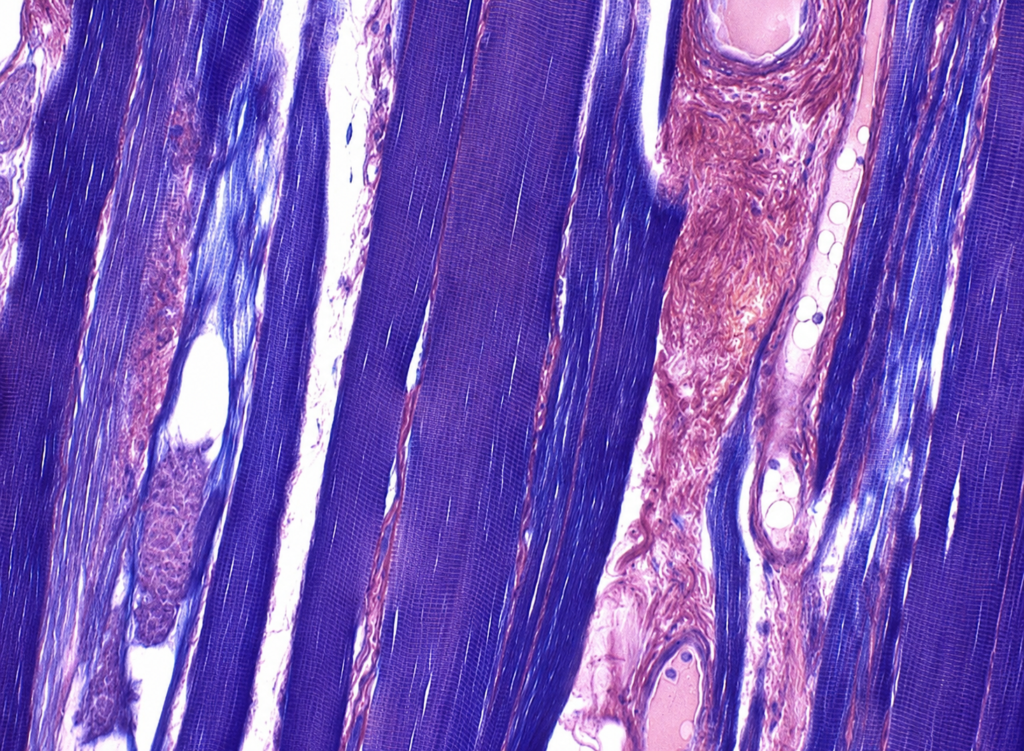
PHOSPHO-TUNGSTIC-ACID-HEMATOXYLIN STAIN:- Aim:- It is a mix of hematoxylin and phosphotungstic acid. Muscle cross  striations, fibrin and glial fibers can be demonstrated by this stain. Principle: The phosphotungstic acid all of the available hematin to form a blue lake pigment. This lake stains the muscle cross striations, fibrin and nuclei. The rest of the phosphotungstic acid stains red brown, components like collagen. Control:- Skeletal muscle, cardiac muscle, fibrin, cerebral cortex for glial fibers. Reagents:- Hematoxylin                                           1gmPhosphotungstic acid                          20gmDistilled water                                       100ml Dissolve the solid ingredients in separate portions of the water, the hematoxylin with aid of gentle heat. When cool mix it. Allow the mixture to ripen or add 177gm of potassium permagnate for immediate use. Properly ripened stain is rich purple in color and opaque. 0.25% potassium permagnate:- Potassium permagnate                     0.25gmDistilled water                                    100ml  5% oxalic acid:- Oxalic acid                                         5gmDistilled water                                  100ml Procedure:-  1. Dehydrate and bring section to water.2. Oxidize in potassium permagnate for 5 to 10 minutes. Discard the solution.3. Wash in water.4. Bleach in oxalic acid for 5 minutes or until the sections are colorless.5. Wash thoroughly. Rinse in distilled water.6. Put PTAH stain for 12 to 24 hour.7. Transfer the section into 95% alcohol, followed by absolute alcohol.8. Dehydrate, clear in xyline and mount in DPX. Result:- Striated muscle fibers                          blue Astrocytes                                              blueFibrin                                                       blueNuclei                                                      blueCytoplasm                                              brown redCollagen                                                 brown pink

Histopathology

Histopathology Spotlight: The Von Kossa Stain

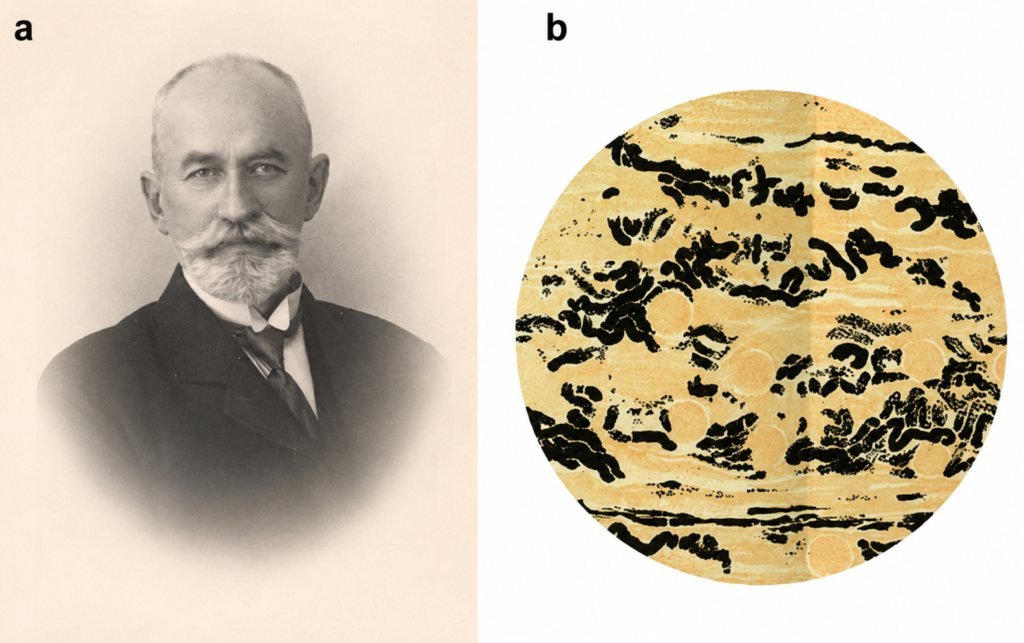
VON-KOSSA STAIN:- Aim: To demonstrate calcium in paraffin sections. Principle: Tissue sections are treated with silver nitrate solution, the calcium is reduced by the strong light and replaced with silver deposits, visualized as metallic silver. Reagents:- 5% silver nitrate solutionSilver nitrate                       25gmDistilled water                    500ml Mix well, pour into acid bottle. Store in refrigerator (stable for one year). Control: Positive control Procedure:- Bring sections to water. One section works as negative control.Immerse one section in citrate buffer (pH4.5) for 20 minutes to removecalcium if it is present.Wash both the slides in distilled water.Put 5% silver nitrate solution.Expose the slides to bright sun light for 10 to 20 minutes.Wash in distilled water several times.Treat with 5% sodium thiosulfate for 2 to 3 minutes.Wash well in water.Counter-stain with neutral red or Van Gieson stain.Dehydrate, clear in xylene and mount in DPX. Result:- Calcium                             Dark green or blackBack ground                     Depends on counter stain. Note: Silver nitrate is tumorogenic and oxidizer. It is strong skin and eye irritant.

Histopathology

MASSON FONTANA SILVER STAINING

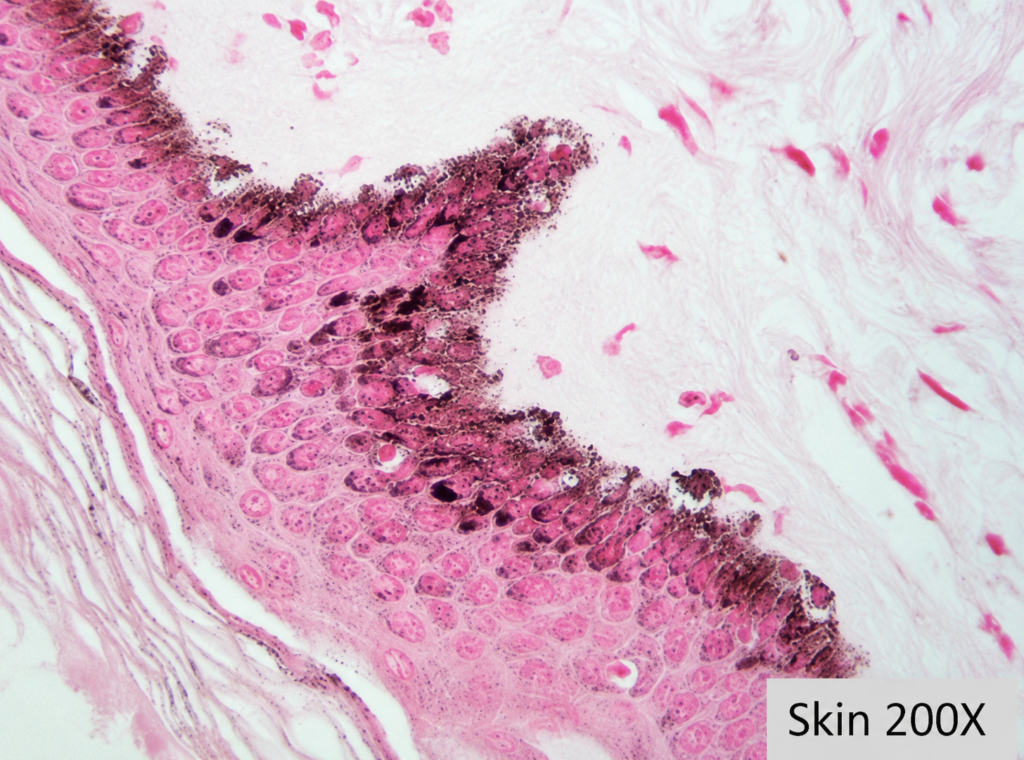
Masson fontana silver staining:- Aim: To demonstrate the presence of argentaffin granules. Principle: Granules in argentaffin cells reduces ammoniacal silver solution to metallic silver. This histo-chemical reaction is due the presence of 5 hydroxy tryptamine(5HT).The 5HT must be converted to tetrahydri-carbolin derivativeby formalin fixation before reactions can be demonstrated. Control: skin or any positive tissue Reagents  1. Stock 10% silver nitrate solution:- Silver nitrate A R grade        10gmDistilled water                       100ml 2. Fontana masson silver nitrate solution To 50 ml of 10% silver nitrate solution, add one or two drops of ammonium hydroxide. The first drop itself will cause a brown precipitate. Continue to add ammonia solution drop by drop just until the solution is clear. From stock 10% silver nitrate solution, add a little more solution drop by drop dissolving the initial precipitate and stop when a permanent faint turbidity is attained. Let it stand overnight to settle. Before use, decant silver solution, filter and dilute with an equal amount of distilled water. Prepare the fresh solution each time. 3. Gold chloride solution:- Gold chloride                      1gmDistilled water                    500mlKeep the solution in refrigerator. 4.  Sodiumthiosulfate                              5gm     Distilled water                                     100ml Procedure:- 1. Bring sections to distilled water2. Treat with Fontana silver nitrate solution for 1 hour at 56-58IN0Cammoniacal silver solution in a closed jar 15 mins3. Check microscopically and repeat step 2 if necessary                                                                                                                  4. Wash well in distilled water5. Tone with gold chloride 2 minutes6. Wash well with distilled water7. Fix in 2% aq sodium thiosulphate 2 minutes8. Wash well with distilled water9. Counter-stain with neutral red stain 1 minutes10. Rinse in distilled water11. Rapidly dehydrate well in absolute alcohol, clear and mount. Results:- Melanin                                                 blackArgentaffin cell granules                    blackSome lipofuscins                                blackChromaffin                                           blackNuclei                                                    red Note:- *Formalin fixation is essential for argentaffin substances, but not critical formelanin.*A known positive control section must be used to ensure correct demonstration  has been achieved.*Time of the ammoniacal silver impregnation depends upon the tissue component to be demonstrated. At room         temperature, melanin will require 12 hrs, argentaffin 24 hrs. At 60°C melanin blackens within 20 minutes, argentaffin     requires approximately 40 minutes. Excessive heat over long periods may cause the silver solution to precipitate, give   non-specific background deposits, and cause precipitation of silver on connective tissue fibres.*Ammoniacal silver solutions can be explosive when allowed to dry. Immediately after use neutralise the silver solution with saturated sodium chloride and discard.

Histopathology

Prussian Blue Staining in Histopathology

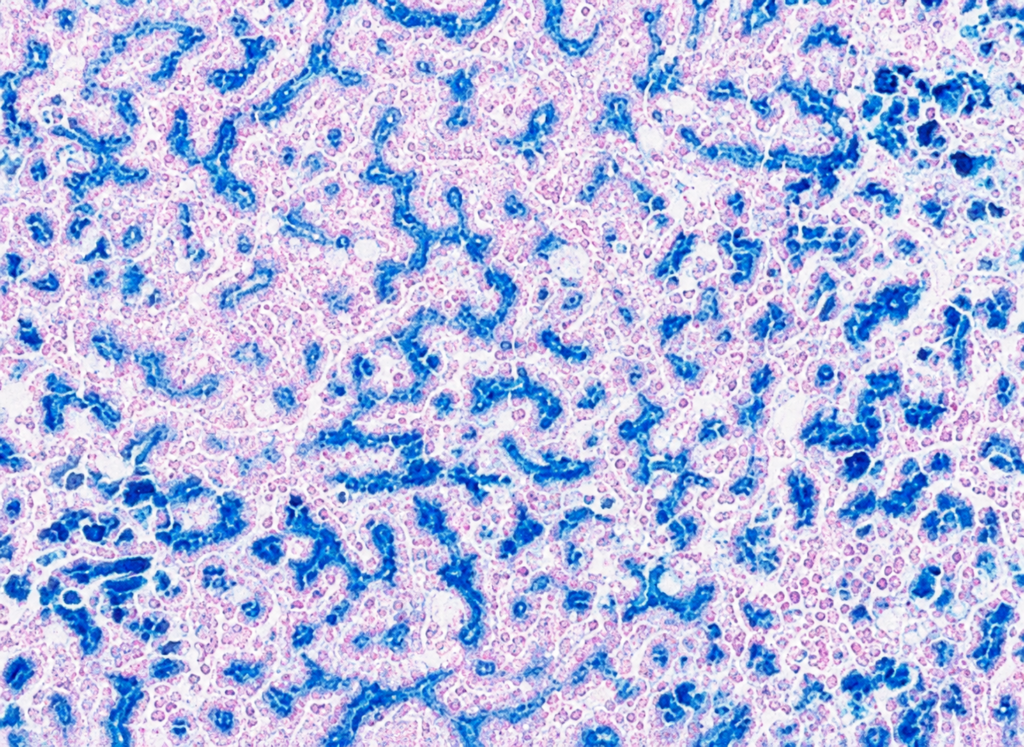
Prussian Blue Staining:- Aim: To demonstrate the presence of iron in tissues. Principle: The ferric iron in tissue combines with potassium ferro cyanide to form ferric-ferro cyanide. This compound has bright blue color (prussian blue). Prussian blue precipitate is insoluble, hence it can be combined with other staining methods. Control: Hemosiderin positive tissue Reagents:- 1. 2%Hydrochloric acid concentrated hydrochloric acid               2ml Distilled water                                            98ml 2. 2% potassium ferrocyanide Potassium ferrocyanide                         2mg Distilled water                                         100ml 3. 0.15% Basic fuchsin Basic fuchsin                                           0.15g 50% ethyl alcohol                                   100ml Procedure:- 1. Bring section to water. 2. Mix equal volume of 2% potassium ferrocyanide and 2% hydrochloric acid. Pour the solution on the slide and keep it for 20 minutes. 3. Wash thoroughly with water. 4. Counter-stain with basic fuchsin or eosin for 30 seconds. 5. Wash with water, dehydrate, clear in xylene and mount in DPX. Result:- Ferric iron                            blue Nuclei                                  red Other tissues                     shades of pink Note: All traces of ferrocyanide should be removed before it is counter-stained, otherwise a dark red fine precipitate will form.

Histopathology

VERHEOFF STAIN FOR COLLAGEN

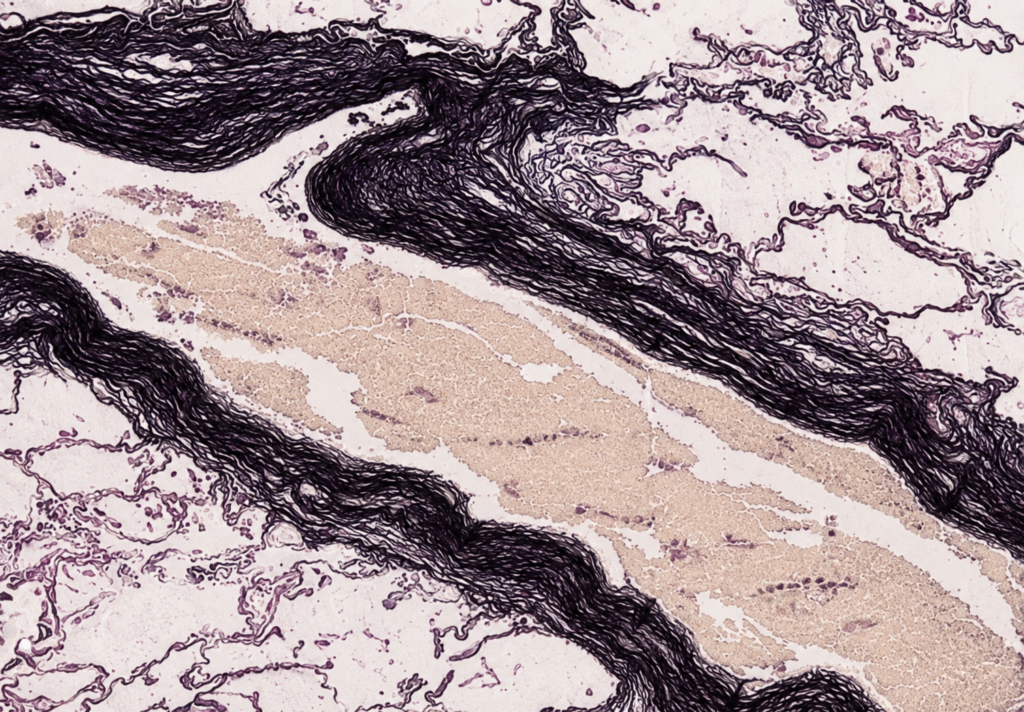
Verheoff stain for collagen:- Aim:– To identify collagen and elastic tissue in the same section. Principle: In the presence of ferric salts (oxidizers) elastic fibers stain withhematoxylin, along with the nuclei. Control: skin Reagents1. Verhoeff’s solution: Freshly prepared solution gives best result. Solution A Hematoxylin                                         5 gmAbsolute alcohol                                100ml Dissolve hematoxylin with the aid of heat, cool and filter Solution BFerric chloride                        10gmDistilled water                                          100ml Solution C Iodine                                            2gmPotassium iodide                        4gmDistilled water                            100ml Add 8ml of solution B into 20ml of solution A and then add 8ml ofsolution C 2. 2% Ferric chloride solution3. 1% aqueous solution of acid fuchsin4. Saturated aqueous solution of picric acid5. Van Gieson’s stain Acid Fuchsin 1% (aqueous)                                                    5mlSaturated aqueous solution of picric acid                           100ml 6. Sodium thiosulphate, 5% (aqueous solution) Procedure 1. Deparaffinize and take the section to water.2. Stain in Verhoeff solution until the section is black.3. Wash in distilled water.4. Differentiate in 2% Ferric chloride with agitation for few minutes. Check differentiation by rinsing in distilled water. Under      the microscope the elastic fibers and nuclei should stain black and rest of the tissue should be light grey.5. Put in 5% sodium thiosulphate for 1 minute.6. Wash in tap water for 5minutes.7. Counter-stain with Van Gieson’s stain for 1-2 minutes.8. Differentiate in 95% alcohol.9. Dehydrate in absolute alcohol two times.10. Clear in xylene and mount in DPX. Result:- Elastic fibres                                  blackNuclei                                              blackCollagen                                          red Other tissues                                  yellow Note: It is a rapid method but fails to demonstrate fine fibers

Histopathology

Masson’s Trichrome Stain

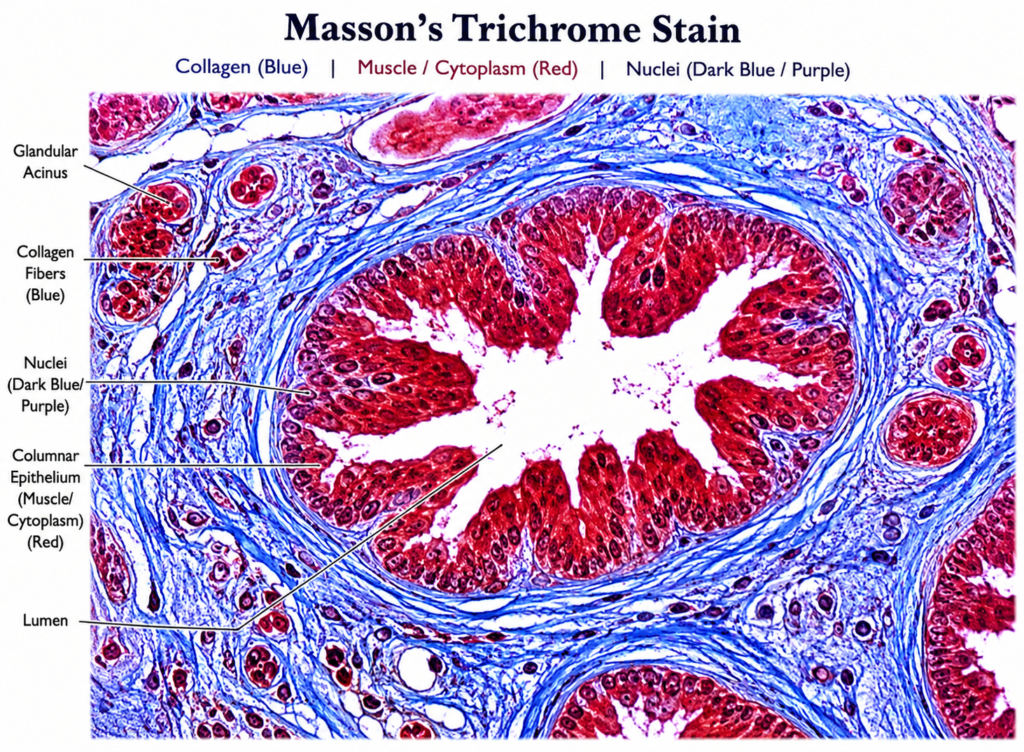
STAINING METHODS TO DEMONSTRATE SPECIAL/ SPECIFIC TISSUES:- Introduction:- Biological tissue has little inherent contrast in either the light or electron microscope. Staining is employed to give both contrast to the tissue as well as highlighting particular features of interest. Where the underlying mechanistic chemistry of staining is understood, the term histochemistry is used. TRICHROME STAIN:- A combination of three different dyes is used to identify different cells and tissue elements. Aim:-To identify the collagen and muscle fibers in a histological section. Reagents:-1. Bouin’s solution Saturated picric acid                               75 mlFormaldehyde (37-40%)                         25 mlGlacial acetic acid                                     5 ml *Mix all the reagents well. This solution improves the trichrome stain  quality. 2. Weigert’s iron hematoxylin stock solution Stock solution A Hematoxylin                                                  1gm95% alcohol                                                  100 ml Stock solution B  29% Ferric chloride in water                        4ml Distilled water                                               100 ml                                                                                                                                      Hydrochloric acid, concentrated                 1.0 ml 3. Weigert’s iron hematoxylin working solution – Mix equal parts of solution  A and B (This solution works for three months.) 4. Biebrich scarlet acid fuchsin solution. 1% Biebric Scarlet-Acid Fuchsin solution (aqueous solution)                  90 ml1% Acid Fuchsin (Aqueous)                                                                           10 ml1% Glacial acitic acid                                                                                        1 ml 5. Phosphomolybdic acid-Phosphotungstic Acid Solution. 5% Phosphomolybdic Acid                                       25ml5%phosphotungstic Acid                                          25ml 6. Aniline blue solution Aniline blue solution                                    2.5gmGlacial acitic acid                                         2mlDistilled water                                              100 ml Control:  skin. Procedure:- 1. De-paraffinize and rehydrate through graded alcohol. 2. Wash in distilled water. 3. Fix the slides in Bouin’s solution for one hour at 560C. 4. Rinse in running tap water for 5 to 10 minutes to remove yellow color. 5. Stain in Weigert’s Iron Hematoxylin solution for 10 minutes. 6. Rinse in warm tap water for 10 minutes. 7. Wash in distilled water.                                                                                                                                                                              8. Put Biebric Scarlet Acid Fuchsin solution for 10 to 15 minutes. 9. Wash in distilled water. 10. Differentiate in Phosphomolybdic-Phosphotungstic Acid solution for 10 to     15 minutes.11. Put the sections in Aniline blue solution for 5-10 minutes. 12. Rinse in distilled water briefly. 13. Differentiate in acetic acid solution for 2-5 minutes. 14. Wash in distilled water.  15. Dehydrate quickly through 95% alcohol and absolute alcohol. (These steps will wipe off Biebric Scarlet acid Fuchsin staining)16. Clear in xyline and mount in DPX. Result:- Glycogen, muscle fibre and keratin               red Collagen and bone                                           blue/green Nuclei                                                                 brown/black Note: This stain can be used on frozen sections also.

Histopathology

IMMUNO-HISTOCHEMISTRY

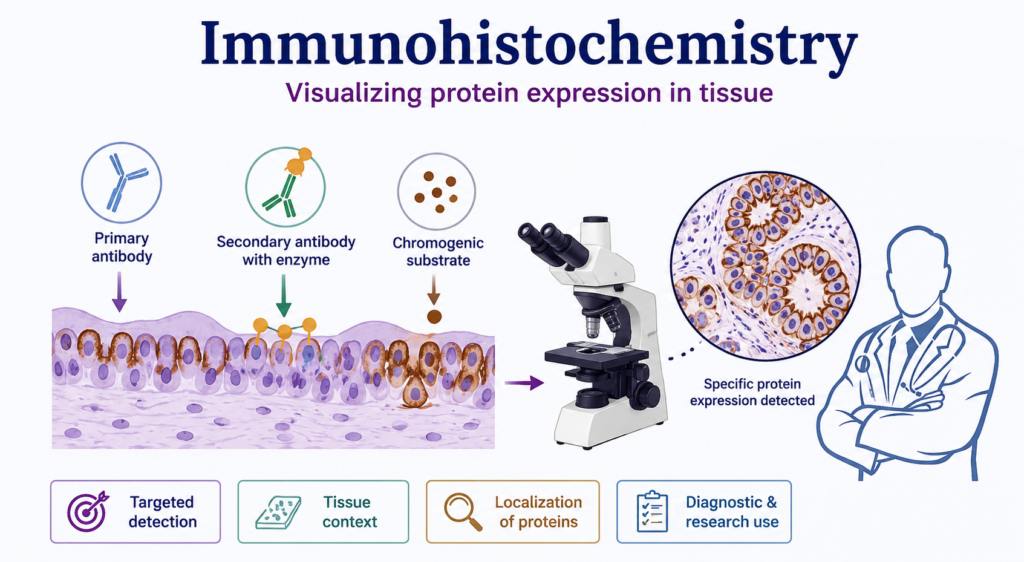
INTRODUCTION:- The gradual development of immunohistochemical methodologies over the past decades has allowed the identification of specific or highly selective cellular epitopes in formalin-fixed paraffin-embedded tissues with an antibody and appropriate labeling system. IMMUNOHISTOCHEMISTRY:- Immunohistochemistry is a technique for identifying cellular or tissue constituents (antigens) by means of antigen-antibody interactions, the site of binding can be identified by direct labeling of the antibody or by use of a secondary labeling method.  or Immunohistchemistry(IHC) is a laboratory technique that uses antibodies to selectively detect specific antigens(proteins) in tissue samples. Antigen-Antibody binding:- The amino acid side-chains of the variable domain of an antibody form a cavity which is complementary to a single type of antigen like a lock and key. The precise fit required explains the high degree of specificity seen in antigen antibody interaction. Affinity:- is the 3 dimensional fit of the antibody to its specific antigen and is a measure of the binding strength between antigen and antibody. Avidity:- is the functional combined strength of an antibody with its antigen. An antibody against more than one epitope of an antigen will bind more strongly to it. Antibody specificity:- is the characteristic of an antibody to bind selectively to a single epitope or an antigen. Sensitivity:- is the relative amount of an antigen that a technique is able to detect. Primary reagents:- Polyclonal antibodies:- they are produced by immunizing an animal with a purified specific molecule (immunogen) bearing the antigen of interest. The animal will mount a humoral response to the immunogen and the antibodies so produced can be harvested from animal blood. The serum is polyclonal in nature as it comprises of a mixture of antibodies to different epitopes present on the antigen. Some of these antibodies may cross react with other molecules and produce nonspecific staining. Monoclonal antibodies:- Hybridoma method is used to produce these antibodies and it combines the ability of a plasma cells or transformed B lymphocytes to produce a specific antibody with the in vitro immortality of a neoplastic myeloma cell line. With the technique of cloning, this cell can be grown andmultiplied in cell culture to unlimited numbers and can produce large supply of particular antibodies Labels:- Enzymes are the most widely used labels in IHC, and incubation with a chromogen using a standard histochemical method produces a stable, colored reaction end-product suitable for the light microscope. Horseradish peroxidase is the most widely used enzyme, and in combination with the most favored chromogen, i.e. 3,3’- diaminobenzidine tetrahydrochloride (DAB) it gives a crisp, insoluble, stable, dark brown reaction end-product. Immunohistochemical Methods:- Methods:-There are numerous IHC staining techniques that may be used, the selection should be based on parameters such as type of specimen, type of preparation (frozen or paraffin section) and sensitivity required. Traditional Direct technique: the primary antibody is conjugated directly to the label. The conjugate may be either a fluorochrome or enzyme. The labeled antibody reacts directly with the antigen. The technique is quick and easy to use but provides little signal amplification and is less sensitive, so its used to demonstrate immunoglobulins and complements in frozen sections of skin andrenal biopsies. New direct technique (Enhanced polymer one step staining method):- available under the commercial name of EPOS. A large number of primary antibodies and peroxidase enzymes are attached to a dextran polymer ‘backbone hence increasing the signal amplification. Two step indirect technique: A labeled secondary antibody directed against the immunoglobulin of the animal species in which the primary antibody has been raised visualizes an unlabeled primary antibody. It is more sensitive than direct technique. Antigen retrieval:- The demonstration of many antigens can be significantly improved by the pretreatment with the antigen retrieval reagents that break the protein cross-links formed by formalin fixation and thereby uncover hidden antigenic sites. It can be done by enzymatic method and/or heat induced. The most popular enzymes employed today are trypsin and protease. The enzymatic digestion breaks down formalin cross-linking and hence the antigenic sites are uncovered. Heat based antigen retrieval methods have brought great improvement in IHC. The theories suggested for the role of heat pretreatment include: heavy salts act as protein precipitant forming insoluble complexes with polypeptides. Another theory is that heat mediated retrieval removes the weaker Schiff bases formedduring formalin fixation. The different methods of heat based antigen retrieval include:- 1. Microwave antigen retrieval2. Pressure cooker antigen retrieval3. Steamer4. Water bath Microwave antigen retrieval with a non toxic citrate buffer at pH 6.0 has demonstrated results equivalent to frozen sections. Most domestic microwave ovens are suitable for antigen retrieval . Uneven heating and the production of hot-spots have been reported, but using 400-600 ml of buffer in a suitably sized container can minimize these problems. Pressure cooker has been suggested as an alternative to microwave oven. Batch variation and production of hot and cold spots in microwave can be overcome. Pressure cooker is said to be more uniform in heating. Also the increased. temperature (120°C) attained under pressure is an advantage in unmasking antigens. Buffers used for antigen retrieval:- *Sodium Citrate Buffer (10mM Sodium Citrate, 0.05% Tween 20, pH 6.0)Tri-sodium citrate (dihydrate) 2.94 gDistilled water 1000 mlMix to dissolve. Adjust pH to 6.0 with 1N HCl.Add 0.5 ml of Tween 20 and mix well. Store at room temperature for 3months or at 4°C for longer storage. *1 mM EDTA, adjusted to pH 8.0EDTA 0.37 gDistilled water 1000 mlStore at room temperature for 3 months. *Tris-EDTA Buffer (10mM Tris Base, 1mM EDTA Solution, 0.05% Tween20, pH 9.0)Tris 1.21 gEDTA 0.37 gDistilled water 1000 ml (100 ml to make 10x, 50 ml to make 20x)Mix to dissolve. pH is usually at 9.0.Add 0.5 ml of Tween 20 and mix well. Store at room temperature for 3months or at 4°C for longer storage. IHC staining:- All incubations should be carried out in a humidified chamber to avoid drying of the tissue. Drying at any stage will lead to non-specific binding and ultimately high background staining. A shallow, plastic box with a sealed lid and wet tissue paper in the bottom is an adequate chamber,

Histopathology, Uncategorized

Electron Microscope Diaries

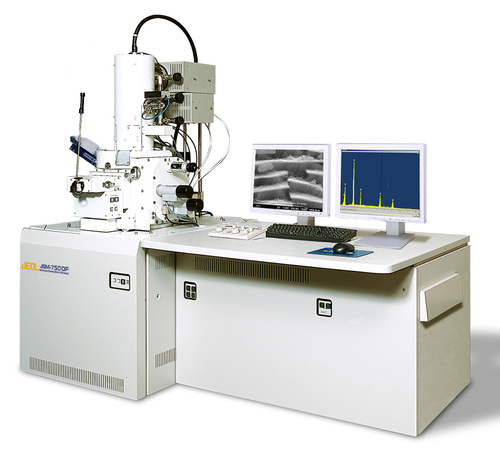
INTRODUCTION:- Electron Microscopes were developed due to the limitations of Light Microscopes which are limited by the physics of light to a resolution of about 0.2 micrometers. In the early 1930’s this theoretical limit had been reached and there was a scientific desire to see the fine details of the interior structures of organic cells (nucleus, mitochondria…etc.). This required 10,000x plus magnification which was just not possible using Light Microscopes. The Transmission Electron Microscope (TEM) was the first type of Electron Microscope to be developed and is patterned exactly on the Light Transmission Microscope except that a focused beam of electrons is used instead of light to “see through” the specimen. The electron microscope was invented in 1931 by Germans Ernst Ruska and Max Knoll. Ernst Ruska later received Nobel Prize for his work in 1986. Conventional transmission electron microscope (TEM) today can achieve a resolution of 0.05nm. TRANSMISSION ELECTRON MICROSCOPE :- The original form of electron microscope, the transmission electron microscope(TEM) is the direct counterpart of conventional light microscope. It uses a highvoltage electron beam to create an image. The electron beam is produced by anelectron gun, commonly fitted with a tungsten filament cathode as the electron source. The electron beam is accelerated by an anode typically at +100 keV (40 to 400 keV) with respect to the cathode, focused by electrostatic and electromagnetic lenses, and transmitted through the specimen that is in part transparent to electrons and in part scatters them out of the beam. When it emerges from the specimen, the electron beam carries information about the structure of the specimen that is magnified by the objective lens system of the microscope. The spatial variation in this information (the “image”) may be viewed by projecting the magnified electron image onto a fluorescent viewing screen coated with a phosphor or scintillator material such as zinc sulfide. Alternatively, the image can be photographically recorded by exposing a photographic film or plate directly to the electron beam. It is the direct counterpart of conventional light microscope. The most obvious differences between TEM and light microscope are the: the ‘light’ source, the form of the lenses and the manner in which image is formed. The Electron beam:- This is the source of ‘light’ in an EM, which can be generated by thermionic emission from a tungsten filament using an electron gun. Electrons are produced by passing a heating current through the filament.In some microscopes, the beam can be generated by field emission. Electromagnetic Lenses:– The lenses in EM are electromagnetic coils. To focus an electronic beam into a given plane, the current passing through the coil is changed. Thus the focal length of these so called lenses can be infinitely variable. Image formation:-  In a light microscope, image formation occurs due differential absorption of light rays. In EM, the image is formed partly by differential absorption and partly by scattering. Scanning Electron Microscope (SEM):- The SEM is an instrument that produces a largely magnified image by using electrons instead of light to form an image. A beam of electrons is produced at the top of the microscope by an electron gun. The electron beam follows a vertical path through the microscope, which is held within a vacuum. The beam travels through electromagnetic fields and lenses, which focus the beam down toward the sample. Once the beam hits the sample, electrons and X-rays are ejected from the sample. Detectors collect these X-rays, backscattered electrons, and secondary electrons and convert them into a signal that is sent to a screen similar to a television screen. This produces the final image. Tissue Processing for Electron microscope:- To study the specimen with electron microscope, a series of processing steps are required whichare similar but different to light microscopy. The steps involved are fixation,dehydration, embedding, cutting and positive staining with heavy metals. Specimen Handling & Fixation:- The specimen must be exposed to fixative as soon as possible after interruption of blood supply. Slices of tissues about 1-2 mm thick should be cut andtransferred to a container containing fixative. The most popular method of fixation used is double fixation. It involves primary fixation in an aldehydefollowed by secondary (post) fixation in osmium tetroxide. Glutaraldehyde is the most popular aldehyde for fixation of tissues for electron microscopy as itreacts rapidly with proteins and stabilises structures by cross-linking before there is any opportunity for extraction by the buffer . Hence more ground substance of the cytoplasm (glycogen) and of the extracellular matrices is preserved. But, glutaraldehyde alone is not an adequate fixative, since certain cell components especially lipids, are not fixed and may be extracted during dehydration, therefore secondary fixation is required using osmium tetroxide. Depth ofpenetration of glutaraldehyde is 2 – 3 mm / hour and of osmium tetraoxide is 1mm/hour. Dehydration:- The aim of dehydration is to remove all the free water in the fixed tissue and replace it with a solution miscible(soluble) with embedding medium. We usually use organic solvents like methanol, ethanol or acetone. It starts with distilled water to 40% ethanol and then through a series of increasing concentrations of ethanol to 100% ethanol. Protocol for dehydration in ethanol:- 1. 40% ethanol, 5 min.  2. 70% ethanol, 10 min. 3. 90% ethanol, 10 min  4. 100% ethanol, 3 x 10 min. 5. If ethanol is miscible (soluble) with the embedding medium then tissue is directly transferred to it. Otherwise, another transitional fluid may be required.Epoxypropane is most commonly used transitional fluid. Embedding Media:- The embedding media for EM are resins, polyester resins and methacrylates. For general electron microscopy epoxy resins have most properties required. Epoxy resin  Characteristics:- (a) Polyaryl ethers of glycerol with terminal epoxy groups. (b) Transparent yellowish resins which range from viscous liquids to fusiblesolids.  (c) Require addition of curing agents to convert them to a tough, extremely adhesive and highly inert solid. Polymerization accomplished by the addition of various bifunctional setting groups which link with the resinto produce a three-dimensional structure. Embedding :- The embedding is carried out in polythene capsules

Histopathology, Uncategorized

The Art of Exhibition (museum magic)

Introduction:- All teaching hospitals and colleges of Pathology have Museums which serve many functions: permanent exhibition of common specimen for undergraduate and postgraduate teaching purposes, illustrating specimens of rarity, permanent source of histologic material and for gross and microscopic photography. BASIC MUSEUM TECHNIQUES :- Any specimens for museum are handled by following steps:- 1. Reception 2. Preparation 3. Fixation 4. Restoration 5. Preservation 6. Presentation Reception of the Specimen:- Any specimen received in the museum should be recorded in a Reception book and given a number followed by year (e.g. 32/2013). This number will stay with specimen even after it is catalogued in its respective place. This number is written on tie-on type label in indelible (permanent) ink and is firmly attached or stitched to the specimen. The reception book should contain all necessary information about the specimen. Preparation of the specimen:- An ideal specimen is received fresh in unfixed state. However, it is mostly obtained from pathology laboratory after being examined, thus will already be formalin fixed. If planning to use a specimen for museum, part of it can be kept without disturbing for museum, e.g. in kidney it can be bisected and one half kept aside for museum.  Fixation of the specimen:- The objective of fixation is to preserve cells and tissue constituents in as close a life-like state as possible and to allow them to undergo further preparative procedures without change. Autolysis and bacterial decomposition and stabilizes the cellular and tissue constituents. The fixatives used in museums all over the world are based on formalin fixative technique, and are derived from Kaiserling technique and his modifications. its recommended that the initial fixation be a neutral formalin (KI) solution and then transferred to a final preserving glycerin solution (KIII) for long term display. Colour preservation is also maintained with these solutions. Kaiserling’s Technique:- Fixation of specimen:- The specimen needs to be kept in a large enough container which can accommodate specimen along with 3-4 times volume of fixative. Specimen is stored in the Kaiserling I Solution for 1 month depending on the size of the specimen. The specimen should not rest on bottom or an artificial flat surface will be produced on hardening due to fixation. Kaiserling I Solution:- Formalin                                    1L Potassium acetate                  45 g Potassium nitrate                    25 g. Distilled water                          Make up to 10 litres. Restoration of specimen:- It is required to restore the specimens, as they lose their natural color on fixation.The recommended method is the Kaiserling II method. It involves removing the specimen, washing it in running water and transferring to 95% alcohol for 10 minutes to 1hour depending on the size of specimen. The specimen is then kept and observed for color change for around 1- 1.5 hrs. After this step, specimen is ready for preservation. Kaiserling II Solution:- Alcohol 95% *Store specimen in this solution for 10 minutes to 1 hour depending on size of specimen. Rejuvenator Solution:- Pyridine                                          100 ml Sodium hydrosulphite                 100 gm Distilled water                               4 liters *Formalin decreases the natural colour of the specimen. However, rejuvenator solution restores the colour. Preservation of specimen:- The recommended solution for this step is Kaiserling III. This is the final solution in which the specimen will remain for display. It is based on glycerine solution. Kaiserling III Solution:- Potassium acetate          1416 g. Glycerine                            4 liters Distilled water                   make up to litres Thymol crystals added to prevent moulds. * Leave solution to stand for 2 – 3 days before using to ensure proper mixing of chemicals. Add 1% pyridine as stabilizer. This solution acts as permanent fixative. This solution easily turns yellowish and needs to be replaced to restore colour of the specimen. The specimen will initially float to surface but later sink to bottom. Presentation of the Specimen:- Initially all museum specimens were mounted in cylindrical jars and sealed with sheep bladder walls. Later they were replaced by rectangular glass jars. They were better than cylindrical ones as the flat surfaces afforded a clear view of specimens without any distortion. They are covered by rectangular glass plates. These jars can be purchased readymade or assembled in museum itself, as per need. Nowadays, Perspex jars are also available, which are lighter than glass jars. However, they cannot be used to store specimens fixed in alcohol or methyl salicylate as they react with plastics. Mounting the Specimens:-  To support the specimen within its jar, it is attached to the specimen plate or rectangular bent glass rods. It can be done by tying the specimen with nylon threads. Double knots should be made by threads, on the specimen surface. -:Museum specimens of cardiovascular system:- l

Histopathology

IMMUNO HISTOCHEMISTRY

INTRODUCTION:- The gradual development of immunohistochemical methodologies over the pastdecades has allowed the identification of specific or highly selective cellularepitopes in formalin-fixed paraffin-embedded tissues with an antibody and appropriate labeling system  IMMUNOHISTOCHEMISTRY :- Immunohistochemistry is a technique for identifying cellular or tissue constituents (antigens) by means of antigen-antibody interactions, the site of binding can be identified by direct labeling of the antibody or by use of a secondary labeling method. Antigen-Antibody binding :- The amino acid side-chains of the variable domain of an antibody form a cavity which is complementary to a single type of antigen like a lock and key. The  precise fit required explains the high degree of specificity seen in antigen antibody interaction. Affinity:- is the 3 dimensional fit of the antibody to its specific antigen and is a measure of the binding strength between antigen and antibody. Avidity: is the functional combined strength of an antibody with its antigen. An antibody against more than one epitope of an antigen will bind more strongly to it. Antibody specificity: is the characteristic of an antibody to bind selectively to a single epitope or an antigen. Sensitivity: is the relative amount of an antigen that a technique is able to detect. Primary reagents :- Polyclonal antibodies: they are produced by immunizing an animal with a purified specific molecule (immunogen) bearing the antigen of interest. The animal will mount a humoral response to the immunogen and the antibodies so produced can be harvested from animal blood. The serum is polyclonal in nature as it comprises of a mixture of antibodies to different epitopes present on the antigen. Some of these antibodies may cross react with other molecules and produce nonspecific staining. Monoclonal antibodies:-  Hybridoma method is used to produce these antibodies and it combines the ability of a plasma cells or transformed B lymphocytes to produce a specific antibody with the in vitro immortality of a neoplastic myeloma cell line. With the technique of cloning, this cell can be grown and multiplied in cell culture to unlimited numbers and can produce large supply of particular antibodies. Labels:-  Enzymes are the most widely used labels in IHC, and incubation with a chromogen using a standard histochemical method produces a stable, colored reaction end-product suitable for the light microscope. Horseradish peroxidase is the most widely used enzyme, and in combination with the most favored  chromogen, i.e. 3,3’- diaminobenzidine tetrahydrochloride (DAB) it gives a crisp, insoluble, stable, dark brown reaction end-product. Immunohistochemical Methods:- Methods There are numerous IHC staining techniques that may be used, the selection should be based on parameters such as type of specimen, type of preparation (frozen or paraffin section) and sensitivity required. Traditional Direct technique: the primary antibody is conjugated directly to the label. The conjugate may be either a fluorochrome or enzyme. The labeled antibody reacts directly with the antigen. The technique is quick and easy to use but provides little signal amplification and is less sensitive, so its used to demonstrate immunoglobulins and complements in frozen sections of skin and renal biopsies. New direct technique (Enhanced polymer one step staining method): available under the commercial name of EPOS. A large number of primary antibodies and peroxidase enzymes are attached to a dextran polymer ‘backbone’, hence increasing the signal amplification. Two step indirect technique: A labeled secondary antibody directed against the immunoglobulin of the animal species in which the primary antibody has been raised visualizes an unlabeled primary antibody. It is more sensitive than direct technique. Antigen retrieval :- The demonstration of many antigens can be significantly improved by thepretreatment with the antigen retrieval reagents that break the protein cross-linksformed by formalin fixation and thereby uncover hidden antigenic sites. It canbe done by enzymatic method and/or heat induced. The most popular enzymes employed today are trypsin and protease. The enzymatic digestion breaks down formalin cross-linking and hence the antigenic sites are uncovered. Heat based antigen retrieval methods have brought great improvement in IHC. The theories suggested for the role of heat pretreatment include: heavy salts act as protein precipitant forming insoluble complexes with polypeptides. Another theory is that heat mediated retrieval removes the weaker Schiff bases formed during formalin fixation. The different methods of heat based antigen retrieval include 1. Microwave antigen retrieval 2. Pressure cooker antigen retrieval 3. Steamer 4. Water bath Microwave antigen retrieval with a non toxic citrate buffer at pH 6.0 has demonstrated results equivalent to frozen sections. Most domestic microwave ovens are suitable for antigen retrieval . Uneven heating and the production of hot-spots have been reported, but using 400-600 ml of buffer in a suitably sized container can minimize these problems. Pressure cooker has been suggested as an alternative to microwave oven. Batch variation and production of hot and cold spots in microwave can be overcome. Pressure cooker is said to be more uniform in heating. Also the increased temperature (120°C) attained under pressure is an advantage in unmasking antigens. Buffers used for antigen retrieval: *Sodium Citrate Buffer (10mM Sodium Citrate, 0.05% Tween 20, pH 6.0) *Tri-sodium citrate (dihydrate) 2.94 g *Distilled water 1000 ml *Mix to dissolve. Adjust pH to 6.0 with 1N HCl. *Add 0.5 ml of Tween 20 and mix well. Store at room temperature for 3 months or at 4°C for longer storage. *1 mM EDTA, adjusted to pH 8.0 *EDTA 0.37 g *Distilled water 1000 ml *Store at room temperature for 3 months *Tris-EDTA Buffer (10mM Tris Base, 1mM EDTA Solution, 0.05% Tween *20, pH 9.0) *Tris 1.21 g *EDTA 0.37 g *Distilled water 1000 ml (100 ml to make 10x, 50 ml to make 20x) *Mix to dissolve. pH is usually at 9.0. *Add 0.5 ml of Tween 20 and mix well. Store at room temperature for 3 months or at 4°C for longer storage IHC staining All incubations should be carried out in a humidified chamber to avoid drying of the tissue. Drying at any stage will lead to non-specific binding and ultimately high background staining. A shallow, plastic box with a sealed lid and wet tissue paper in the bottom is an adequate chamber,

Scroll to Top