Histopathology

Histopathology

CRYOSTAT AND FROZEN SECTION

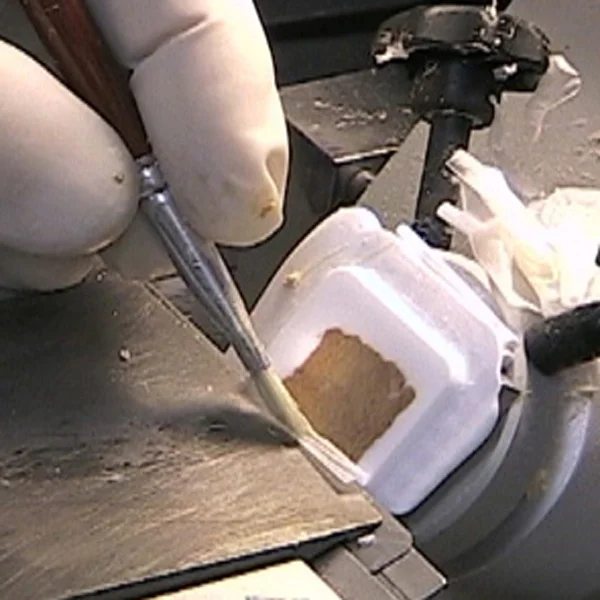
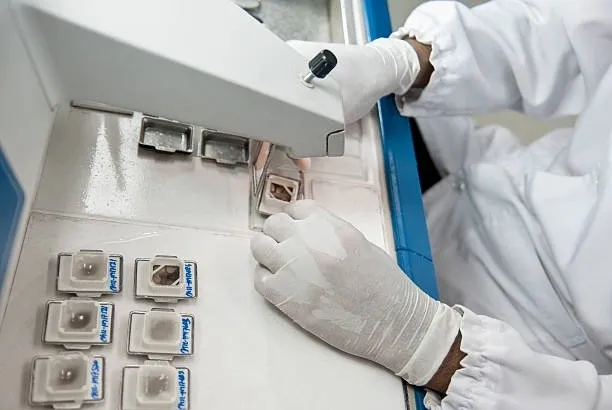
INTRODUCTION:- Sections are prepared quickly for histological examination by freezing the tissue. The section should be thin, and without water crystals. It is an important procedure for quick diagnosis. OBJECTIVES:- After reading this lesson, you will be able to: *enlist the indications of frozen section *explain the disadvantages of frozen section *describe cryostat PURPOSES OF FROZEN SECTION :- Frozen sections are used for following purpose: *Quick diagnosis *Study the margins of cancer *Enzyme histochemistry *Immunohistochemistry *Detection of lipid *Some molecular procedures Disadvantages:-  *Morphology is distorted *Cellular details are not well seen, *Staining is not very good *Some specials stains cannot be performed. Handling of specimen:- Tissue must reach histopathology laboratory immediately. To avoid tissue being dried it should be kept in saline. The size of the tissue should be small thin, so that good smooth sections can be obtained and freezing is quick. Thickness of he tissue should be about 3mm to 4mm.The tissue can directly be taken to cryostat or can be fixed with 10% formalin or formol –alcohol Embedding media:- Sucrose (20%) or a drop of water may be applied on the chuck. Optimum Cooling temperature (OCT) compounds or 20% sucrose gives good result. Other embedding media are available with cryostat. Completion of freezing is observed by the change of color of tissue which turns glossy white. Freezing should be done fast. This will prevent ice crystal formation. The morphology is better preserved and artifacts are lesDifferent freezing substances are used depending upon the availability and feasibility. Carbon Dioxide gas is most commonly used with freezing microtome. This gives good results. Liquid Nitrogen is another substance used for freezing the tissue. An expertise is required while using liquid nitrogen to get uniform freezing. Aerosol sprays are also used for this purpose Cryostat: Cryostat is used in medicine to cut histological sections. They are usually used in a process called frozen section histology. The cryostat is essentially an ultrafine “deli-slicer”, called a microtome, placed in a freezer. The cryostat is usually a stationary upright freezer, with an external wheel for rotating the microtome. The temperature can be varied, depending on the tissue being cut – usually from minus 20 to minus 30 degree Celsius. The freezer is either powered by electricity, or by a refrigerant like liquid nitrogen. Small portable cryostats are available and can run off generators or vehicle inverters. To minimize unnecessary warming all necessary mechanical movements of the microtome can be achieved by hand via a wheel mounted outside the chamber. Newer microtomes have electric push button advancement of the tissue. The precision of the cutting is in micrometres. Tissue are sectioned as thin as 1 micrometre. Usual histology slides are mounted with a thickness of about 7 micrometres. Specimens that are soft at room temperature are mounted on a cutting medium (often made of egg white) on a metal “chuck”, and frozen to cutting temperature (for example at -20 degrees C). Once frozen, the specimen on the chuck is mounted on the microtome. The crank is rotated and the specimen advances toward the cutting blade. Once the specimen is cut to a satisfactory quality, it is mounted on a warm (room temperature) clear glass slide, where it will instantaneously melt and adhere. The glass slide and specimen are air dried, and stained. The entire process from mounting to reading the slide takes from 10 to 20 minutes, allowing rapid diagnosis in the operating room, for the surgical excision of cancer. The cryostat section quality is poorer as compared to fixed tissue sections    

Histopathology

HEMATOXYLIN AND EOSIN STAINING

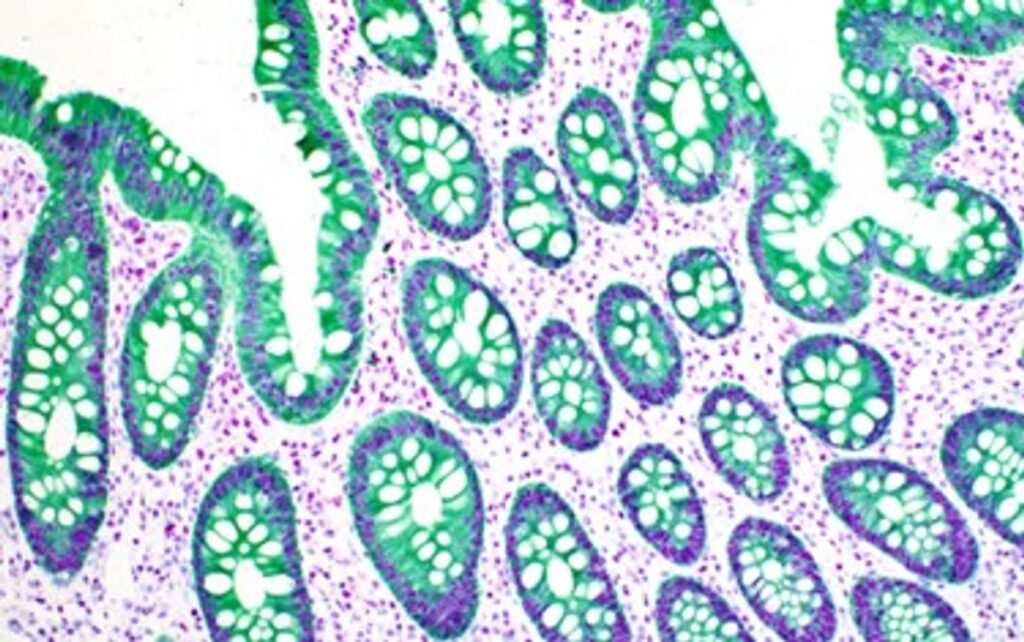
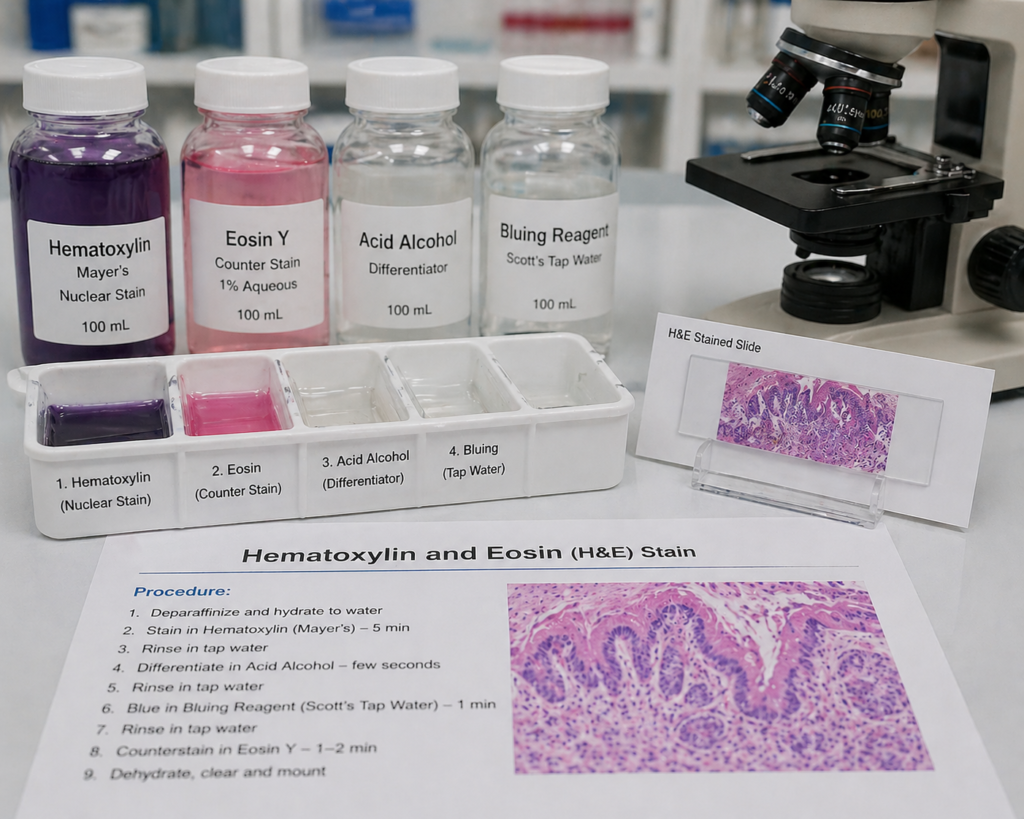
INTRODUCTION:- The sections, as they are prepared, are colourless and different components cannot be appreciated. Staining them by different coloured dyes, having affinities of specific components of tissues, makes identification and study of their morphology possible. Hematoxylin and Eosin (H&E) is the most frequently used stain in histology. OBJECTIVES:- After reading this lesson, you will be able to: describe Hematoxylin and its preparation describe the properties of Hematoxylin explain Eosin and its preparation describe the method of staining. HEMATOXYLIN :- It is extracted from the bark of a tree”, hematoxylom campechianum”. The hematoxylin which we buy is extracted from this bloodwood tree. To obtain the bark of freshly logged tree is chipped off, then boil the chips in water. An orange red solution is obtained, which turns yellow, then black on cooling. The water is evaporated leaving crude hematoxylin. Further purification is done.Solutions of the dye should be oxidized to retain its staining ability longer. The dye may be oxidized by exposure to the natural light for 3-4 months. chemical oxidation is achieved by using either sodium iodate or mercuric oxide. The chemical oxidation converts the dye almost instantaneously but the product does not have shelf life. Sodium iodate is most commonly used oxidizing agent (0.2gm oxidizes 1.0 gm hematoxylin). Hematoxylin is neither a dye nor it has coloring properties. For nuclear staining it is necessary to oxidize the hematoxylin to hematin which is a weak anionic purple dye. Anionic hematin will have no affinity for the nucleic acids of nuclei. Hence a metallic salt or mordant is combined with hematoxylin so that a positive charge to the dye is obtained by virtue of the metal action. Thus the cationic dye–metal complex will bind to the anionic nuclear chromatin. Various mordants are ammonium or potassium alum ferric salt, chrom alum and phosphotungstic acid. The tissue component most frequently demonstrated is nuclear chromatin using an alum mordant in the H&E staining method. The combination of hematoxylin and mordant is called a hematoxylin lake. The aluminium lake formed with ammonium alum is particularly useful for staining nuclei. Hematoxylin recipes using these mordants are called alum hematoxylin. PROPERTIES OF HEMATOXYLIN :- 1. Hematoxylin has no staining property. 2. Hematin with mordant such as ammonium or potassium alum forms lake which functions as cationic dye and stains anionic tissue components. 3. Hematin in an aqueous solution can be acidic or an alkaline dye depending on pH. 4. Hematin has affinity for several tissues with an appropriate mordant. Progessive staining :-When tissue is left in the stain just long enough to reach the proper end point. The slides have to be examined at different interval to find out when the staining is optimum. Regressive staining :-  In this method the tissue is overstained and then destained (differentiate) until the proper endpoint is reached. Harris hematoxylin is a regressive stain; the overstaining is removed by acid alcohol. The removal of this excess dye is called differentiation. The hematoxylin alum gives a reddish hue to the tissues because of acidic pH. To convert this colour to the final blue, alkaline pH is required. This process is called “blueing”. It is done either by tap water or by ammonium hydroxide. Preparation of Harris’s hematoxylin :- Ingredients :-  Hematoxylin                             –          5 gm Absolute alcohol                     –          50 ml Ammonium alum                    –         100 gm Distilled water                         –         1000 ml Mercuric oxide                        –         2.5 gm Glacial acetic acid  5gm        –         40 ml Method :-  Dissolve the hematoxylin in absolute alcohol and ammonium alum in hot water. Mix the two solutions and heat to boiling. Remove from flame, and add mercuric oxide and cool rapidly. Glacial acetic acid if added gives brisk nuclear staining, but life of the solution is reduced. Hence if acetic acid is to be added, it should be added in working solution. Preparation of Mayer’s hematoxylin:- Ingredients : Hematoxylin                             –   1.0 gm                                                                                                                    Distilled water                         –    1000 ml                                                                                                                  Ammonium alum                   –     50 gm Sodium iodate                        –      0.2 gm Citric acid (reduces pH)        –     1.0 gm Chloral hydrate (preservative)-   50 gm Method:- Hematoxylin is dissolved in distilled water using gentle heat. Then alum is added and dissolved. Then sodium iodate, citric acid and chloral hydrate are added respectively. EOSIN :- Eosin is used as the counterstain that stains the cytoplasm rose coloured. The intensity of the eosin is individual choice. The most widely used eosin is “eosin Y”. The “Y” stands for yellowish. It is available in either water soluble or alcohol soluble form. Most laboratories use the water soluble form of eosin Y in an alcohol-water solution which is described here. Eosin Y (water soluble)          –         1.0 gm Distilled water 

Histopathology

Embeding in histology

INTRODUCTION:- Embedding is the process in which the tissues or the specimens are enclosed ina mass of the embedding medium using a mould. Since the tissue blocks are very thin in thickness they need a supporting medium in which the tissue blocks are embedded. This supporting medium is called embedding medium. Various embedding substances are paraffin wax, celloidin, synthetic resins, gelatine, etc. OBJECTIVES:- After reading this lesson, you will be able to: describe embedding *explain embedding media *describe types of moulds *explain various devices for tissue embedding. EMBEDDING:- The choice of embedding media depends upon *Type of microscope *Type of microtome *Type of tissue eg. hard tissue like bone or soft tissue like liver biopsy Paraffin wax: with a higher melting point (56 to 62oC) is used for embedding.The molten wax is filtered inside the oven through a course filter paper into another container. This will protect the knife edge. OTHER TYPES OF EMBEDDING MEDIA:- Carbowax: It is a water soluble wax. Therefore tissues are directly transferred to water soluble wax after fixation and washing. Methacrylate: It is easily miscible with alcohol and gives a clear and hard block when polymerised Polymerization takes place in the presence of a catalyst. Any trace of water causes uneven polymerization and formation of bubbles in the block around the tissue Epoxy Resin (Araldite): Epoxy polymers of araldite is used in higher resolution work and to see greater details. Epoxy resins are used for electron microscopy. Epoxy polymers of araldite differ from methcrylate in that they are crosslinked causing the cured solid block of araldite to be insoluble in any solvent. Longer filtration is required because the viscosity of resin is greater than methacrylate. For electron microscopy araldite is obtained as casting resinCY212, ahardner DDSA and an amine accelerator, DMP (ditrimethylamino methyl phenol) Blocks are suitably cured before sectioning for 48 to 60 hours at 60oC Agar embedding: It is mainly used in double embedding. Multiple fragments and friable tissue may be impregnated in one block when sectioning on the cryostat. Another use of agar embedding is for FNAC specimens. Celloidin media:- Celloidin is a purified form of nitrocellulose. It is used for cutting hard tissues. Gelatin: Its melting point is less than the melting point of agar. Gelatin maybe used when frozen sections are required on friable and necrotic tissues. TYPES OF MOULDS  A variety of moulds are used for embedding. These may be LEUCKHARD embedding moulds (L mould) paper blocks, plastic moulds. Most of the laboratories use L moulds. L moulds are made up of metal, easy to procure, reusable and may be adjusted to make different size of blocks. One limb of the”L” is longer than the other. The two “Ls” are jointed to form a sides of the rectangular box that act as a cast to make the mould. Plastic moulds: Most of the laboratories use plastic embedding rings now. These are relatively inexpensive, convenient and support the block during sectioning and are designed to fit it on the microtome. This eliminates the step of mounting or attaching the block on a holder (metal or wooden holder). 1. Tissue-Tek System1 or Mark1 system:- In this system plastic embedding rings with stainless steel moulds allow rapid embedding and cutting of tissues. In this system the blocks are stored with the plastic rings; the angle does not change for further requirement of sections. The disadvantage of this method is that the space required for storing is more. 2. Tissue-Tek system 2or Mark 2 system: The Mark 2 system has provided a cassette to hold tissue during processing and has a stainless steel lid on the plastic cassette. The cassette has a rough surface on one side of it with a slope where the accession number or the marking is done using a permanent marker. 2. Tissue-Tek system 2or Mark 2 system: The Mark 2 system has provided a cassette to hold tissue during processing and has a stainless steel lid on the plastic cassette. The cassette has a rough surface on one side of it with a slope where the accession number or the marking is done using a permanent marker. Advantages :-  *Since the cassette is processed with the tissues and afterwards used for embedding, the writing has to be done once. *Cassettes are thin so less wax is required. *The space required for filing the blocks is less. Disadvantages:- *A special clamp has to be used in the microtome for this technique. *The cassettes are shallow hence thin sections should be taken for processing. PARAFFIN WAX ADDITIVES:- Various substances can be added to paraffin wax in order to modify its consistency and melting point to improve the efficiency during microscopy. Additives increase the hardness of blocks. This helps in cutting thinner sections at higher temperature. Stickiness of the medium is increased so better ribbons can be obtained. However if larger quantities of additives are added, undesirable side effects may be seen. Commonly used additives:- Ceresin – It is hard white substance derived from mineral ozokerite. Its melting point is between 61 to70o C. The addition of 0.3-0.5% is sufficient to reduce the crystalline structure of paraffin wax. Bees’ wax – It is yellow substance with melting point of 64o C. This also reduces the crystalline structure of the paraffin wax and improves the ribbon quality. Bayberry wax – It is a vegetable wax and present in the peal of bayberry. It is extracted from the peal of the fruit. Its melting point is 45° C. Devices for tissue embedding :- Devices designed specifically for tissue embedding are available for laboratories in need of such equipment. These machines vary in size and design depending on the number of samples they are designed to process. Some are designed for specific embedding media, including proprietary compounds intended for specific kinds of histopathology applications. Tissue embedding equipment tends to be expensive. Manufacturers have sales representatives who can provide information and advice when a lab is selecting new or replacement Tissue embedding machine equipment. All the blocking steps can be performed with the help of tissue embedding machine. The embedding machine

Histopathology

tissue processing practical

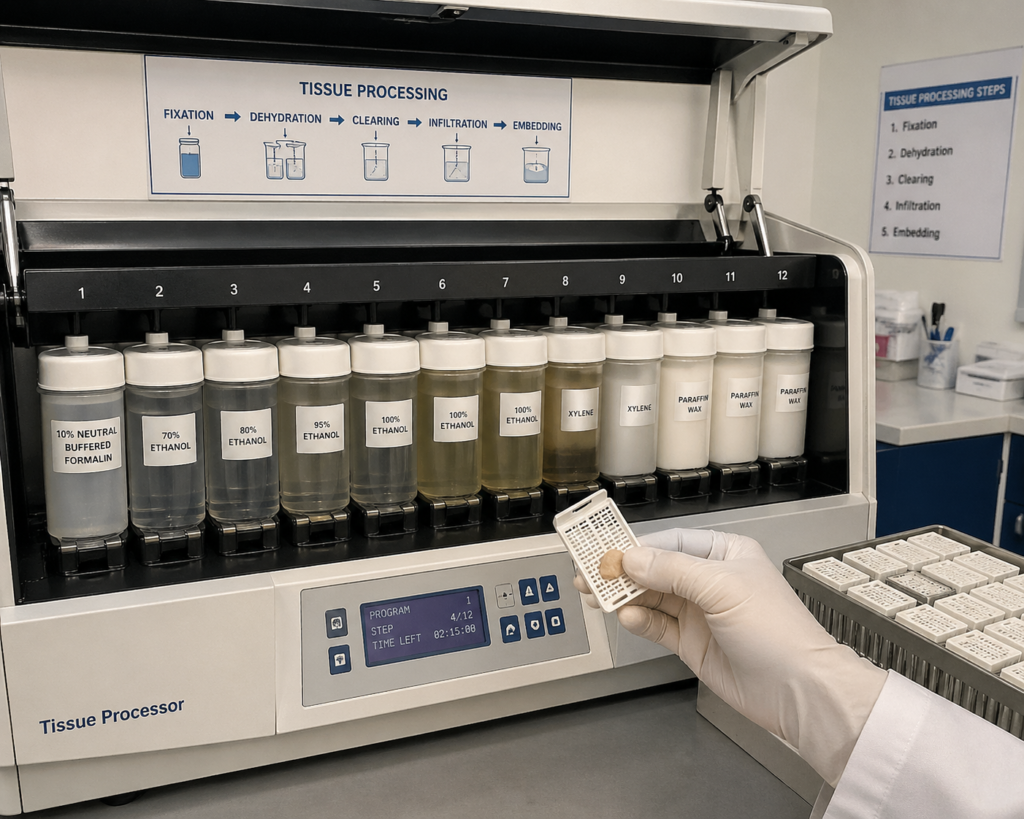
TISSUE PROCESSING :- Tissue processing can be performed either manually or through automated tissue processor. The device can handle larger number of tissues, process more quickly and produces better quality outcome. Two types of devices are available � Tissue transfer or dip dunk � Fluid transfer or enclosed Advantages of automated tissue processor – Saves time, decreases human error, effective fluid circulation, Temperature can be adjusted and vacuum/pressure can also be incorporated. Tissue Transfer Type:-  The machine consist of a time clock, a circular superstructure that contains basket carrier, a receptacle basket and receptacles (stainless steel or plastic capsules), and a circular deck which holds the reagent beakers and plastic baths. Small blocks of tissue are enclosed in the perforated capsules. These capsules are placed in the basket which in turn is attached to one of the yokes in the superstructure, while it is in the raised position. When the superstructure descends the basket is immersed in the first solution and other reagent beakers are covered preventing evaporation of reagents. To move the basket from one reagent to the next the entire superstructure ascends and descends at scheduled intervals controlled by the time clock. During immersion the basket rotates so the infiltration of fluid into the tissues is optimum. The entire process takes about 16 hours. The machine is started in the evening so that the process is complete in the morning,and embedding is done.   Enclosed Type In this type of tissue processor the tissues remain in one container but reagents get changed at scheduled interval. Manual:– In this process the tissue is changed from one container of reagent to another by hand. Advantages:- *Can be used when the number of tissue blocks is limited *Non-availability of automated tissue processor Disadvantages :- *Difficult to use when large number of tissue blocks are to be processed *Proper agitation of reagent not achieved *More evaporation of reagents *Process is tedious and requires constant attention Precautions:- 1. Labels should be written with graphite pencil, India ink or typed. 2. The fluid used in complete dehydration and clearing tend to become contaminated with fluid carried over from previous vat by the tissue. Every alternate day daily the last solution is the series are replaced by fresh solution of 100% alcohol, acetone and xylene and the previously used once one moved forward while the first one is discarded. Other reagents are changed twice a week or earlier with an average work load. It is far better to change the reagents a day earlier than to have a precious surgical specimen improperly infiltrated.  

Histopathology

Tissue processing in histology

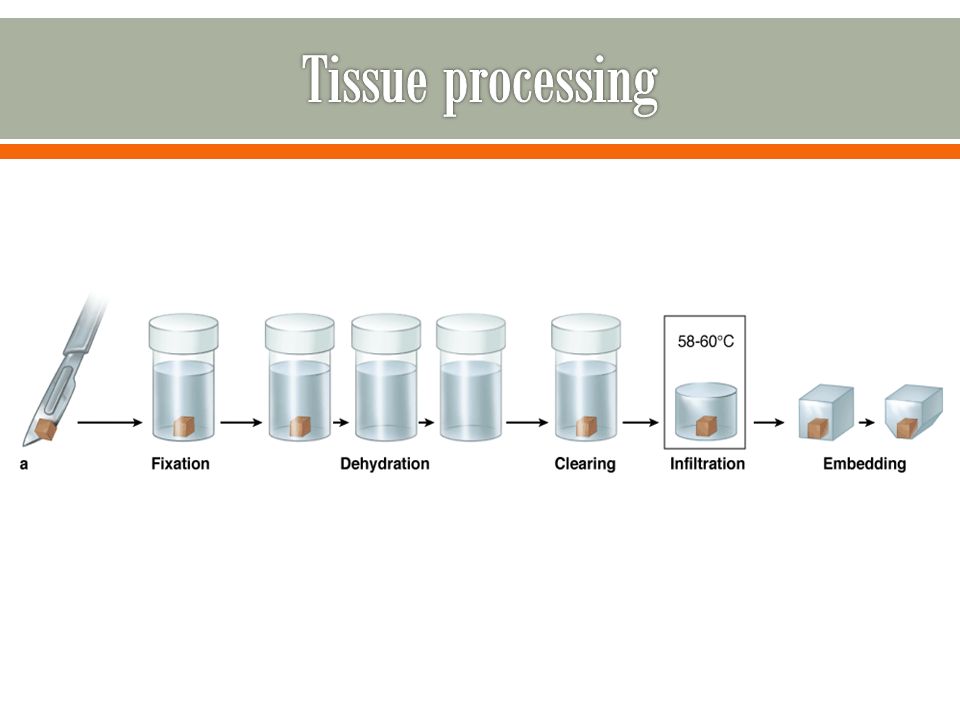
INTRODUCTION:- The technique of getting fixed tissues into paraffin is called tissue processing. This describes the steps required to take animal and human tissues from fixation to the state where it is completely infiltrated with a suitable wax i.e. paraffin wax and can be embedded and ready for section cutting on microtome OBJECTIVES:- After reading this lesson, you will be able to: *define tissue processing *describe its aim and method of processing. Aim: To process the fixed tissue into a form in which it can be made into thin microscopic sections. Processing:  The steps in this process are dehydration and clearing. Dehydration:  It is the process of removing water from tissues. It is important because paraffin is not miscible with water. Dehydration is usually complete when less then 3-4% of water remains in the tissues. Time required for this depends on: 1. Permeability of tissues 2. Continuous rotation of fluid to prevent stagnation of fluid around tissues 3. Temperature 4. Vacuum applied Dehydrants: Ethyl alcohol, Methyl alcohol, Butyl alcohol and Isopropyl alcohol. The most commonly used dehydrant is ethyl alcohol. Alcohol Method:- The tissues are passed through a series of progressively more concentrated alcohol baths. Concentration of first alcohol bath depends on the fixative and size and type of the tissue, e.g. delicate tissue needs lower concentration of alcohol and smaller interval between two strengths of alcohol.  Usually 70% alcohol is employed as the first solution and100% as the last solution. After about 40 tissues have passed through the first change of alcohol, it is discarded and all the other changes are brought one step lower. Absolute alcohol at the end is always fresh. Usually tissues are kept in each solution for 40 to 60 minutes. Use of copper sulphate in final alcohol:  A layer of anhydrous CuSO4 is placed at the bottom of a dehydrating bottle or beaker and is covered with 2-3 filter paper of approximate size to prevent staining of the tissue. Anhydrous CuSO4 removes water from alcohol as it in turn removes it from tissues. Anhydrous CuSO4 is white in colour while the hydrated form is blue. Therefore, it acts as an indicator for the presence of water. Advantage of CuSO4 1. Rapid dehydration 2. Prolongs life of alcohol 3. Blue colouration of CuSO4 indicates that both alcohol and CuSO4 should be changed Acetone – Acetone is clear colourless inflammable fluid which is miscible with water, ethanol. It is used for complete dehydration. Four changes of acetone of half an hour or two changes of one hour are given to achieve complete dehydration of tissues. Advantages *Rapid actio                                                                                                                                                                                                *Easily removed by most clearing agents                                                                                                                                            *Less expensive Disadvantages:- *Highly volatile *Causes shrinkage and brittleness of tissues *Dissolves lipid more than ethanol Clearing :- Clearing is a process which leaves the tissues clear and transparent. This term relates to the appearance of the tissues after the dehydrating agent has been removed. If the refractive index of the clearing agent is similar to the protein of tissue the tissue becomes transparent. The end point of clearing can be noted by the transparent appearance of the tissue. Thus clearing serves two purposes 1. Removes alcohol to make paraffin impregnation complete 2. Acts as solvent for the mounting media which renders the tissues transparent and improves the refractive index, making microscopic examination easier. Clearing Agents:-  Xylene – It is colourless and most commonly used. Two changes of one hour each are given to get the end point. Prolonged treatment hardens the tissues. It is not preferred for brain tissue. Other Clearing Agents:-  Toluene Dioxane Cedarwood oil Cloroform  Benzene Carbol-xylene – clears rapidly, it is kept reserved for material difficult to clear INFILTRATION AND IMPREGNATION:- After clearing, tissues are transferred to molten paraffin wax for filtration and impregnation. During this process clearing agent diffuses out and molten wax is infiltrated. The wax which has infiltrated in the tissue gets deposited. This process is called impregnation. Routinely two changes are given in the wax to get proper impregnation. The duration and number of changes required for thorough impregnation of tissue depends on  1. Size and type of tissues-Longer time is required for thicker tissues. Vacuum reduces the time required for complete impregnation. 2. Clearing agent employed 3. Use of vacuum imbedding Tissue processing may be performed manually or with the help of automated tissue processor. Routinely 12 containers containing different solutions are used for processing in the following order 10% formalin – container no 1, 2 50% alcohol – container no 3 90% alcohol – container no 4 & 5 Absolute Alcohol – container no 6 Acetone – container no 7 & 8 Xylene – container no 9 & 10 Paraffin Wax – container no 11 & 12      

Histopathology, Uncategorized

Decalcification in histology

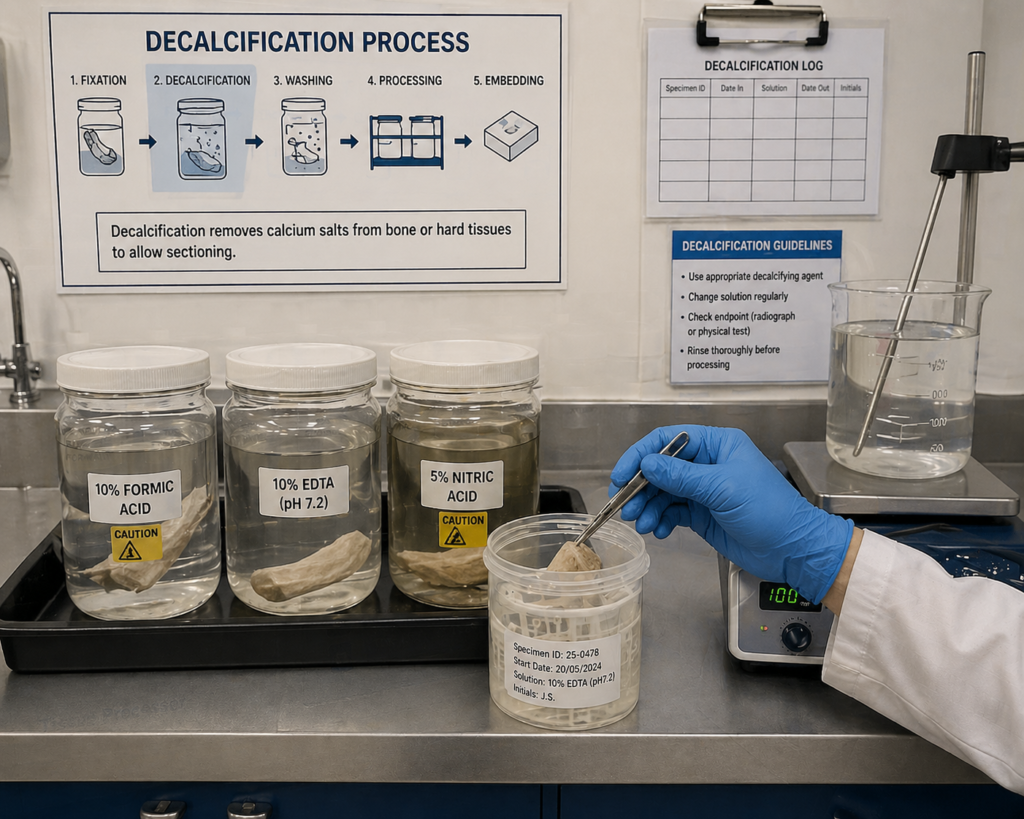
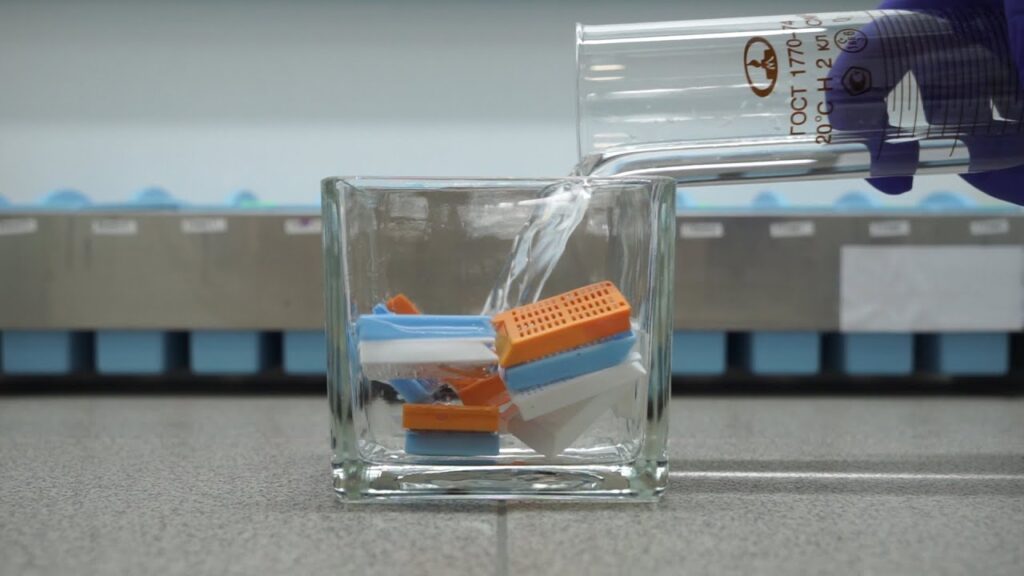
INTRODUCTION:- The presence of calcium salts in tissues makes them hard. This causes damage to the knife, difficulty in cutting tissue. Calcium is normally present in bones and teeth. Calcium may also be present in normal tissues in pathological conditions like necrotic tissue in tuberculosis. OBJECTIVES:- After reading this lesson, you will be able to:  *describe decalcification *explain different methods of decalcification *describe the chemical and physical tests to estimate the remaining calcium. DECALCIFICATION:- Aim – To remove calcium salts from the tissues and make them amenable for sectioning.  Preparation of tissues – The calcified hard tissues should be first cut into small pieces (2 to 6mm) with a thin blade, hacksaw or sharp knife in order to minimize the tearing of the surrounding tissues. This process is followed by fixation in buffered formalin or any other desired fixative. After fixation tissues must be thoroughly washed and excess fixative should be removed before the specimen is subjected to decalcification. DIFFERENT METHODS OF DECALCIFICATION:- 1. Acid decalcification 2. Ion exchange resin 3. Electrical ionization 4. Chelating methods 5. Surface decalcification Decalcification process should satisfy the following conditions *Complete removal of calcium salts *Minimal distortion of cell morphology *No interference during staining Decalcification is a straightforward process but to be successful it requires: *A careful preliminary assessment of the specimen *Thorough fixation *Preparation of slices of reasonable thickness for fixation and processing *The choice of a suitable decalcifier with adequate volume, changed regularly *A careful determination of the endpoint *Thorough processing using a suitable schedule. Methods of Decalcification :- The tissue is cut into small pieces of 3 to 5 mm size. This helps in faster decalcification. The tissue is then suspended in decalcifying medium with waxed thread. The covering of wax on thread prevents from the action of acid on thread. The volume of the decalcifying solution should be 50 to 100 times of the volume of tissue. The decalcification should be checked at the regular interval. Acid Decalcification – This is the most commonly used method. Various acid solutions may be used alone or in combination with a neutralizer. The neutralizer helps in preventing the swelling of the cells. Following are the usually used decalcifying solutions- 1. Aqueous Nitric Acid:- Nitric acid              –         5ml Distilled water       –        100 ml If tissue is left for long time in the solution, the tissue may be damaged. Yellow colour of nitric acid should be removed with urea. But this solution gives good nuclear staining and also rapid action. 2. Nitric Acid Formaldehyde Nitric acid                 – 10 ml Formaline                 – 5-10 ml                                                                                                                        Distilled water upto 100 ml Advantages   * Rapid action *Good nuclear staining *Washing with water is not required *Formalin protects the tissues from maceration 3. Formic Acid Solution: Formic acid                   – 5  ml Distilled water              – 90 ml Formalin                       –  5 ml In this solution the decalcification is slow. If concentration of formic acid is increased the process is fast but tissue damage is more: 4. Trichloroacitic Acid – This is used for small biopsies. The process ofdecalcification is slow hence cannot be used for dense bone or big bony pieces. Formal saline (10%)                 –      95 ml Tricloroacitic acid                    –      5 gm Ion Exchange method – In these ammonium salts of sulfonated polystyrene resin is used. The salt is layered on the bottom of the container and formic acid containing fluid is filled. The decalcifying fluid should not contain mineral acid. X-rays can only determine complete decalcification. The advantages of this method are:- *Faster decalcification *Well preserved tissue structures *Longer use of resin Electrolytic Method – Formic acid or HCl are used as electrolytic medium. The calcium ions move towards the cathode. Rapid decalcification is achieved but heat produced may damage the cytological details. Chelating Agents:- Organic chelating agents absorb metallic ions. EDTA can bind calcium forming a non-ionized soluble complex. It works best for cancerous bone. This is best method for decalcification of bone marrow biopsies as it preserves cytological details best. The glycogen of marrow is preserved. EDTA Solution :- EDTA                                    –                 5.5 gm Formaline                          –                  100 ml Distilled water-                 –                   900 ml Surface Decalcification – The surface layer of paraffin blocks are inverted in5% HCl for one hour. About top 30 micron is decalcified. It should be washed thoroughly before cutting. Factors affecting rate of Decalcification:- 1. Concentration of decalcifying solution-Increased concentration of the decalcifying agent fastens the reaction. 2. Temperature-The rate of decalcification increases with rise of temperature. 3. Density of bone-Harder bone takes longer time to decalcify. 4. Thickness of the tissue-Small tissue pieces decalcify earlier. 5. Agitation-Agitation increases the rate of decalcification. METHODS OF DETERMINING OPTIMUM DECALCIFICATION OR ENDPOINT:-  Specimens should NOT be crowded together and should NOT contact the bottom of container in order to provide complete decalcification. Over decalcification can also permanently damage specimen. The following procedure help determine the correct end-point of decalcification. End-Point of Decalcification: X-ray (the most

Histopathology

TISSUE FIXATION IN HISTOLOGY

INTRODUCTION:- It is a process by which the cells or tissues are fixed in chemical and partly physical state so that they can withstand subsequent treatment with various reagents, with minimal distortion of morphology and no decomposition AIMS OF FIXATION:- (a) To preserve the tissues as close to their living state as possible (b) To prevent autolysis and bacterial attack (c) To prevent tissues from changing their shape and size during processing (d) To harden the tissues (e) To allow clear staining of sections subsequently (f) To improve the optical differentiation of cells & tissue PRINCIPLE OF FIXATION:- Fixation results in denaturation and coagulation of protein in the tissues. The fixatives have a property of forming cross links between proteins, thereby forming a gel, keeping everything in their in vivo relation to each other. PROPERTIES OF FIXATIVES AND FACTORS AFFECTING FIXATION:- 1. Coagulation and precipitation of proteins in tissues. 2. Penetration rate differs with different fixatives depending on the molecular weight of the fixative 3. pH of fixatives – Satisfactory fixation occurs between pH 6 and 8. Outside this range, alteration in structure of cell may take place. 4. Temperature – Room temperature is alright for fixation. At high temperature there may be distortion of tissues. 5. Volume changes – Cell volume changes because of the membrane permeability and inhibition of respiration. 6. An ideal fixative should be cheap, nontoxic and non-inflammable. The tissues may be kept in the fixative for a long time TYPE OF FIXATION:- Immersion fixation Perfusion fixation Vapour fixation Coating/Spray fixation Freeze drying Microwave fixation/Stabilization The most commonly used technique is simple immersion of tissues/smears in an excess of fixative. For all practical purposes immersion fixatives are most useful. These may be divided into routine and special SIMPLE FIXATIVES :- 1. Formaldehyde:- Commercially available solution contains 35%-40% gas by weight, called as formalin. Formaldehyde is commonly used as 4% solution, giving 10% formalin for tissue fixation. Formalin is most commonly used fixative. It is cheap, penetrates rapidly and does not over- harden the tissues. The primary action of formalin is to form additive compounds with proteins without precipitation. Formalin brings about fixation by converting the free amine groups to methylene derivatives. If formalin is kept standing for a long time, a large amount of formic acid is formed due to oxidation of formaldehyde and this tends to form artefact which is seen as brown pigment in the tissues. To avoid this buffered formalin is used. 2. Absolute alcohol – it may be used as a fixative as it coagulates protein. Due to its dehydrating property it removes water too fast from the tissues and produces shrinkage of cells and distortion of morphology. It penetrates slowly and over-hardens the tissues 3. Acetone :– Sometimes it is used for the study of enzymes especiallyphosphatases and lipases. Disadvantages are the same as of alcohol. 4. Mercuric chloride :– It is a protein precipitant. However it causes great shrinkage of tissues hence seldom used alone. It gives brown colour to the tissues which needs to be removed by treatment with Iodine during dehydration 5. Potassium dichromate – It has a binding effect on protein similar to that of formalin. Following fixation with Potassium dichromate tissue must be well washed in running water before dehydration. 6. Osmic acid :– It is used for fixation of fatty tissues and nerves. 7. Chromic acid – It precipitates all proteins and preserves carbohydrates. Tissues fixed in chromic acid also require thorough washing with water before dehydration. 8. Osmium tetraoxide – It gives excellent preservation of cellular details, hence used for electron-microscopy. 9. Picric acid – It precipitates proteins and combines with them to form picrates. Owing to its explosive nature when dry; it must be kept under a layer of water. Tissue fixed in picric acid also require thorough washing with water to remove colour. Tissue can not be kept in picric acid more than 24 hrs. COMPOUND FIXATIVES:- 1. Formal saline :– It is most widely used fixative. Tissue can be left in this for long period without excessive hardening or damage. Tissues fixed for a long time occasionally contain a pigment (formalin pigment). This may be removed in sections before staining by treatment with picric alcohol or 10% alcoholic solution of sodium hydroxide. The formation of this pigment can be prevented by neutralizing or buffering the formal saline. Fixation time – 24 hours at room temprature 2. Formal calcium – Useful for demonstration of phospholipids. Fixation time-24 hours at room temperature 3. Zenker’s fluid – It contains mercuric chloride, potassium-di-chromate, sodium sulphate and glacial acetic acid. Disadvantages :-– After fixation the tissue must be washed in running waterto remove excess dichromate. Mercury pigment must be removed with Lugol’s iodine. 4. Zenker’s formal (Helly’s fluid) – In stock Zenker’s fluid, formalin is added instead of acetic acid. Advantages – excellent microanatomical fixative especially for bone marrow, spleen & kidney. 5. Bouins fluid – It contains picric acid, glacial acetic acid and 40% formaldehyde. Advantages – (a) Rapid and even penetration without any shrinkage. (b) Brilliant staining by trichrome method. It is routinely used for preservation of testicular biopsiesntages – even penetration, rapid fixation Points to Remember :- 1. 10% buffered formalin is the commonest fixative. 2. Tissues may be kept in 10% buffered formalin for long duration. 3. Volume of the fixative should be atleast ten times of the volume of the specimen. The specimen should be completely submerged. 4. Special fixatives are used for preserving particular tissues. 5. Formalin vapours cause throat/ eye irritation hence mask/ eye glasses and gloves should be used. 6. Tissues should be well fixed before dehydration. 7. Penetration of fixatives takes some time. It is necessary that the bigger specimen should be given cuts so that the central part does not remain unfixed. 8. Mercury pigment must be removed with Lugol’s iodine. 9. Biopsies cannot be kept for more than 24 hours in bouin’s fluid without changing the alcohol. 10. Glutaraldehyde and osmion tetraoxide are used as fixatives for electron microscopy. Most Commonly used Fixatives in the Laboratory are 10% Formalin.

Histopathology

Component of a microscope

Light source:- Light source can be external or inbuilt. Dispersal of heat, collection of greatest amout of light, direction and distance are carefully calculated by the designers of microscope for greatest efficiency Condensers:- Body Tube Objectives Stage Clamping Screw Condenser Mirror (Light Source) Fig. 2.3: Microscope Condensor Adjustment The purpose of condenser is to concentrate the light into the plane of the object. The more the light at the specimen, better is its resolution. All condensers have aperture diaphragm with which the diameter of the light beam can be controlled Object stage:- It is a rigid platform with an aperture through which the light can pass. It supports the glass slide. It allows controlled movement in two directions.  Objectives:- They are the most important parts of microscope. The main task of objective is to collect the maximum amount of light from the object, unite it and form a high quality magnified real image. Magnifying powers of objectives are from 1:1 to 100:1. Body tube:- Body tube can be monocular, binocular and the combine photo-binocular (also called trinocular). Binocular tubes have provision for inter-pupillary distanceadjustment, enabling each observer to adjust for his eyes  Eyepiece :- The final stage in optical path, the eyepiece’s function is to magnify the image formed by the objective within the body tube, and present the eye with a virtual image.  Use of the Microscope :-  * Illumination should be centered.  *The condenser should be centered and in proper position.   *Objectives should be properly screwed.   *Optical parts should be clean and free from dust.   *Use oil only for oil immersion objective.  After use, clean the oil objective with lens tissue.  Avoid use of xylene, alcohol or acetone.  Eyepieces get dirty by grease from eyelashes, clean them with lens paper.   *When changing slide, always lower the stage before removing the slide or change objective lens to scanner view.   *Make sure the slide is the right way up

Histopathology

Histopathology & Cytology Practical Index

Practical index:-       1.    Safety guidelines of histopathology       2.    Important Histopathology Laboratory Instruments              a.      Microtome              b.      Wax Bath              c.       Slide Warmer              d.      Automatic Tissue Processor       3.    Sample Receiving and identification       4.    Gross Examination of Specimen       5.    Fixation (Merits, Demerits, and application) a.    Type of Fixative b.    Selection of fixative        6.     Dehydration        7.     Decalcification        8.     Clearing        9.     Impregnation       10.  Embedding and blocking       11. Trimming      12.  Section Cutting or Microtomy      13.  Slide Preparation      14. Staining of section slide a.     Routine H & E Stain b.     Special Stain      15. Mounting      16. Frozen Section processing      17. Museum Techniques a.     Preparation of Specimen b.     Storage of Specimen c.      Mounting of museum specimen

Histopathology

DECALCIFICATION

Introduction:- The presence of calcium salts in tissues makes them hard. This causes damage to the knife, difficulty in cutting tissue. Calcium is normally present in bones and teeth. Calcium may also be present in normal tissues in pathological conditions like necrotic tissue in tuberculosis. OBJECTIVES:- After reading this lesson, you will be able to: describe decalcification explain different methods of decalcification describe the chemical and physical tests to estimate the remaining calcium DECALCIFICATION:-

Scroll to Top