
TISSUE PROCESSING :-
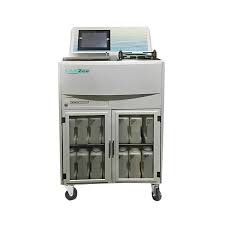
Tissue processing can be performed either manually or through automated tissue
processor. The device can handle larger number of tissues, process more quickly
and produces better quality outcome.
Two types of devices are available
� Tissue transfer or dip dunk
� Fluid transfer or enclosed
Advantages of automated tissue processor – Saves time, decreases human error,
effective fluid circulation, Temperature can be adjusted and vacuum/pressure
can also be incorporated.
Tissue Transfer Type:-
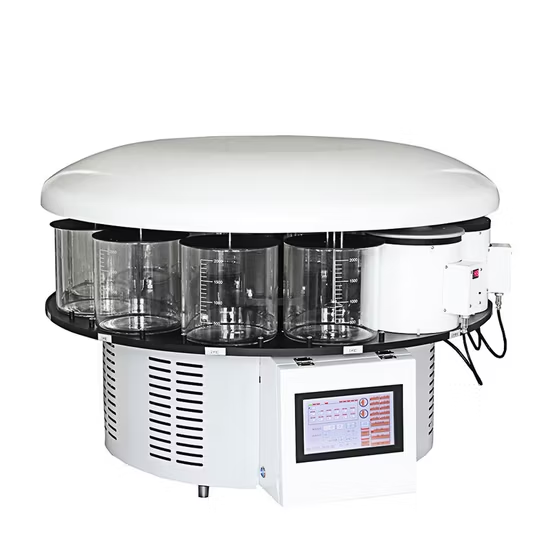
The machine consist of a time clock, a circular superstructure that contains basket carrier, a receptacle basket and receptacles (stainless steel or plastic capsules), and a circular deck which holds the reagent beakers and plastic baths. Small blocks of tissue are enclosed in the perforated capsules. These capsules are placed in the basket which in turn is attached to one of the yokes in the superstructure, while it is in the raised position. When the superstructure descends the basket is immersed in the first solution and other reagent beakers are covered preventing evaporation of reagents. To move the basket from one reagent to the next the entire superstructure ascends and descends at scheduled intervals controlled by the time clock. During immersion the basket rotates so the infiltration of fluid into the tissues is optimum. The entire process takes about 16 hours. The machine is started in the evening so that the process is complete in the morning,and embedding is done.
Enclosed Type
In this type of tissue processor the tissues remain in one container but reagents
get changed at scheduled interval.
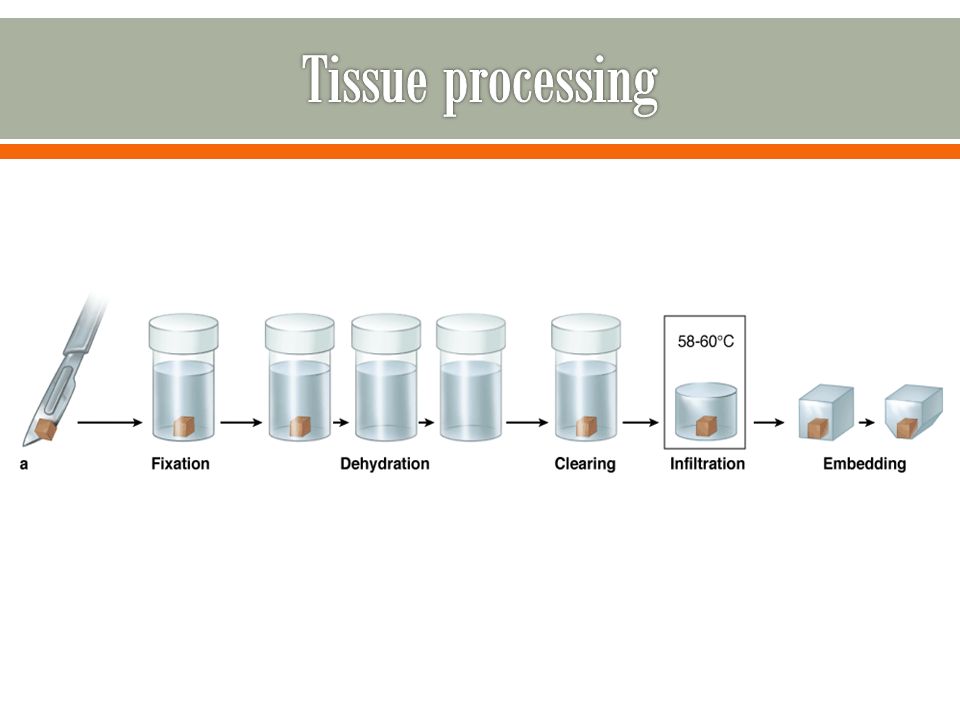
Manual:– In this process the tissue is changed from one container of reagent to another
by hand.
Advantages:-
*Can be used when the number of tissue blocks is limited
*Non-availability of automated tissue processor
Disadvantages :-
*Difficult to use when large number of tissue blocks are to be processed
*Proper agitation of reagent not achieved
*More evaporation of reagents
*Process is tedious and requires constant attention
Precautions:-
1. Labels should be written with graphite pencil, India ink or typed.
2. The fluid used in complete dehydration and clearing tend to become contaminated with fluid carried over from previous vat by the tissue. Every alternate day daily the last solution is the series are replaced by fresh solution of 100% alcohol, acetone and xylene and the previously used once one moved forward while the first one is discarded. Other reagents are changed twice a week or earlier with an average work load. It is far better to change the reagents a day earlier than to have a precious surgical specimen improperly infiltrated.