
INCUBATORS:-
An incubator is a laboratory device used to provide a controlled environment for the growth and maintenance of microorganisms, cell cultures, or biological samples.
Principle:-
The working principle of an incubator is based on the thermoelectric effect—the transformation of thermal energy into electrical energy. A thermostat regulates the internal temperature by generating a thermal gradient, which in turn maintains the desired conditions for microbial or cell culture growth.
or
An incubator operates on the principle maintaining a controlled environmental condition, primarily a constant temperature, to support the growth and development of microorganisms, cells, and tissues. It uses a heating system controlled by a thermostat to maintain the desired temperature. When the temperature drops below the set value, the heater turns on, and when the required temperature is reached, it turns off, ensuring stable conditions for biological growth.
An incubator operates on the principle maintaining a controlled environmental condition, primarily a constant temperature, to support the growth and development of microorganisms, cells, and tissues. It uses a heating system controlled by a thermostat to maintain the desired temperature. When the temperature drops below the set value, the heater turns on, and when the required temperature is reached, it turns off, ensuring stable conditions for biological growth.
components:-
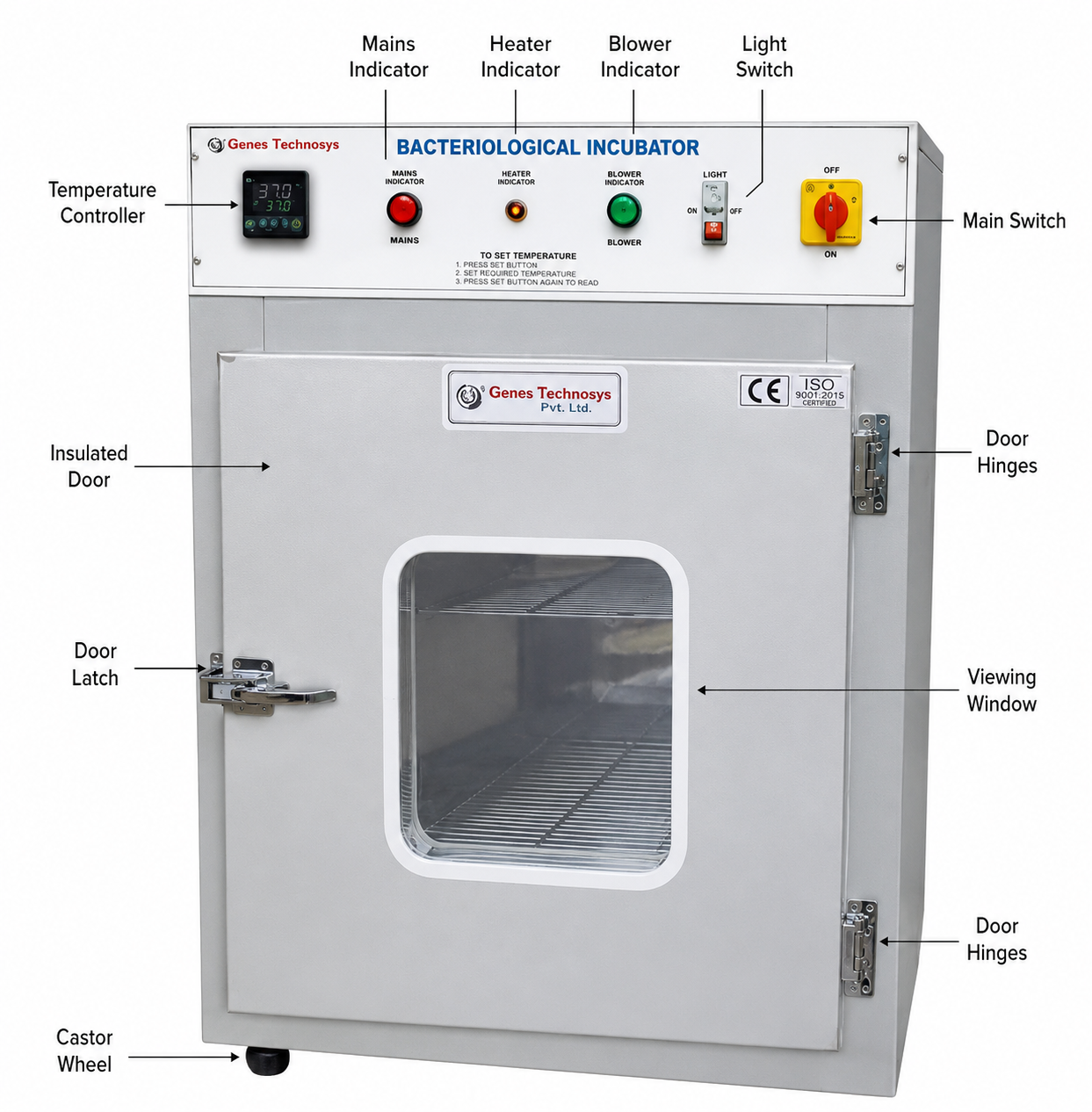
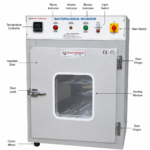
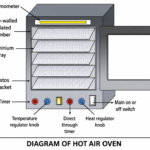
1.Cabinet(outer chamber) The external body that encloses and protects the incubator.
2.Heating Elements:- Gemerates heat to maintain the desired tempreature inside the chamber.
3.Thermostat/Temperature controller:- regulates and maintains the set temperature automatically.
4.Temerature sensor:- Maonitors the chamber temperature and provides feedback to the controller.
5.Shelves:- Hold culture plates, flasks, test tubes, and other laboratory materials.
6.Door and Viewing window:-Allow access to samples the transparent window enables observation without opening the door.
7.Power supply and indicator lights:- Provide electrical power and indicate operating status
8.The temperature can be controlled by using a control knob, and it is recorded by a thermometer
temperature range (30-80°C).
uses:-
These are mainly used for:-
1.Determination of enzymes in the specimen by end point reaction methods
2.determination of glucose urea,uric acid, cholesterol, triglycerides etc by enzymatic methods.
3.Growing microorganisms on various culture media.
4.Pharmaceutical Research(Drug development and testing,Stability studies of pharmaceutical products.)
5.Biotechnology Applications(Production of enzymes, vaccines, and biological products,Genetic engineering and molecular biology experiment)
6.Food and Dairy Industry (Quality control testing of food products,Detection of microbial contamination.)
7.Environmental Studies (Cultivation of environmental microorganisms from soil, water, and air samples.)
Types of incubatore:-
The most prevalent kinds of incubators include:
- Bacteriological Incubators
- BOD Incubators
- CO2 Incubators
Bacteriological incubators:- Microbiology labs commonly use these incubators for bacterial culture growth. They heat-regulate (no cooling mechanism) and operate between 35–37°C. They include programmable settings, a thermometer, and insulation to maintain internal conditions. The thermostat regulates the temperature, allowing for a consistent temperature set to the need. A thermometer attached to incubators displays the correct temperature.
BOD Incubator (Biological Oxygen Demand Incubator)
Also known as Low Temperature Incubators, these are used for fungal cultures, especially molds and yeasts, which require lower incubation temperatures (20–25°C). BOD incubators are also essential for wastewater testing to assess biological oxygen demand. Since a low temperature of about 20–25°C is necessary for biological oxygen demand testing, these incubators are known as BOD (biological oxygen demand) incubators. Therefore, don’t mix up the word because the function of BOD incubators is the same as that of bacteriological incubators.
CO₂ Incubator:-
CO₂ incubators are specially designed for tissue culture and cell line experiments, where precise control of CO₂ levels, humidity, and temperature is critical. The primary use for CO2 incubators is this technique of growing live creatures in vitro.
Procedure for use:-
*Clean the Incubator
*Switch On the Power
*Set the Temperature
*Allow Temperature Stabilization
*Place the Samples
*Close the Door Properly
*Monitor the Temperature
*Incubate for the Required Time
*Remove the Samples
*Switch Off and Clean
Care and maintenance:-
1.Do not forget to put off the main switch when the heating period is over.
2.Clean the incubator after use.
Precaution’s:-
- Avoid frequent door opening.
- Keep temperature stable at all times.
- Clean and disinfect regularly.
- Use cotton plugs or moisture chambers for extended incubations.
- Label all cultures clearly to avoid mix-ups.