Laboratory instruments

Laboratory instruments

Centrifuges principle,use, and working

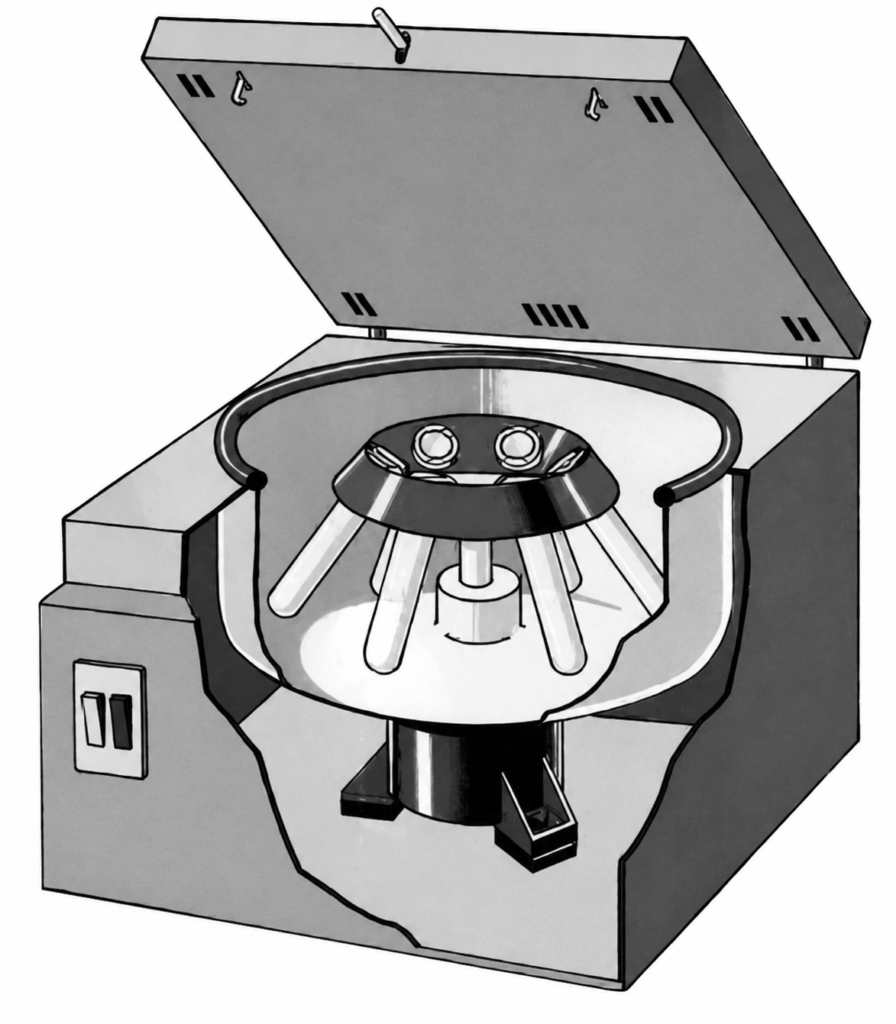
Centrifuges:- A centrifuge is a  mechanical device that rotates a container at high speeds to separate a mixture into its component parts based on their density.centrifuge are designed to accelerate the sedimentaion  process by using centrifugal force. The two general types of centrifuges used uin the laboratories are:- A. The swing out head type (horizontal rotor)   B. The anglehead type(fixed angle rotor) In the case of swing out head centrifuge the tubes are in a vertical position when the centrifuge is at rest and assume a horizontal position when the centrifuge is operating.The speed of centrifuge is more than 5000 RPM. The angle head centrifuge tubes are positioned rigidly at a fixed angle (20-40 degree) to the vertical of rotaion. due to the very low friction of air, angle head rotor units can attain much higher speed.The centrifuge capable of producing speeds up to 100,000 RPM with relative centrifugal force (RCF). The centrifuge based on the principle of centrifugal force, which acts on a sunstance in circular motion, towards the periphery. Principle:- The centrifuge based on the principle of centrifugal force, which acts on a sunstance in circular motion, towards the periphery. the factors which govern the speed of centrifugation are:- 1.The rotation per minutes. 2.length of radius: the radius is measured from the center rotation to the inside bottom of the tube. 3.Shape and size of the particles. 4.viscosity and specific gravity of the fluid under centrifugation. 5.Gracitational force acting on the particles. Important component of a centrifuge:- A centrifuge consists of the following main components:- 1. The centrifuge head(rotor):- The rotating part of the centrifuge,Holds the sample tubes. 2.Motor:- Provides the power required to rotate the rotor.Controls the speed of rotation (RPM). 3.Centrifuge Tubes:– Containers that hold the samples being separated.Usually made of glass or plastic and designed to withstand high speeds. 4 speed control and the additinal parts:- Used to set and monitor operating parameters such as speed (RPM), time, and temperature.Modern centrifuges often have digital displays. 5.Timer:- Allows the user to set the duration of centrifugation. Automatically stops the centrifuge when the set time is reached. 6.Spindle:-  Connects the motor to the rotor,Transfers rotational motion from the motor to the rotor. Uses of centrifuge:- The centrifuge is used in laboratory for various purpose such as:- 1.The separtaion of serum or plasma from blood. 2.Separation of sediment in urine. 3.Separation of protein free filtrate. 4.Washing of red blood cells by normal saline(cell suspension). 5. Separation of antigen boundfraction or antibody bound fraction from the free fraction in immonoassays. 6.Separates microorganisms such as bacteria, fungi, and viruses from liquid media. 7.Separates and purifies drugs, vaccines, and biological products during manufacturing in pharmaceutical industry. 8.Used in cell biology, biochemistry, genetics, and medical research for the separation of cellular organelles and other biological materials. Procedure for useing centrifuge:- 1.Place the samples in appropriate centrifuge tubes.Ensure that the tubes are properly labeled. 2.Place tubes of equal volume and weight opposite each other in the rotor.An unbalanced centrifuge can cause vibration and damage. 3.Insert the tubes securely into the rotor slots or buckets.Check that all tubes are properly seated. 4.Close the centrifuge lid firmly. 5.Select the required RPM (speed),Set the desired centrifugation time. 6.Switch on the centrifuge and allow it to reach the set speed. 7.After the set time, the centrifuge will stop automatically. 8.Carefully open the lid,Remove the tubes gently without disturbing the separated layers. 9.Clean the rotor and chamber according to laboratory guidelines. Care and Maintenence:- 1.Place the centrifuge on a firm base.it should not be placed near a sensitive equipment such as photometer or spectrophotometer, because it generates electrical noise and high current drain when stared up.It should not be run near the a combustible fluid. 2.Before the centrifugation,the centrifuge tubes and the cups or tubes of centrifuge should be balanced properly. 3.The chamber should be kept clean.All the splits should be clean immediately since it may contain biohazardous materials.(chemical,microbiological or radioactive) 4.Always make sure that the cover is closed while the centrifuge is operating .Never open the chamber until the rotor has come to a complete stop. 5. Observed for usual normal vibration noise during operation. The centrifuge may vibrate excessively,if the tubes inside are not balanced properly,should be check immediately. 6.Place a plastic cover on the centrifuge when nor use.    
Laboratory instruments

Constant temperature water bath

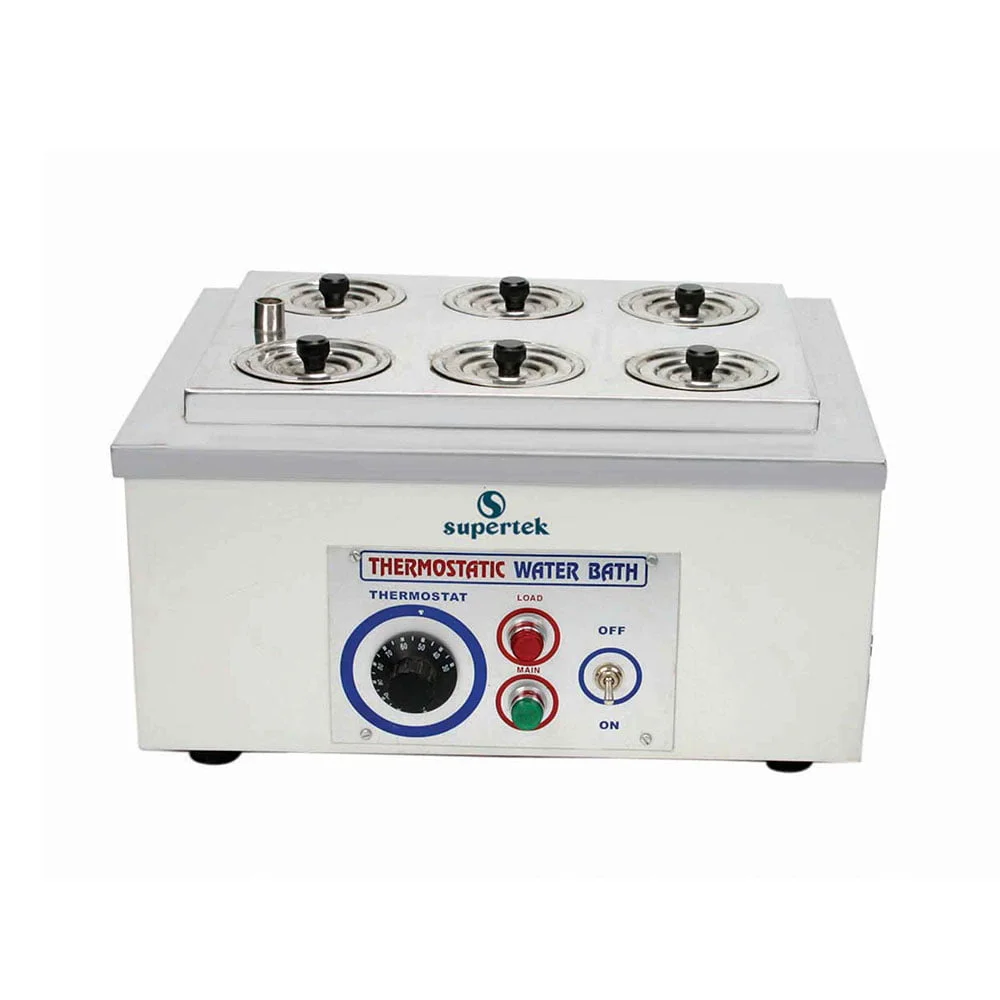
Water Bath:- A water bath is a laboratory instrument that consists of a container filled with water and equipped with a heating system to maintain a constant temperature for warming, incubating, or heating samples gently.water bath are a ubiquitous laboratory fixture , utilised for heating sample in a uniform, controlled environment. As opposed to direct heating techniques such as hot plates or open flames, water baths provide precise temperature control without degrading the sample, making them a necessity for pharmaceutical, chemical, and life science research. A water bath maintains samples at a constant temperature by transferring heat uniformly from heated water to the sample through conduction and convection. Principle:- A water bath works on the principle of heat transfer by conduction and convection. The primary principle of a laboratory water bath is indirect heat transfer, which uses heated water as a medium to provide gentle, uniform, and constant temperature control to submerged samples. Components:- 1.The container is generally made up of heavily nickel plated tank of about 20-30 liter capacity.  2.The heating is done by the strip heater clamped under the tank. 3.The temperature is controlled by a thermostat and regulated by a control knob. 4.The temperature can be recorded by a thermometer. Uses:- The water bath is used to carry out various chemical reactions at specific temeratures.depending upon the requirement of an experiment.The temperature of the water bath is controlled by a thermostatic arrangement.  The carious uses of a water bath are below. 1.Determination of serum enzymes(37°C). 2.Enzymatic determination of glucose, Urea, Cholesterol, Triglycerides etc.(37°C) 3.Serological determination(56°C). 4.Saponification(60-70°C). 5.Incubating samples  6.Heating reagents and solutions. 7.Melting substance(such as agar, gelatin, or wax.) 8.Warming culture media.(before use in microbiology laboratories.) Procedure for using water bath:- 1.Check the water bath to ensure it is clean and working condition. 2.Fill the bath with distilled water to the recommended level. 3.Switch on the water bath and set the desired temperature using the temperature control. 4.Allow the water to reach the set temperature and stabilize. 5.Place the sample (test tube, bottles or flasks) securely in a rack and immerse them in the water without allowing water enter the containers. 6.Incubate or heat the samples for the required time while monitoring the temperature. 7.Remove the sample carefully using protective gloves to avoid burns. 8.Switch off the water bath after use. 9.Empty, clean and dry the bath. Care and Maintenece of water bath:- 1.The water bath should be sufficiently filled with water before use. 2.Do not forget to put off main switch after use. 3.Cover the water bath when not in use.

Laboratory instruments

Incubators principle, uses,

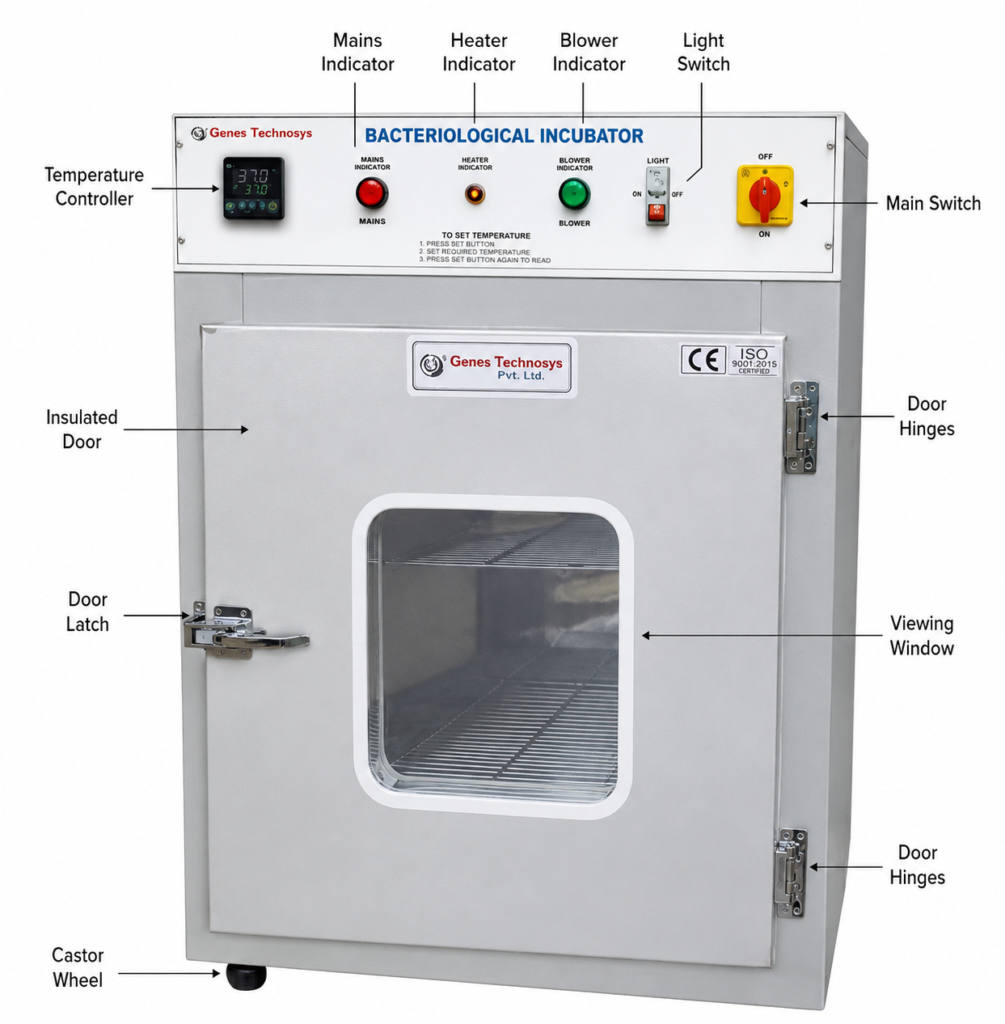
INCUBATORS:- An incubator is a laboratory device used to provide a controlled environment for the growth and maintenance of microorganisms, cell cultures, or biological samples. Principle:- The working principle of an incubator is based on the thermoelectric effect—the transformation of thermal energy into electrical energy. A thermostat regulates the internal temperature by generating a thermal gradient, which in turn maintains the desired conditions for microbial or cell culture growth. or An incubator operates on the principle maintaining a controlled environmental condition, primarily a constant temperature, to support the growth and development of microorganisms, cells, and tissues. It uses a heating system controlled by a thermostat to maintain the desired temperature. When the temperature drops below the set value, the heater turns on, and when the required temperature is reached, it turns off, ensuring stable conditions for biological growth. components:- 1.Cabinet(outer chamber) The external body that encloses and protects the incubator. 2.Heating Elements:- Gemerates heat to maintain the desired tempreature inside the chamber. 3.Thermostat/Temperature controller:- regulates and maintains the set temperature automatically. 4.Temerature sensor:- Maonitors the chamber temperature and provides feedback to the controller. 5.Shelves:- Hold culture plates, flasks, test tubes, and other laboratory materials. 6.Door and Viewing window:-Allow access to samples the transparent window enables observation without opening the door. 7.Power supply and indicator lights:- Provide electrical power and indicate operating status 8.The temperature can be controlled by using a control knob, and it is recorded by a thermometer temperature range (30-80°C). uses:- These are mainly used for:- 1.Determination of enzymes in the specimen by end point reaction methods 2.determination of glucose urea,uric acid, cholesterol, triglycerides etc by enzymatic methods. 3.Growing microorganisms on various culture media. 4.Pharmaceutical Research(Drug development and testing,Stability studies of pharmaceutical products.) 5.Biotechnology Applications(Production of enzymes, vaccines, and biological products,Genetic engineering and molecular biology experiment) 6.Food and Dairy Industry (Quality control testing of food products,Detection of microbial contamination.) 7.Environmental Studies (Cultivation of environmental microorganisms from soil, water, and air samples.) Types of incubatore:- The most prevalent kinds of incubators include: Bacteriological Incubators BOD Incubators CO2 Incubators Bacteriological incubators:- Microbiology labs commonly use these incubators for bacterial culture growth. They heat-regulate (no cooling mechanism) and operate between 35–37°C. They include programmable settings, a thermometer, and insulation to maintain internal conditions. The thermostat regulates the temperature, allowing for a consistent temperature set to the need. A thermometer attached to incubators displays the correct temperature. BOD Incubator (Biological Oxygen Demand Incubator) Also known as Low Temperature Incubators, these are used for fungal cultures, especially molds and yeasts, which require lower incubation temperatures (20–25°C). BOD incubators are also essential for wastewater testing to assess biological oxygen demand. Since a low temperature of about 20–25°C is necessary for biological oxygen demand testing, these incubators are known as BOD (biological oxygen demand) incubators. Therefore, don’t mix up the word because the function of BOD incubators is the same as that of bacteriological incubators. CO₂ Incubator:- CO₂ incubators are specially designed for tissue culture and cell line experiments, where precise control of CO₂ levels, humidity, and temperature is critical. The primary use for CO2 incubators is this technique of growing live creatures in vitro. Procedure for use:- *Clean the Incubator *Switch On the Power *Set the Temperature *Allow Temperature Stabilization *Place the Samples *Close the Door Properly *Monitor the Temperature *Incubate for the Required Time *Remove the Samples *Switch Off and Clean Care and maintenance:- 1.Do not forget to put off the main switch when the heating period is over. 2.Clean the incubator after use. Precaution’s:- Avoid frequent door opening. Keep temperature stable at all times. Clean and disinfect regularly. Use cotton plugs or moisture chambers for extended incubations. Label all cultures clearly to avoid mix-ups.  

Laboratory instruments, Uncategorized

Hot Air Oven for Dry Heat Sterilization

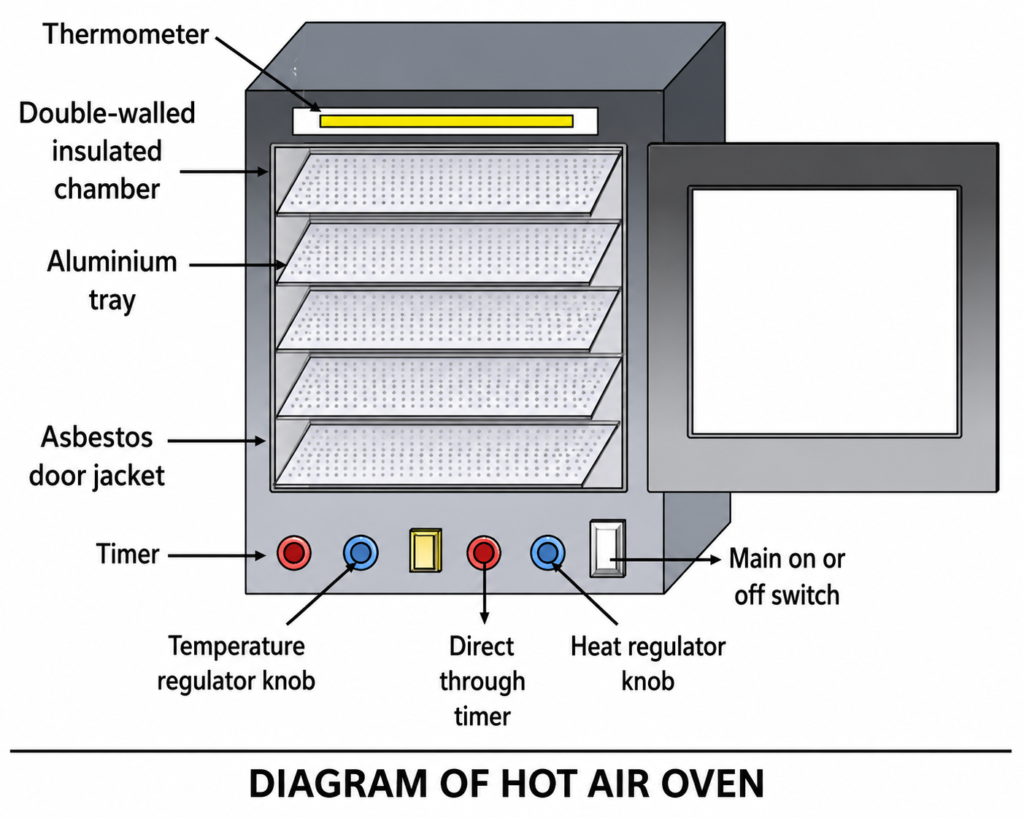
Hot Air Oven:- A hot air oven is a laboratory equipment used for dry heat sterilization of glassware, metal instruments, powders, oils, and other materials that can withstand high temperatures. Principle:-  When electricity is passed through the heating coils, electrical energh is converted to heat energy. the tempreture is controlled by a thermostat.                                                                                               orThe hot air oven works on the principle of dry heat sterilization. Hot air is circulated inside the chamber, and heat is transferred to the articles by conduction, convection, and radiation. The high temperature destroys microorganisms by oxidation of cellular components and denaturation of proteins. components :- 1. Double walled heavy gauge aluminium chamber.2. continuous heat elements externally wound on all sizes of the working chamber(These enable efficient heat transfer by conduction and radiation.)3. Thermal insulation by thick glass-wool between the working chamber and the outer mild steel casting.4. Thermostat- A temperature-control device in a hot air oven that maintains the desired temperature by automatically switching the    heating element on and off.5.Adjustable ventilator:- Allow controlled circulation and release of hot air and moisture.6.Pilot lamp:- A small indicator light on a hot air oven that shows whether the oven is switched on and receiving power.7.temperature controller:- A device used to set, monitor, and regulate the temperature inside a hot air oven. It maintains the selected temperature accurately for proper sterilization.8.Perforated metal selves:– Metal shelves with small holes that hold the materials inside the hot air oven and allow free circulation of hot air. 9. Thermometer:- An instrument used to measure and display the temperature inside the hot air oven.(temperature range 40°C to 300°C) Uses:- *Hot air oven is mainly used for the following various purposes:-*Dry sterilization such as Petri dishes, test tubes, pipettes, and flasks.*Preparation of anticoagulated bulbs.*Sterilization of non-aqueous materials like oils, fats, waxes, and powders.*Heating of chemicals used for the preparation of primary standards. *Drying laboratory materials and equipment. Procedure for Use:- 1.Place dry articles on the shelves.(In case of glassware, the excess water should be drained completely)2.Close door firmly.3.Put on the main switch.4.Control temperature by adjusting the control Knob.5.Keep it on for the required time period.6.Put off the main switch.7.Remove the articles. Care and Precautions:- 1.Do not forget to put off the main switch when the heating period is over.2.Cleen the hot air oven after use.3.Do not overload the chamber; allow proper air circulation.4.Switch off the oven after use and allow it to cool before cleaning.5.Use heat-resistant gloves when handling hot materials.

Laboratory instruments

Calorimeter Instruments Basics and Working

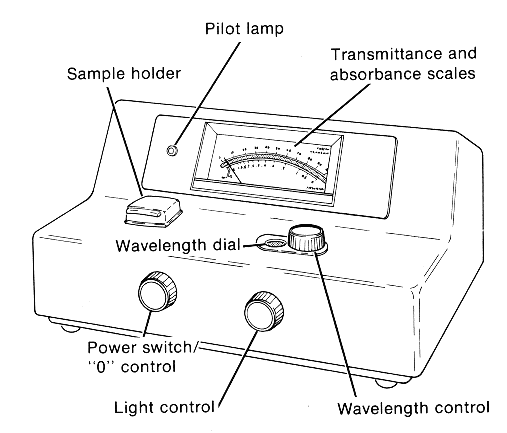
Calorimeter Principle,Components,Working & Applications:-  calorimeter:- A Colorimeter involves the measurement of Color and is the widely used method for finding the concentration of biochemical compounds. It Measures absorbance and wavelength between 400 to 700 nm (nanometer) i.e. from the visible spectrum of light of the electromagnetic spectrum. Absorption of light :- Light falling on a colored solution is either absorbed or transmitted. A colored solution absorbs all the colors of white light and selectively transmits only one color. This is its own color. PRINCIPLE OF COLORIMETER:-   A colorimeter is based on the photometric technique which states that When a beam of incident light of intensity I0 passes through a solution, a part of the incident light is reflected (Ir), a part is absorbed (Ia) and rest of the light is transmitted (It) Beer’s Law :-  This law states that the amount of light absorbed is directly proportional to the cocentration of the solute in the solution . Lambert’s Law:-  The Lambert’s law states that the amount of light absorbed is directly proportional to the length and thickness of the solution under analysis. In simplified form, The working principle of the colorimeter is based on Beer-Lambert’s law which states that the amount of light absorbed by a color solution is directly proportional to the concentration of the solution and the length of a light path through the solution.                                                     A ∝ cl Where, A = Absorbance / Optical density ofsolution c = Concentration of solution   l = Path length                                                 A = ∈cl     ∈ = Absorption coefficient PARTS OF COLORIMETER:- There are 5 essential parts in a calorimeter Light Source – The most common source of light used in colorimeter is a tungsten filament. Monochromator – To select the particular wavelength filter or monochromators are used to split the light from the light source.  Sample holder – Test tube or Cuvettes are used to hold the color solutions they are made up of Glass at the visible wavelength. Photo Detector System – when light falls on the detector system, an electric current is generated, this reflects the Galvanometer reading. Measuring device – The current from the detector is fed to the measuring device, the Galvanometer, shows the meter reading that is directly proportional to the intensity of light.   the formula used for determining the concentration of a substance in the test solution                                      A = ∈cl For two solutions i.e. Test and standard,            ∈ = Constant    l = Constant (using the same Cuvette or Standard cell)        AT = CT                ….. (i)        AS = CS               ….. (ii) From (i) & (ii),       AT × CS = AS × CT       CT = (AT/AS) × CS Where, CT = Concentration of the Test solution AT =Absorbance/ Optical density of the test solution CS =Concentration of the standard AS =Absorbance / Optical density of the standard solution

Scroll to Top