

CROSS MATCH
Cross matching is a laboratory test that checks the compatibility between the donor’s red blood cells (RBCs) and the recipient’s serum(plasma).
it helps to prevent transfusion reactions caused by antibodies in the recipient attacking donor red blood cells.
or
cross match is the final compatibility test is performed in a blood bank to ensure that a patient blood is compatible with a donor blood before transfusion.
If blood is compatible with recipient blood after cross matching, then donor can donate blood. if not compatible then donor cannot donate blood.
The cross match is a final check reverse and forward.
In 1907 first time Hekaton he just proposes cross match.
In 1908 Ottenberg first time use cross match for blood transfusion in New York.
Procedure: –
*Make 5% cell suspension for both donors and recipients.
*Take two clean and dry test tubes and mark as major and minor cross match.
*Add 50µl donor cell suspension (antigen)and 25µl serum (antibody)of recipient for major cross match.
*Add 50µl cell suspension of recipient and 25µl serum of donor for minor cross match.
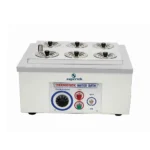
*Mix well and incubate for 30 minutes at 37°c
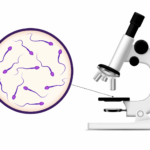
*After incubation observe microscopically and macroscopically
Observation: –
If agglutination shows, then blood is not compatible for recipient.
If agglutination is not shown, then the blood is compatible for recipient.
Cross match by micro gel tube method: –
The micro gel tube method, also called the gel card method, is a modern and reliable technique used in blood bank to perform cross matching between donor and recipient blood.
It helps ensure that compatibility before transfusion, preventing transfusion reactions.
Principle: –
The gel microcolumn contains antiglobulin reagent (coombs reagent) or other media that trap agglutinated red cells during centrifugation.
Agglutinated(incompatible)red cells are trapped in the gel.
Non agglutinated(compatible) red cells pass through the gel and settle at the bottom.
It detects antigen-antibody reactions between donor red cells and recipient serum/plasma.
Requirement: –
Gel card (antiglobulin gel microtube card)
Sample (both donor and recipient)
Micropipette and tips
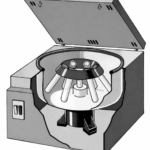
Centrifuge (specific for gel cards)
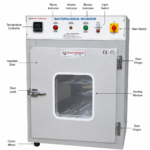
Incubator
Procedure: –
Prepare 2-5% suspension of donor red cells in normal saline.
Add 50µl of recipient serum/plasma into the designated microtube of gel card.
Add 25µl of donor red cell suspension to the same microtube.
Incubate the card at 37°c for 15-30 minutes (to allow antigen-antibody reaction).
Centrifuge the card in a gel card centrifuge for 10 minutes.
Observe the position of red cells in the gel column.
If red cells are forming a band at the top or dispersed in the gel then result positive means agglutination occurred, blood is incompatible.
If red cells are forming a pellet at the bottom of the microtube (or RBC settle down in bottom of microtube) then result negative means agglutination does not occur, blood is compatible.
If mixed pattern means some cells are trapped, or on top and some at bottom then result weak positive show incompatibility (possible minor).


