



human blood group system

Facebook
X
LinkedIn
WhatsApp
Telegram
Pinterest
unnamed (2)

human blood group system

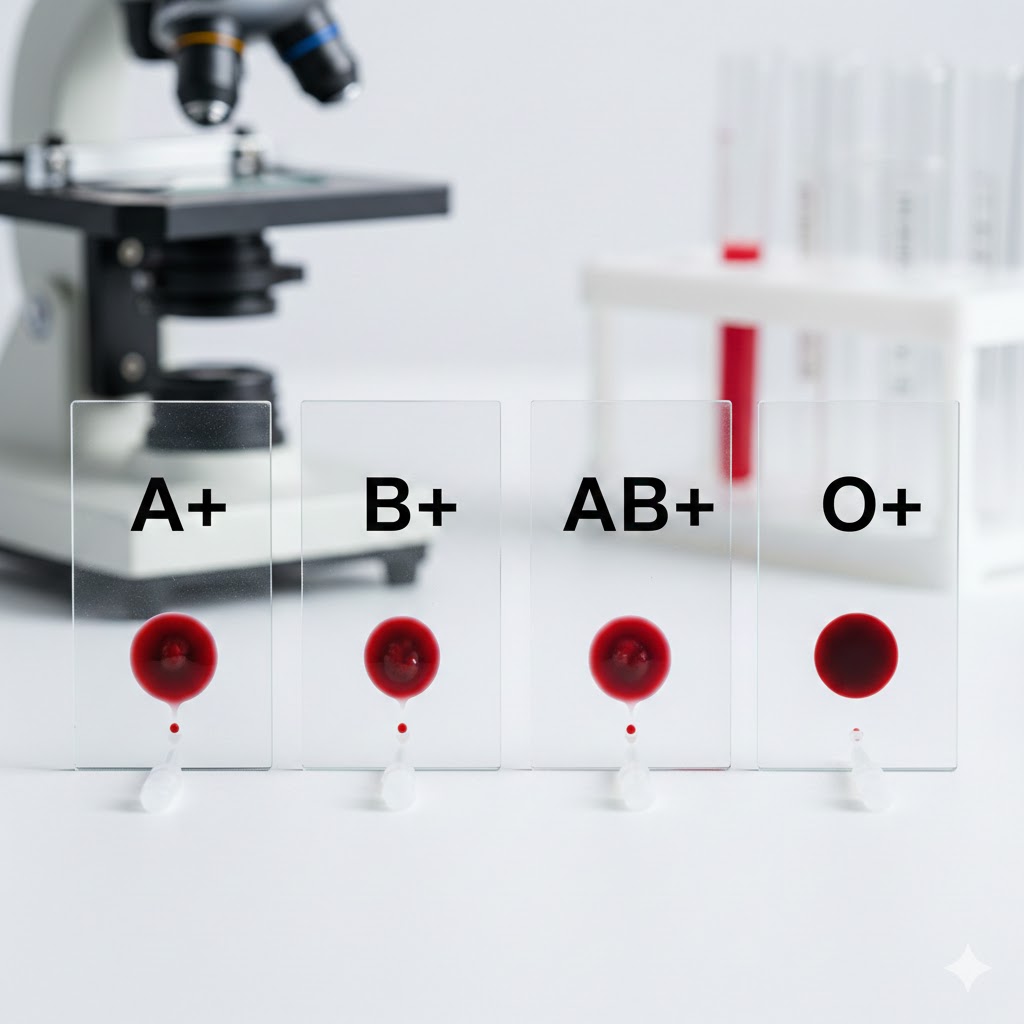
Human blood group system:-


Rh are major, the most important of all the blood group system. All people (with some exception) of ABO system can be divided in 4 major groups in this system they are A, B, AB and O group. This determines by the reaction of two different reagent, known Anti A, and Anti B.

For example: – Forword grouping or cell grouping by using known Anti A and Anti B results obtained are as follow.

Red cell sample 

Reagent 

Reaction

Blood group 

Red cell 

Anti A 

Agglutination 


A groupThere are nearly 300 blood group systems so for discovered. The ABO and

Red cell 

Anti B 

No agglutination 

Red cell 

Anti A 

No agglutination 


B group 

Red cell 

Anti B 

Agglutination 

Red cell 

Anti A 

Agglutination 

AB group 

Red cell

Anti B 

Agglutination 

Red cell 

Anti A 

No agglutination 


O group 

Red cell 

Anti B 

No agglutination 

ABO BLOOD GROUP SYSTEM:-

Karl Landsteiner, an Austrian scientist discovered the ABO blood group system in the year 1900.in his experiments, he mixed different blood types and noted that the plasma from certain blood type produced agglutinates. Which were caused by the absence of molecules on red blood cells and resulting in antibodies to defeat that molecules. He made a note of the agglutination and divided the blood type in 4 different groups.

For the discovery of ABO blood group, he was awarded the Nobel price.

ABO and Rh blood group: –

During blood transfusion, two group system are examine the ABO and Rh (Rhesus)system.

ABO BLOOD GROUP: –

The ABO system is based on the presence or absence of two antigens (A and B) on the surface of red blood cells (RBCs).

The presence of A,B, or O antigen on red cell is determined by the inheritance of the allelic genes A, B, and O on chromosome 9, which are inherited in pairs as Mendelian dominants. 

it classified into 4 types 

*Group A → RBCs have A antigen, plasma has anti-B antibodies

*Group B → RBCs have B antigen, plasma has anti-A antibodies

*Group AB → RBCs have both A and B antigens, plasma has no antibodies (universal recipient)

*Group O → RBCs have no antigens; plasma has both anti-A and anti-B antibody

The ABO group system is important in blood transfusion during blood donation as mismatching of blood group can lead to clumping of RBCs with various disorders. 

It is important for blood cells matching during transfusing i.e. donor -recipient compatibility is necessary. 

ABO antibody: –

ABO antibodies are usually IgM, which are cold reacting. These antibodies don’t cross the placenta and can bind complements.

The majority of anti A from group B person or individual and anti B from group A person or individual contain IgM antibody with minor amount of IgG or IgA present.

Antisera used in ABO test procedure: –

In ABO test procedure antigens present on an individual cells are determining method is called forward typing or direct typing and consist of testing the unknown cells with known antisera and then observing for agglutination.

Anti A antiserum: –

The serum is obtained from “B” type individuals, since there is a “natural” occurrence of anti A agglutinin in their serum.

Anti B antiserum: –

 The serum is obtained from “A” type individuals where there is a natural occurrence of anti B agglutinin in the serum.

Anti A, B typing serum: –

This anti serum is obtained from “O” Type individuals.

Anti A1: –

This serum is obtained from human sources or plant lectins. This serum determines A1 and A1 B person from other A and AB types.

Anti H: –

this serum is obtained from lectin (plant source) this antiserum determines Bombay (oh)types (who lack H substance

2. Rh (Rhesus) system: – 

The Rh system is the second most important blood group system after the ABO system in transfusion medicine. About two-third of the papulation contain the third antigen on the surface of their red blood cells known as Rh factor or Rh antigen.

It was first discovered in 1940 by Landsteiner and Wiener in his experiment using the blood of Rhesus monkeys

NOTE: – 

The Rh system is a complex blood group system, mainly determined by the D antigen, playing a vital role in transfusion safety and in preventing haemolytic disease of the newborn

  • The Rh system has more than 49 antigens, but the most significant is the D antigen.

  • If a person has the D antigen on their red blood cell, then the person is Rh positive (Rh+).

  • If D antigen absent on their red blood cell, then the person is Rh negative (Rh-)

  • Some other important Rh antigens are C, c, E, and e.

  • The Rh system is inherited genetically.

  • It is controlled by two closely linked genes on chromosome 1.

     RHD gene     –        produces the D antigen.

      RHCE gene –     produces C/c and E/e antigen.

  • Haemolytic disease (break down of RBC called haemolytic disease) of the newborn (HDN):-occurs when an Rh- mother carries an Rh+ foetus. the mother’s immune system may produce anti D antibodies that destroyed fatal red blood cells.

  • Blood Transfusion Reactions:
    If Rh patients receive Rh blood, they may form antibodies (anti-D), leading to haemolysis in future transfusions.

  • That’s why Rh typing and cross-matching are essential before blood transfusion.

  • Rh mothers are given anti-D immunoglobulin after delivery or miscarriage to prevent sensitization.

  • Note: – Bombay blood group is discovered by Y.M Bende in 1950.


Leave a Comment

Your email address will not be published. Required fields are marked *

Scroll to Top