INTRODUCTION:-
In the laboratory setting, numerous histological specimens are received throughout the day for testing. Receiving of Surgical Specimens requires a systematic approach to ensure that all samples are properly accounted for and handled correctly. Without proper documentation and verification, there is a potential to misplace or lose samples.
OBJECTIVES:-After reading this lesson, you will be able to:-
*explain the process of receiving surgical specimens
*describe preparation of gross room
*receive the samples, label the sample and store.
RECEIVING OF SURGICAL SPECIMENS:-
2. Sex and age of patient
3. Registration no, OPD or indoor number
4. Type of sample like appendix or lymph node.
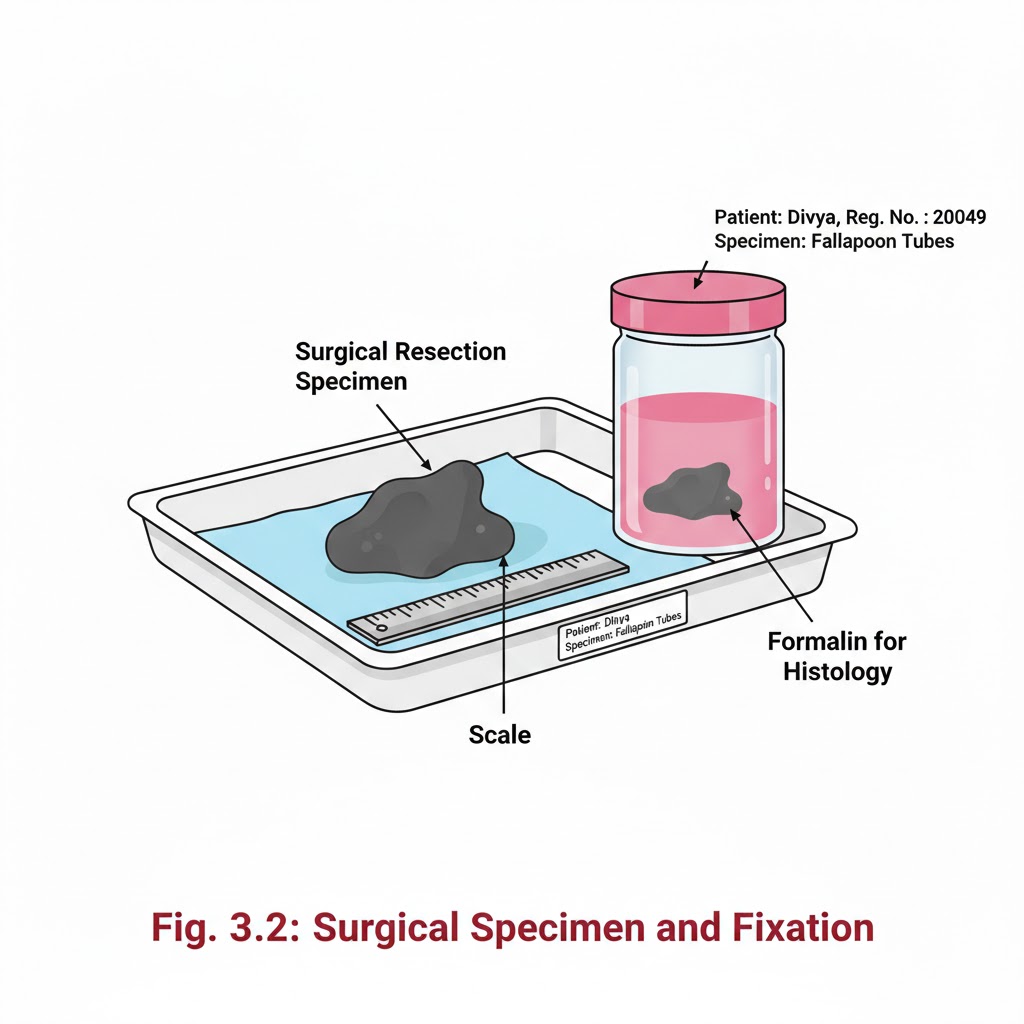
After matching the above points carefully, accession number of the Histopathology
laboratory should be given on the requisition form and on the sample container
like it has been depicted in the form and sample bottle.
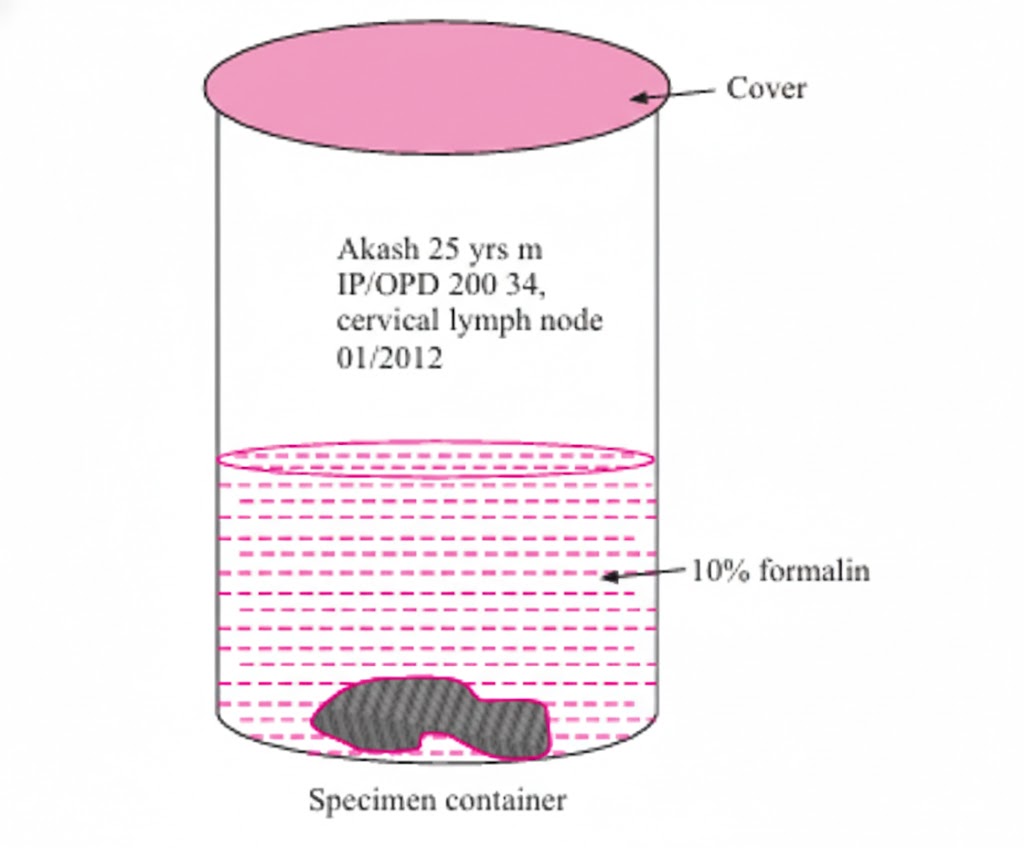
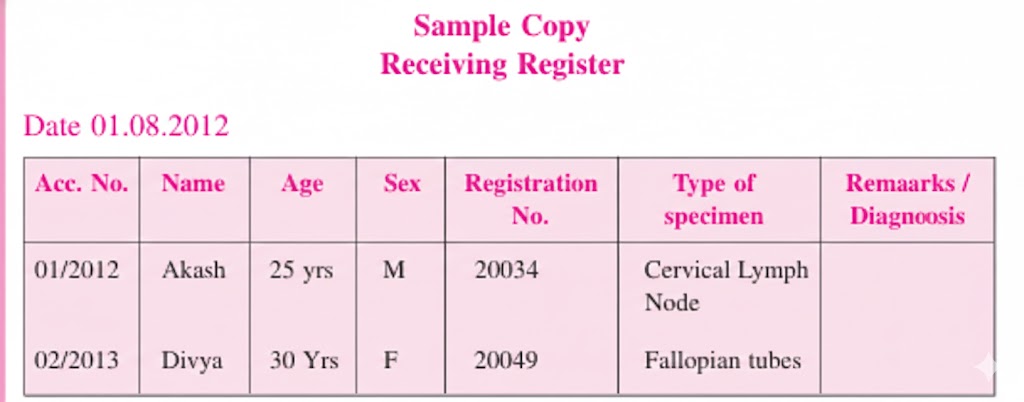
A register should be maintained for record and for future reference Following points should be noted on the register (sample given)
1.Date
2.Accession number which was given by the pathology department.
3.Patients name, age, sex.
4.Patients registration number/ OPD/ indoor number.
5.Type of sample.
6.Number of samples received from one patient.
7.Remarks / final diagnosis which may be entered later on.
After receiving the samples the consultant should be informed for grossing. If grossing to be done after some time, fixative should be put in all the samples to prevent autolysis of the specimen.
PREPARATION OF GROSS ROOM:-
The routine work associated with a surgical pathology specimen includes gross
and microscopic examination. Proper preservation of tissues and processing of
the tissue are the most important aspects for correct diagnosis.
The size and features of the gross room depends on the number of specimens
and type of institution. Gross room should be well illuminated and ventilated.It should have a gross station and racks to keep the specimen in order of accession number. Gross station – It should have ventilated hood.
1. Cutting board placed inside the metal box designed in such a fashion that
all the fluids should flow directly into the sink
2. Ready access to sink with hot & cold water
3. Formalin – stock and 10% buffered formalin
4. Box of instruments containing (a) Scissors (b) Forceps (c) Malleable probe (d) Scalpel handle with disposable blades
(e) Long knife (f) Scale (g) Pins for attaching the specimens to corked surface if required
5. Containers with different fixatives
6. Bone cutter
7. Large disposal bin
8. Box with cassettes and labels
These are the essential items. Depending upon the pathology service being
rendered to the institution more sophisticated items may be added.
Apart from the above items following items may be of help in keeping the
records
1. Photographic facility 2. Refrigerator 3. Balance to weigh the gross specimen 4. X-ray view box
5. Other equipments for tissue bank facility.