
OXIDATION FERMENTAION TEST:-
This test is used to differentiate the organisms that oxidize carbohydrates (aerobic utilization) from those organisms
that ferment carbohydrates (anaerobic utilization). Example: Differentiation of Pseudomonas aeruginosa (carbohydrate oxidation) from members of the Enterobacteriaceae (carbohydrate fermentation).
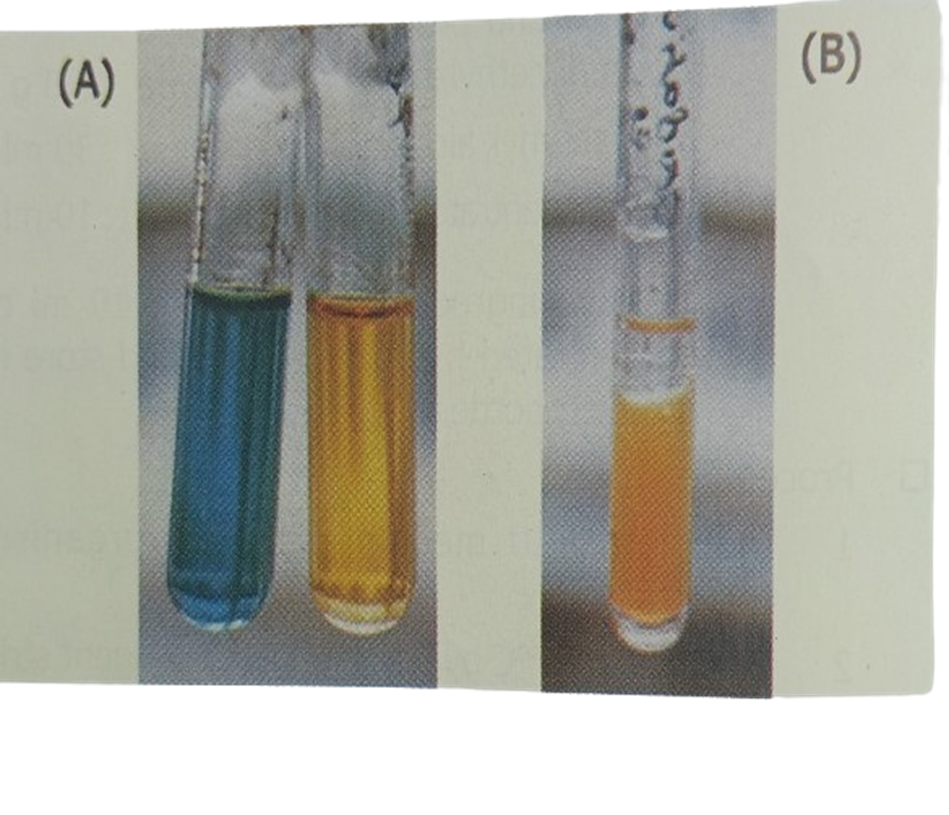
v Principle:- The test organisms are inoculated into tryptone or peptone agar medium containing glucose (or mal- tose or sucrose) and the indicator bromothymol blue. The test is carried out in two tubes. The inoculated medium in one tube is sealed with a layer of liquid paraffin to exclude oxygen. Fermentative organisms act on the carbohydrates in both the tubes and the green colored media changes to yellow, due to the formation of acid. Oxidative organisms are able to use carbohydrates only in the open tube and the col- or of the tube changes to yellow.
v Procedure:-
1. By using heavy inoculum, inoculate the O-F medium to the bottom of the two tubes.
2 Cover one tube (from each carbohydrate pair) with 1 cm layer of sterile paraffin oil.
3 Incubate the tubes at 35°C upto 14 days. Examine the tubes daily.
v Results:-
Open tube Paraffin tube Interpretation
Yellow Green Oxidative organism
Yellow Yellow Fermentative organism
Green or blue Green No utilization of carbohydrates
v Quality control:-
Use the following microorganisms to confirm the reliability of reagents:
Positive control: Yellow – Green color: Pseudomonas aeruginosa
Negative control: Yellow-Yellow color: E. coli