NITRATE REDUCTION TEST:-
This test helps to differentiate bacteria that produce the enzyme nitrate reductase from the bacteria that do not produce the enzyme. This test is also helpful in differentiating Mycobacterium species.
v Principle:-
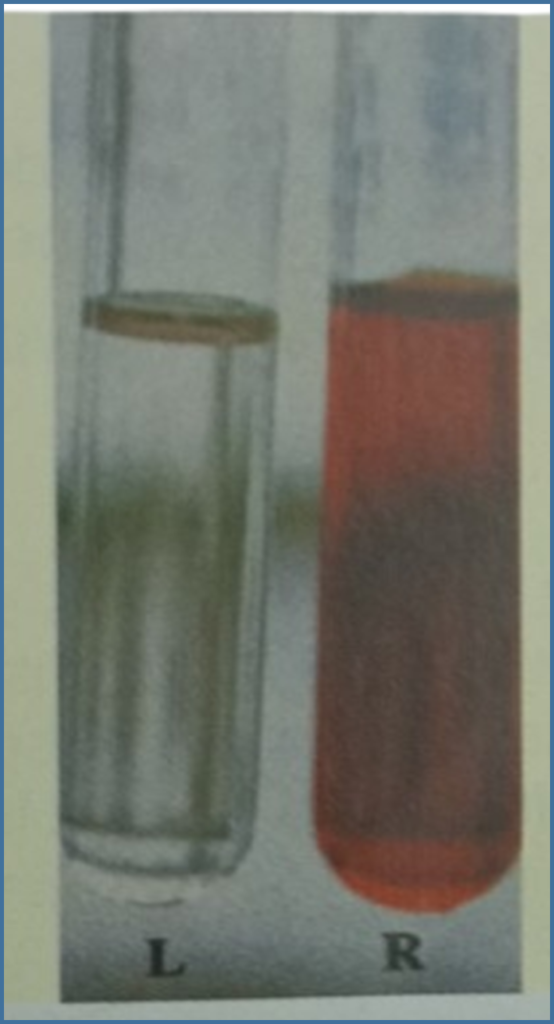
The test organisms are incubated in a broth containing nitrate. The nitrate reductase producing organisms reduce nitrate to nitrite, which is tested by adding sulfanilic acid reagent and a-naphthylamine. The formation of pink red compound indicates positive reaction.
v Requirements:-
1. Nitrate broth
2. Sulfanilic acid reagent
a) Glacial acetic acid : 5.7 ml
b) Distilled water : 14.3 ml
c) Sulfanilic acid : 0.16 g
3. alfa-naphthylamine reagent
a) Glacial acetic acid : 5.7 ml
b) Distilled water : 14.3 ml
c) Sulphonic acid :0.16 g
v Procedure:-
1. Incubate the nitrate broth (sterile) with test organism.
2. Incubate at 37°C for four hours
3. Add one drop of sulfanilic acid reagent.
4. Add one drop of a naphthylamine reagent.
5. Mix well and observe the reaction
v Observations:-
Red color : Positive test
No red color :No reduction of nitrate
v Additional information:-
When nitrate is not detected it is necessary to test whether the organism has reduced the nitrate beyond nitrite to nitrogen gas or ammonia. Zinc dust (knife point), small amount is added, which will convert any nitrate to nitrite. In that case the observation is as follows:
Red color : Negative test
No red color : Positive test
v Quality control:-
Use the following microorganisms to confirm the reliability of reagents:- Positive control : E.coli
Negative contro l : Acinetobacter sp.