INDOLE TEST :-
This test is important in the identification of enterobacteria such as E.coli, P.
vulgaris, P. rettgeri, etc.
v Principle:-
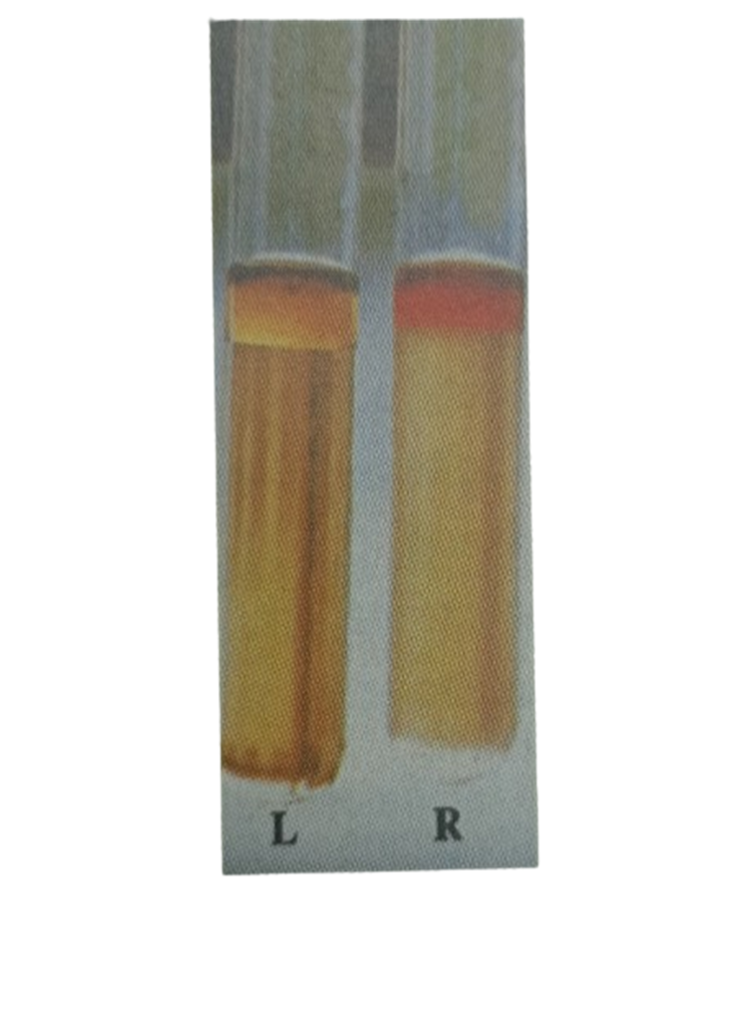
The test organism is cultured in a medium containing tryptophan. The organisms break down tryptophan and indole is released. It is detected by the action of Kovac’s or Ehrlich reagent (formation of red colored compound. This test can also be performed by culturing the organism in tryptone water or peptone water containing tryptophan. Indole production is detected as described above).
v Requirements:-
1. Motility indole urea (MIU) medium
2. Kovac’s reagent strips (or
Kovac’s reagent) Kovac’s Reagent
v Formula and preparation:-
1. p-dimethylaminobenzaldehyde : 2.0 g
2. Isoamyl alcohol : 30 ml
3. Concentrated hydrochloric acid : 10 ml
Dissolve ingredients 1 and 2 in 10 ml of concentrated hydrochloric acid and store in a brown bottle.
v Procedure:-
1. Inoculate MIU medium with test organism colonies.
2. Incubate at 37°C by placing Kovac’s reagent strip in the neck of the MIU tube and
3 . Look for reddening of the lower part of the test strip (or formation of red color of the
reaction mixture).
v Results:-
1. Reddening of strip : Positive test
2 No red color : Negative test
v Quality control:-
Use following microorganisms to confirm the reliability of reagents
Positive control: Escherichia coli
Negative control: Klebsiella aerogenes