
INTRODUCTION:-
Hospital waste is “Any waste which is generated in the diagnosis, treatment or immunization of human beings or animals or in research” in a hospital. Hospital Waste Management means the management of waste produced by hospitals using such techniques that will help to check the spread of diseases through.
DISPOSAL OF HUMAN WASTE:-The laboratory should conform to the local practices and guidelines for safe
disposal of human and chemical waste generated in the laboratory.
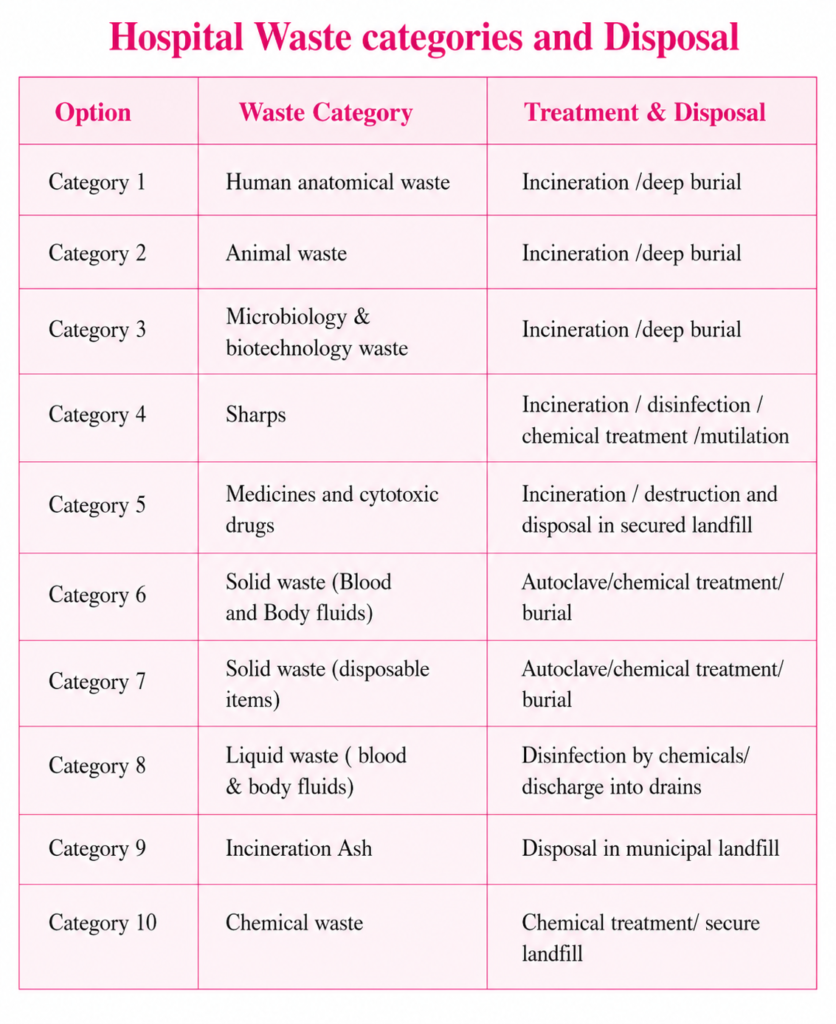
WHO MEDICAL WASTE CATEGORIES:-
Infectious:-
Materials containing pathogens if exposed can cause disease:-
Human anatomical waste: waste from surgery and autopsies on patients with
infectious diseases;
Sharps: disposable needles, syringes, saws, blades, broken glasses, nails or
any other item that could cause a cut;
Pathological: tissues, organs, body parts, human flesh, fetuses, blood and
body fluids;
Non Infectious (Hazardous):- Pharmaceuticals: drugs and chemicals that are returned from wards, spilled,
outdated, contaminated, or are no longer required;
Radioactive: solids, liquids and gaseous waste contaminated with radioactive
substances used in diagnosis and treatment of diseases like toxic goiter.
Non Infectious (Non Hazardous):-
Domestic waste: from the offices, kitchens, rooms, including bed linen,
utensils, paper, etc
Care needs to be taken to dispose off the Infectious and non-infectious hazardous
waste. The non Infectious (Non Hazardous) waste can be disposed off with
regular garbage disposal.
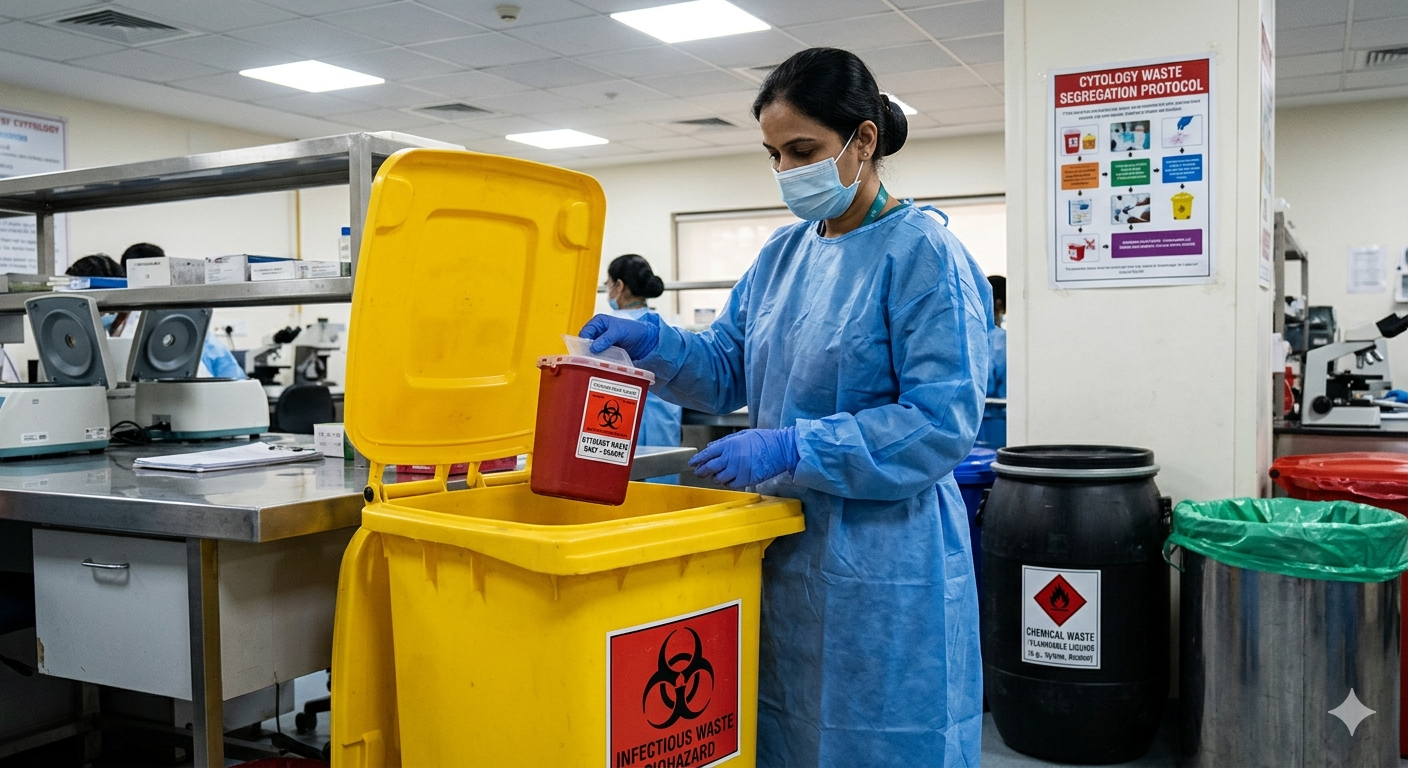
Cytology laboratory generates waste in the form of remnants of fluids (peritoneal, pleural, cysts, etc), sputum, and left over specimen of liquid cytology. The specimens need to be discarded only after chemical decontamination using at least 1% sodium hypochlorite solution; and then discharged into drains/sewers where it is taken care of by the principle of dilution and dispersal.
Any solid waste needs to be disposed off according to hospital waste management. Before disposal the specimen need to be segregated after proper identification.
Segregation by color coding system:-
Three categories :-
Infectious waste – Red bags
Domestic waste – Green Bags
Sharps – Needle cutters / Puncture proof containers.
Transportation:-
Containers: puncture proof, leak proof,
Bags: sturdy, properly tied
Transport trolleys: designated & timely
Staff protection: provided with protective clothing and other items
Never put hands in a bag puncture proof, leak proof,
The infectious material in red bags will go for incineration:-
The sharps can either go to incinerator or following autoclaving/chemical
disinfection can be mutilated. They should never be thrown in regular garbage.
Chemical waste collected throughout the staining, dehydration, clearing and
coverslipping processes must be disposed of or recycled according to state and
local regulations.